



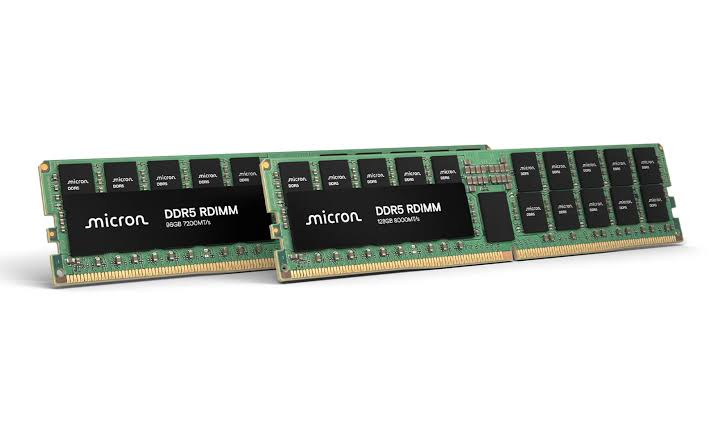
DDR5 memory prices in Germany continued climbing in July 2026, pushing the market’s average price index to 448 percent of the level recorded one year earlier.
The latest increase places July above the previous peaks seen in January and February, when the index reached 440 percent. June had already climbed to 419 percent, meaning the market rose by close to 7 percent in one month.
The data covers a broad selection of DDR5 memory kits sold by several German retailers. It includes common capacities such as 8GB, 16GB, 24GB, 32GB, and 48GB, along with different speeds and latency ratings.
Although the figures apply specifically to Germany, they reflect the wider pressure affecting the memory market. Rising demand from AI servers, limited DRAM supply, long term contracts, and cautious production expansion have pushed prices higher across several regions.
Nearly every major DDR5 configuration became more expensive in July
Earlier price increases were concentrated around selected memory kits, but the latest data shows a broader rise across the market.
Most of the tracked configurations became more expensive during July. Only 2 x 48GB DDR5 6400 kits and 2 x 24GB DDR5 7200 kits avoided a noticeable monthly increase.
The sharpest rises were seen among mainstream 32GB configurations. Kits containing two 16GB modules at DDR5 6000 CL28 and DDR5 7200 or faster increased by roughly 16 to 17 percent compared with June.
| DDR5 market indicator | July 2026 result |
|---|---|
| Price index compared with July 2025 | 448 percent |
| Previous peak in January and February | 440 percent |
| June 2026 price index | 419 percent |
| Approximate monthly market increase | Nearly 7 percent |
| Largest monthly increases | Around 16 to 17 percent |
| Least affected tracked kits | 2 x 48GB DDR5 6400 and 2 x 24GB DDR5 7200 |
Other memory kits recorded monthly increases ranging from around 2 percent to 14 percent.
The widespread rise suggests the shortage is no longer limited to premium or unusual configurations. Buyers seeking ordinary 32GB kits are now facing some of the strongest increases.
Mainstream gaming memory is among the hardest hit
The 2 x 16GB format remains one of the most popular choices for gaming PCs and general desktop systems.
A 32GB kit provides enough capacity for modern games, content creation, multitasking, and everyday applications without the higher cost of 64GB or 96GB configurations. Strong demand for this capacity may be contributing to its sharper price increases.
DDR5 6000 CL28 is also widely used in AMD gaming systems because it offers a strong balance between speed and latency. Faster DDR5 7200 kits are more common in tuned Intel builds and enthusiast PCs.
When these popular configurations rise faster than the rest of the market, the effect is felt directly by a large number of PC builders.
Buyers may need to choose slower memory, accept higher latency, reduce total capacity, or postpone an upgrade.
The 448 percent index does not mean every kit costs 4.48 times more
The reported figure represents an overall price index based on several memory products. Individual kits can move at different rates.
Some configurations may have risen far less than the average, while others may have increased more sharply. Retail stock, manufacturer, speed, capacity, timings, and promotional discounts can all influence the final price.
The index is still useful because it shows the direction of the market. Germany’s average tracked DDR5 pricing is now more than four times the reference level from July 2025.
That does not necessarily mean a kit that cost €100 last year now costs exactly €448. It means the combined tracked market has reached an equivalent indexed level.
AI demand is placing pressure on conventional DRAM
One reason for the current pricing environment is the rapid expansion of AI infrastructure.
Memory manufacturers are allocating more investment and production capacity toward high bandwidth memory and server DRAM. These products generally provide stronger margins than consumer desktop memory.
The same factories and supply chains cannot always expand every memory category at once. Increasing production of AI focused products can limit the capacity available for standard DDR5 used in laptops and desktop PCs.
Large server customers are also signing long term supply agreements, reserving future memory output before it reaches the retail market.
This leaves PC manufacturers, component vendors, and individual buyers competing for a smaller portion of available production.
New factories will take years to affect retail supply
Samsung, SK hynix, Micron, and other suppliers have announced expansion plans, but additional capacity will not arrive immediately.
A new semiconductor fabrication facility can take several years to construct, equip, test, and qualify. Even after production starts, yields must improve before the factory can deliver large volumes efficiently.
Memory companies are also cautious about expanding too quickly. Previous cycles have shown that aggressive production growth can create oversupply, causing prices and profits to collapse.
This makes manufacturers more likely to increase capacity gradually, even when demand remains strong.
The result is a slower supply response and continued pressure on retail prices.
Higher memory prices are changing the cost of PC builds
DDR5 was once expected to become cheaper as adoption increased and production matured. The current shortage has reversed that trend.
A gaming PC build that previously allocated a modest portion of its budget to memory may now need a much larger amount. This can force buyers to compromise on the graphics card, processor, storage, or cooling system.
Upgrading an existing PC has also become less attractive. A buyer may decide that moving from 16GB to 32GB or from 32GB to 64GB no longer provides enough value at current prices.
Prebuilt computer manufacturers face the same problem. They may increase system prices or ship products with less memory to protect margins.
Buyers should compare full kit specifications carefully
The current market makes price comparison more important.
Two kits with the same capacity may differ significantly in speed, timings, voltage, memory chip quality, warranty, and motherboard compatibility. A cheaper model is not always a worse purchase if the performance difference is small.
For many gaming systems, slightly slower DDR5 can deliver similar real world performance at a lower cost. Buyers should also check motherboard memory support lists and avoid paying heavily for speeds their processor may not use reliably.
Waiting for a sale may help, but the July figures show that the broader pricing trend remains upward.
Germany’s DDR5 market has now reached its highest level in the tracked period. With almost every major configuration affected, memory is becoming one of the most difficult parts to price sensibly in a new PC build.



Discussion (0)
Be the first to comment.