



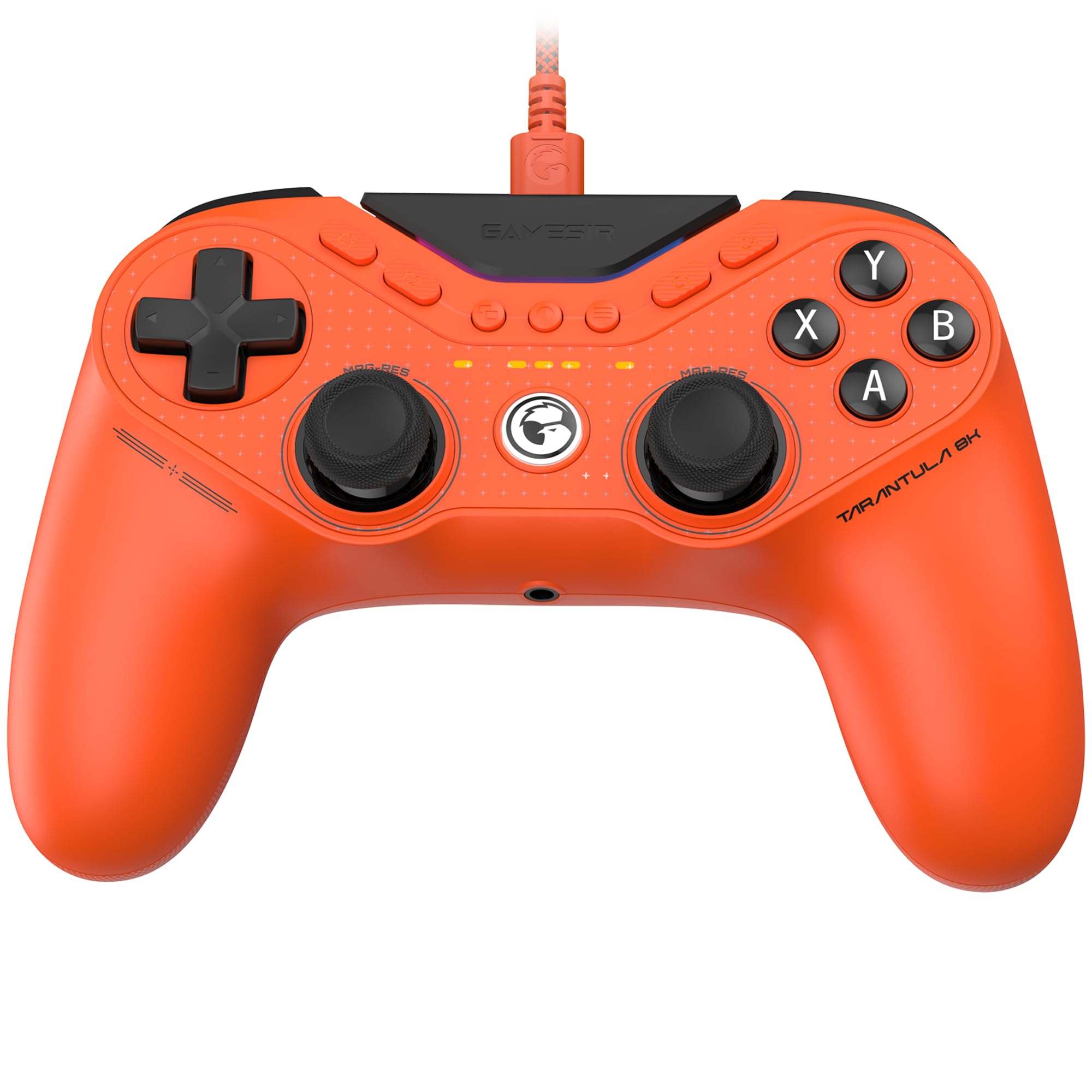
The GameSir Tarantula 8K is a wired PC controller built around features usually associated with much more expensive competitive models. It combines an 8,000 Hz polling rate, second generation TMR thumbsticks, Hall Effect triggers, mechanical switches and extensive button remapping while carrying a listed US price of $70.
The controller works with Windows 10 and Windows 11 through USB C. It weighs only 180 grams and uses a symmetrical thumbstick layout similar to PlayStation controllers rather than the offset design commonly associated with Xbox.
Its low weight comes partly from one notable omission. The Tarantula 8K has no vibration or haptic motors.
| Specification | GameSir Tarantula 8K |
|---|---|
| Connection | Wired USB C |
| Compatibility | Windows 10 and Windows 11 |
| Polling rate | Up to 8,000 Hz |
| Thumbsticks | Gen 2 Mag Res TMR |
| Triggers | Hall Effect analog with micro switch trigger stops |
| Face buttons | Mechanical micro switches |
| D pad | Tactile mechanical |
| Remappable controls | 9 buttons |
| Motion control | 6 axis gyroscope |
| Lighting | Customizable RGB |
| Weight | 180 g |
| Software | GameSir Connect |
| US price | $70 |
TMR sticks and mechanical controls are the main attraction
The Tarantula 8K uses TMR thumbsticks, which are designed to avoid the traditional wear problems associated with potentiometer based sticks and reduce concerns around stick drift.
In use, the sticks were described as smooth, while the supplied thumbcaps combine a convex center with raised and textured edges.
The ABXY face buttons also use mechanical micro switches, providing a distinct click when pressed. Activating the trigger stops changes the triggers to a similarly short mechanical action.
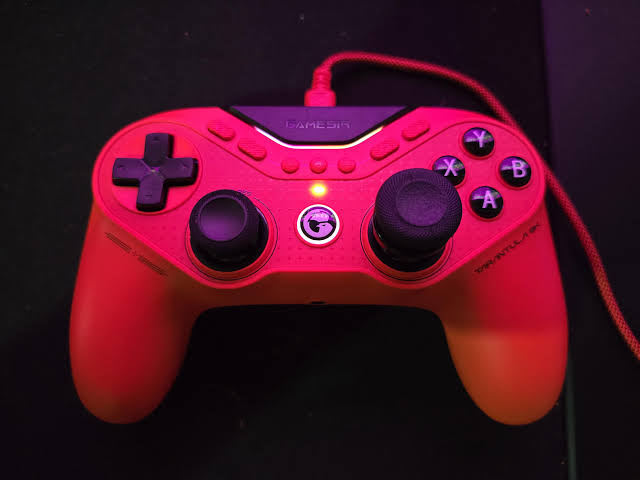
Two rear controls are placed where they can be reached without significant stretching. They can also be physically locked if you do not want to press them accidentally.
The controller includes a large number of additional inputs. Beyond the rear buttons, there are four controls on the front, two additional bumper buttons and another programmable control around the GameSir branded section.
Multiple profiles can be stored directly on the controller.
8,000 Hz polling works, although the benefit may be limited
Polling rate is one of the Tarantula 8K's biggest specifications.
You can choose between 250 Hz, 1,000 Hz, 4,000 Hz and 8,000 Hz modes. Testing with a controller polling utility showed that the device could reach or approach its advertised 8,000 Hz figure when connected directly to a USB 3.2 port on the motherboard.
Front panel USB connections did not produce quite the same results during testing.
Despite the large number, the practical improvement from 8,000 Hz was difficult to notice. Running the controller at 4,000 Hz in Call of Duty still produced a fast and responsive experience.
The controller was considered comparable in responsiveness to considerably more expensive competitive models.
GameSir Connect handles the customization
Most configuration is performed through the GameSir Connect application.
The software allows you to change button assignments, adjust stick and trigger response, control RGB lighting, configure profiles and use an additional Shift Layer for more commands.
The controller does not require the application to remain open once settings have been saved internally. Profiles can be changed directly using the rear M button and the right thumbstick.
There are two reasons to install the software even if you prefer not to keep it running.
Without it, the controller stays at its default 250 Hz polling rate, and firmware updates also require the application.
The software previously included a feature linked to rotational aim assist behavior in Apex Legends, but that feature has since been removed.
Lightweight design comes without vibration
At 180 grams, the Tarantula 8K is unusually light for a controller with this many features.
That can make it comfortable during longer competitive sessions, but the missing vibration system will matter to players who want feedback in racing games or other titles where rumble contributes to the experience.
For competitive shooters, where players often disable vibration anyway, the tradeoff may be less important.
The symmetrical stick layout may also divide opinion. Players accustomed to DualShock style controllers should find it familiar, while those who strongly prefer offset Xbox controls may need time to adjust.
A few design details could be improved
The controller's grip uses lightly textured plastic, but testing found that it did not add much traction and could become visibly dirty with extended use.
Similar light texturing appears on the triggers and bumpers.
The positioning of the extra bumper buttons is another weakness. They sit very close to the standard bumpers, making accidental presses possible during fast gameplay.
During Call of Duty testing, assigning reload to one of these buttons occasionally resulted in grenades being thrown by mistake because the neighboring bumper was pressed instead.
Color choice is also limited, with the reviewed PC model available only in orange.
Strong hardware for its $70 price
The Tarantula 8K's main advantage is the amount of hardware GameSir has fitted into a comparatively inexpensive controller.
At $70, it provides TMR sticks, Hall Effect triggers, mechanical face buttons, an 8,000 Hz polling option, multiple programmable inputs, onboard profiles and extensive software configuration.
There are compromises. It is wired, limited to PC in this version, lacks vibration, has a relatively weak grip texture and places some extra buttons too close together.
Still, the underlying control hardware and responsiveness put it much closer to premium competitive controllers than its price suggests.
GameSir also offers other Tarantula and G7 models for players who need Xbox compatibility or prefer the Xbox style stick layout, but the Tarantula 8K reviewed here is specifically aimed at Windows players who prioritize low latency, customization and lightweight competitive play.


Discussion (0)
Be the first to comment.