



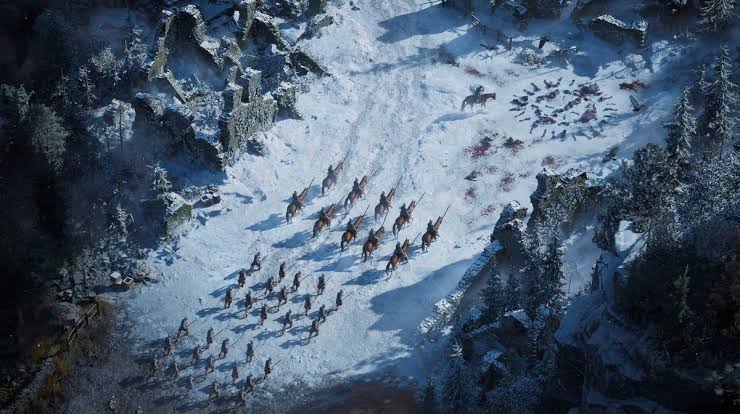
Game of Thrones: War for Westeros has been delayed from 2026 to early 2027, giving developer PlaySide Studios more time to improve combat, unit behavior, map design, and overall quality.
The PC strategy game will let you command one of four major factions competing for control of Westeros. These include House Stark, House Lannister, House Targaryen, and the Night King’s Army of the Dead.
PlaySide says the extra development time will help the team reach a higher quality standard before release. The studio has not provided an exact launch date, but it has shared new details about faction heroes, squad based combat, tactical counters, and the maps that will support competitive skirmishes.
The game remains available to add to your Steam wishlist.
Four factions will use different heroes, armies, and battlefield strategies
Each faction will have its own units and powerful heroes drawn from the Game of Thrones setting.
Heroes will function as active battlefield commanders rather than simple bonus units. They will gain levels during matches, unlock new abilities, and provide passive benefits to nearby soldiers.
Jon Snow is designed as a front line leader who can fight alongside his troops and improve the morale of surrounding units. His role should suit players who prefer direct pressure and close control of the main army.
Tywin Lannister takes a different approach. He is described as a commander who operates farther from the front line and improves the efficiency of the Lannister military through careful coordination.
| Faction or hero | Expected battlefield role |
|---|---|
| House Stark | Resilient armies and direct leadership |
| House Lannister | Organized tactics and efficient unit control |
| House Targaryen | Powerful offensive options and iconic forces |
| Army of the Dead | Undead pressure and unconventional armies |
| Jon Snow | Front line hero with morale support |
| Tywin Lannister | Back line commander focused on army efficiency |
PlaySide has not revealed the full hero roster or every faction mechanic. More characters and abilities are expected to be shown closer to launch.
Combat is built around squads and clear tactical counters
War for Westeros will have you command full squads rather than moving every soldier individually.
PlaySide is placing considerable attention on movement, physical impact, pathfinding, and how units respond when orders are issued. The goal is to make armies feel like organized groups while keeping their actions readable during large battles.

The combat system is also designed to discourage players from winning by massing one basic unit type.
A large group of ordinary infantry may look powerful, but it can be destroyed by the correct counter. A heavy cavalry charge, for example, can break through unsupported infantry and cause significant losses.
Light infantry equipped with spears can stop that charge more effectively. This creates a need to study the opposing army, prepare counters, and adjust your formation during the fight.
| Enemy threat | Possible response |
|---|---|
| Heavy cavalry | Spearmen and defensive formations |
| Large infantry group | Ranged attacks or specialized counters |
| Defended chokepoint | Flanking movement or pressure in another lane |
| Hero led army | Focused attacks or control abilities |
| Aggressive front line | Defensive positioning and reinforcements |
The final balance will depend on unit statistics, hero abilities, terrain, and how quickly players can replace losses. The current design suggests that decision making will matter more than simply building the largest army.
Ashemark is designed as a focused competitive map
PlaySide has revealed Ashemark, a location in the Westerlands connected to Robb Stark’s campaign during the War of the Five Kings.
The map is built for one versus one matches and uses two open lanes surrounded by defensible chokepoints.
This layout creates several tactical choices. Players can apply pressure through one lane, divide forces between both routes, defend a narrow position, or attempt to move around an opponent’s main army.
Chokepoints can make smaller forces more effective, but relying too heavily on one defensive position may allow the other player to take control of the rest of the map.
PlaySide says it wants maps to reflect the grounded visual style of Westeros while remaining easy to read during fast battles. Decorative detail therefore has to be balanced with clear paths and visible unit formations.
Other planned locations include King’s Landing, The Wall, castles, open land, and recognizable regions from across the continent.
The delay gives PlaySide more time to improve movement and battlefield clarity
Real time strategy games depend heavily on responsiveness.
Units must move reliably, choose sensible routes, maintain formations, and react quickly when the player gives a command. Weak pathfinding can make even a well designed strategy frustrating, especially when large squads become trapped around buildings or narrow terrain.
PlaySide’s focus on pathing suggests the developer understands how important this area will be. The additional development time may also help improve animation, collision, interface clarity, artificial intelligence, and multiplayer balance.
The studio must ensure that battles remain understandable even when several heroes, armies, and special abilities are active at once. Strong visual feedback will help players identify charges, morale changes, attacks, and unit counters before it is too late to respond.
Early 2027 now gives the game a clearer development window
The move to early 2027 removes Game of Thrones: War for Westeros from its previous 2026 target.
Delays can disappoint players, but strategy games often benefit from additional testing because small balance or control problems can affect every match. A longer production period gives PlaySide more time to refine its factions and prevent one army or tactic from becoming consistently dominant.
The game is being developed as a premium PC RTS rather than a free to play release. That places greater pressure on PlaySide to deliver a complete experience with strong single player and multiplayer systems at launch.
More information will be shared as development continues. The main questions still concern the campaign structure, multiplayer modes, complete faction rosters, progression systems, and whether the game will include large scale battles beyond competitive skirmishes.
Game of Thrones: War for Westeros is now scheduled to launch in early 2027. Its emphasis on recognizable heroes, counter based combat, and carefully designed maps could give it a clear identity if PlaySide uses the extra time effectively.



Discussion (0)
Be the first to comment.