



The US Federal Communications Commission is reportedly considering restrictions on optical transceivers made in China, a move that could reshape the supply chain supporting fibre networks and artificial intelligence data centres.
The proposal would directly affect Zhongji Innolight, a major Chinese supplier that controls an estimated 27 percent of the global optical transceiver market. More than 90 percent of its revenue reportedly comes from customers outside China, making any US restriction particularly significant.
China also accounts for more than 70 percent of global optical transceiver shipments. That level of market concentration means an immediate and complete ban could disrupt data centre construction, raise costs, and create shortages.
For that reason, a gradual restriction appears more likely than a sudden removal of existing products.
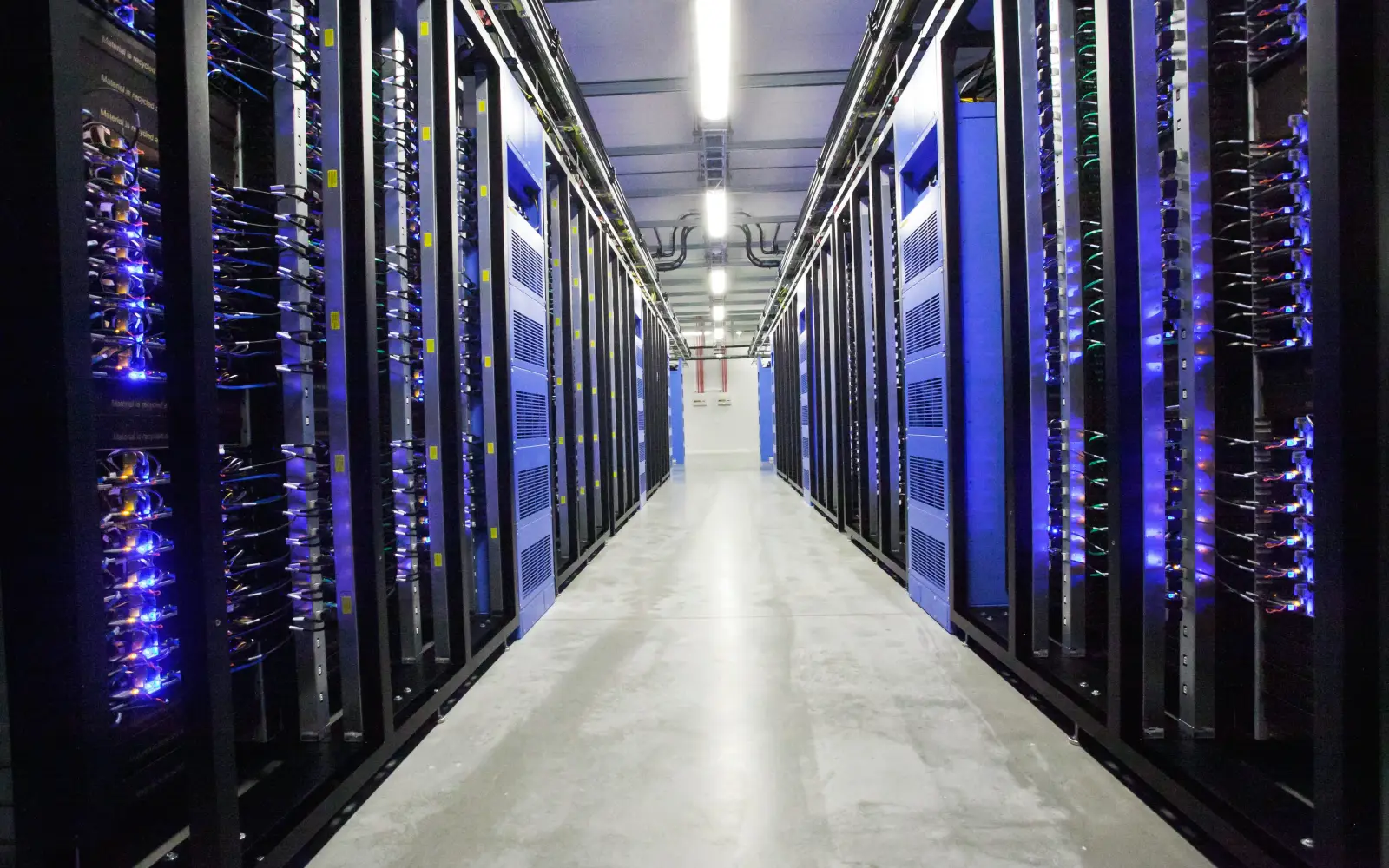
Optical transceivers are essential to AI data centres
Optical transceivers convert electrical data into light signals for transmission through fibre optic cables. A second transceiver at the receiving end converts those light signals back into electrical data.
These components are critical in modern data centres because large AI clusters need to move enormous amounts of information between GPUs, switches, storage systems, and other computing equipment.
| Component or company | Role in the market |
|---|---|
| Optical transceiver | Converts electrical signals to light and back |
| Zhongji Innolight | Chinese supplier with about 27% global share |
| Coherent | US-based optical component manufacturer |
| Lumentum | US-based optical networking supplier |
| 800G transceiver | Current high-speed data centre connection |
| 1.6T transceiver | Next-generation connection with higher bandwidth |
The rapid growth of AI infrastructure is increasing demand for faster links. Current 800G transceivers are already widely used, while the industry is moving toward 1.6T products capable of transferring up to 1.6 terabits per second.
These faster connections are expected to become increasingly important as AI systems expand from hundreds to thousands of accelerators.
An immediate ban would be difficult
Optical transceivers are not simple interchangeable parts.
Before a product can be deployed, it must be tested with network switches, digital signal processors, cables, firmware, and the wider data centre architecture. Replacing one supplier with another can therefore require extensive validation.
Innolight is also believed to supply major technology companies, including NVIDIA and Google. Removing its products without a transition period could delay existing projects and complicate the rollout of new AI infrastructure.
| Possible restriction | Likely effect |
|---|---|
| Immediate ban on all Chinese products | High risk of supply disruption |
| Ban on new purchases | Gradual shift toward other suppliers |
| Restriction on government networks | Limited initial market effect |
| Ban on upgrading to 1.6T products | Creates time for US suppliers to expand |
| Security review and certification | Adds compliance costs and delays |
A more practical approach could be to allow current 800G equipment to remain in use while restricting future upgrades to Chinese-made 1.6T transceivers.
That would give American suppliers time to increase manufacturing capacity and complete compatibility testing with major customers.
Coherent and Lumentum could benefit
A restriction on Chinese transceivers would create a major opportunity for US suppliers such as Coherent and Lumentum.
Both companies produce optical networking components and could gain market share if customers are required to move away from Innolight.
However, neither company may be able to replace Innolight’s output immediately. Building more production capacity requires factories, specialised equipment, trained workers, materials, and customer qualification.
| Potential benefit for US suppliers | Remaining challenge |
|---|---|
| Higher demand | Limited near-term production capacity |
| Larger market share | Need to qualify products with customers |
| Stronger pricing power | Risk of higher costs for buyers |
| More investment in US production | Long factory expansion timelines |
| Strategic government support | Dependence on global materials |
The transition could therefore benefit Coherent and Lumentum over the medium term while creating short-term supply pressure across the data centre industry.
Innolight faces significant exposure
Innolight’s reported 27 percent global market share makes it one of the most exposed companies if the FCC proceeds.
Because most of its revenue comes from customers outside China, losing access to the US market could affect both sales and future product development.
The company could try to offset the impact by expanding in China, other parts of Asia, the Middle East, and regions that do not follow US restrictions. However, major American cloud and AI companies represent some of the industry’s largest buyers.
A ban could also influence suppliers in allied countries if they decide to adopt similar rules.
The policy could raise AI infrastructure costs
Restricting a major supplier may improve supply chain security, but it could also reduce competition.
If fewer companies are able to sell optical transceivers to US customers, prices may rise. This would add another expense to already costly AI data centre projects.
The industry is also dealing with high demand for GPUs, high bandwidth memory, networking equipment, power systems, and cooling infrastructure.
| Cost pressure | Effect on data centre projects |
|---|---|
| Fewer approved suppliers | Higher component prices |
| Compatibility testing | Longer deployment schedules |
| Limited 1.6T capacity | Slower network upgrades |
| New manufacturing investment | Higher supplier expenses |
| Strong AI demand | Greater competition for available stock |
Optical networking represents only one part of the total data centre budget, but shortages in a small component can delay an entire installation.
Indium phosphide may become another strategic issue
The report also raises questions about indium phosphide, a semiconductor material used in high-speed optical devices.
Indium phosphide can serve as a substrate for lasers and other photonic components used in AI data centre connections, silicon photonics, and high-frequency communications.
If the United States restricts Chinese optical products while still depending on Chinese supplies of important materials, the policy could create another point of tension.
This may encourage US companies to secure alternative sources or increase domestic and allied production.
A gradual transition appears more likely
The FCC has not announced a final ban, and the reported discussion remains at the policy evaluation stage.
A complete restriction could help reduce American dependence on Chinese networking equipment, but the scale of Innolight’s market position makes a sudden change difficult.
The most realistic path may involve limits on future products, government procurement rules, stricter security reviews, or restrictions focused on next-generation 1.6T systems.
Such an approach would give Coherent, Lumentum, and other suppliers time to increase production while reducing disruption to data centres already using Chinese transceivers.
The final decision will need to balance national security concerns with the practical demands of an AI industry that depends on fast, affordable, and widely available optical networking hardware.



Discussion (0)
Be the first to comment.