



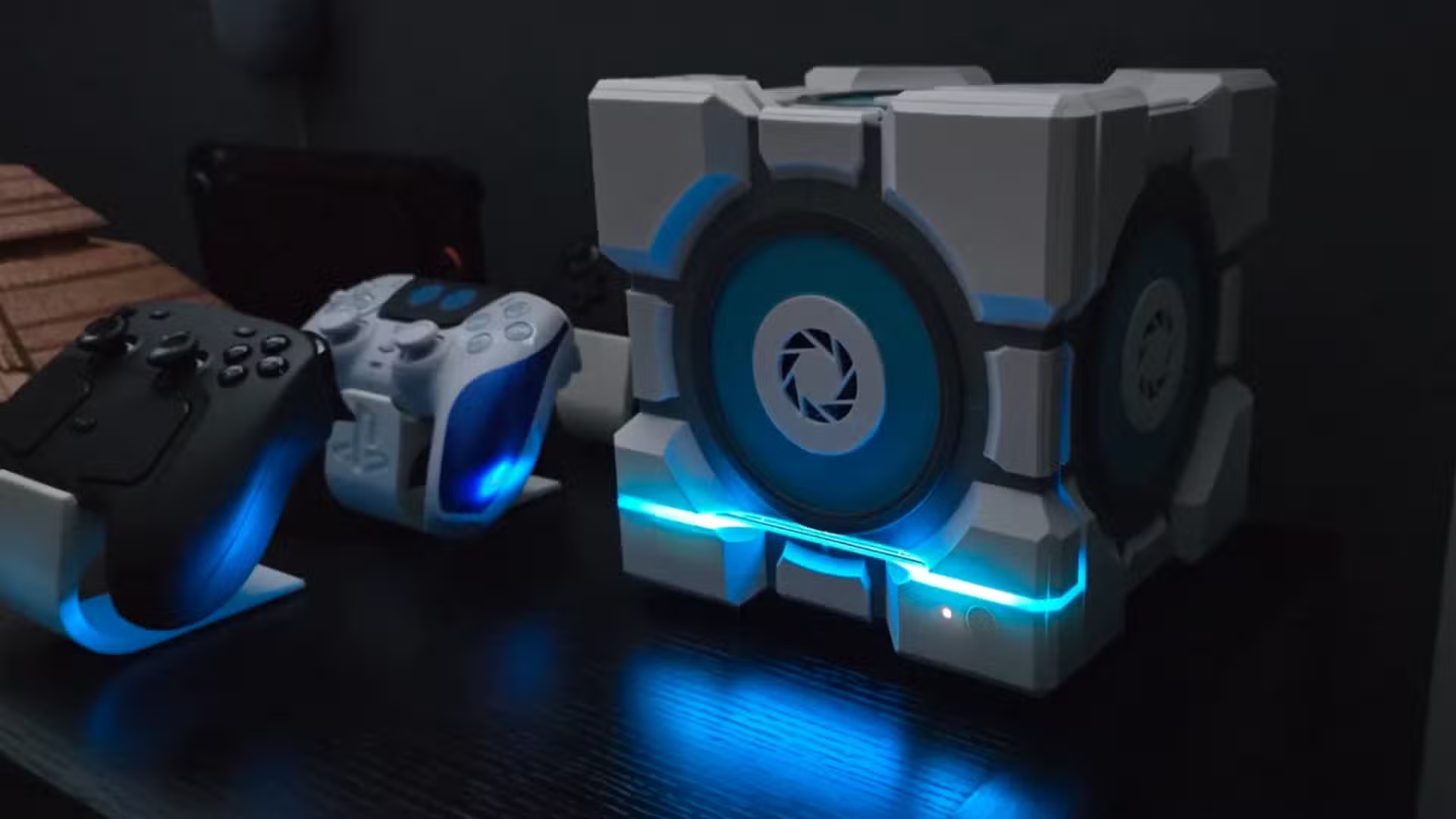
A Steam Machine owner has created two Portal inspired cases that can be produced with a 3D printer, giving Valve’s compact gaming PC the appearance of objects found inside Aperture Science test chambers.
The project includes designs based on the Weighted Companion Cube and the more common Weighted Storage Cube. Both sets of printing files are available at no cost, allowing people with access to a compatible 3D printer to build the cases themselves.
The designs arrived after a planned commercial Companion Cube accessory was cancelled over intellectual property concerns. That earlier product attracted significant attention and briefly became available for preorder, but development ended because permission had not been secured to use the Portal design.
The new community project is not being sold as a commercial accessory. It offers Steam Machine owners another way to customise the system while preserving access to its ports, cooling system, and front lighting.
Two Portal inspired designs are available
The Weighted Companion Cube version uses the familiar heart symbols associated with the object from the Portal games. The Weighted Storage Cube design replaces those hearts with Aperture Science markings, giving it the appearance of the standard cubes regularly seen throughout the test chambers.
Both designs wrap around the Steam Machine rather than replacing its internal structure. The case has been shaped to preserve the practical functions of Valve’s hardware while changing its exterior appearance.
| Design | Main visual detail | Intended style |
|---|---|---|
| Weighted Companion Cube | Heart symbols on the panels | Based on Portal’s well known companion object |
| Weighted Storage Cube | Aperture Science markings | Based on the standard test chamber cube |
| Rear section | Open layout | Preserves access to ports and ventilation |
| Front panel | Removable with cutouts | Leaves room for ports and the LED strip |
| Decorative openings | Hollow sections in the design | Provide some additional airflow |
The open rear section is especially important because the Steam Machine’s fan and several connections are located at the back. Covering this area could restrict airflow, increase internal temperatures, or make cables difficult to connect.
The removable front panel also contains openings for the system’s front ports. A gap allows the Steam Machine’s LED strip to remain visible after the decorative shell has been installed.
On the Storage Cube version, the Aperture Science symbol is hollow rather than completely solid. This choice adds visual detail while allowing a small amount of additional air to pass through the case.
The cancelled commercial accessory created room for fan projects
A commercial accessory company revealed its own Companion Cube design shortly after Valve announced the Steam Machine. The concept gained attention online, and preorders opened close to the computer’s release.
The product was later withdrawn because the company had not received permission to use the Portal intellectual property. No official replacement has been announced, leaving people who wanted the design without a ready made commercial option.
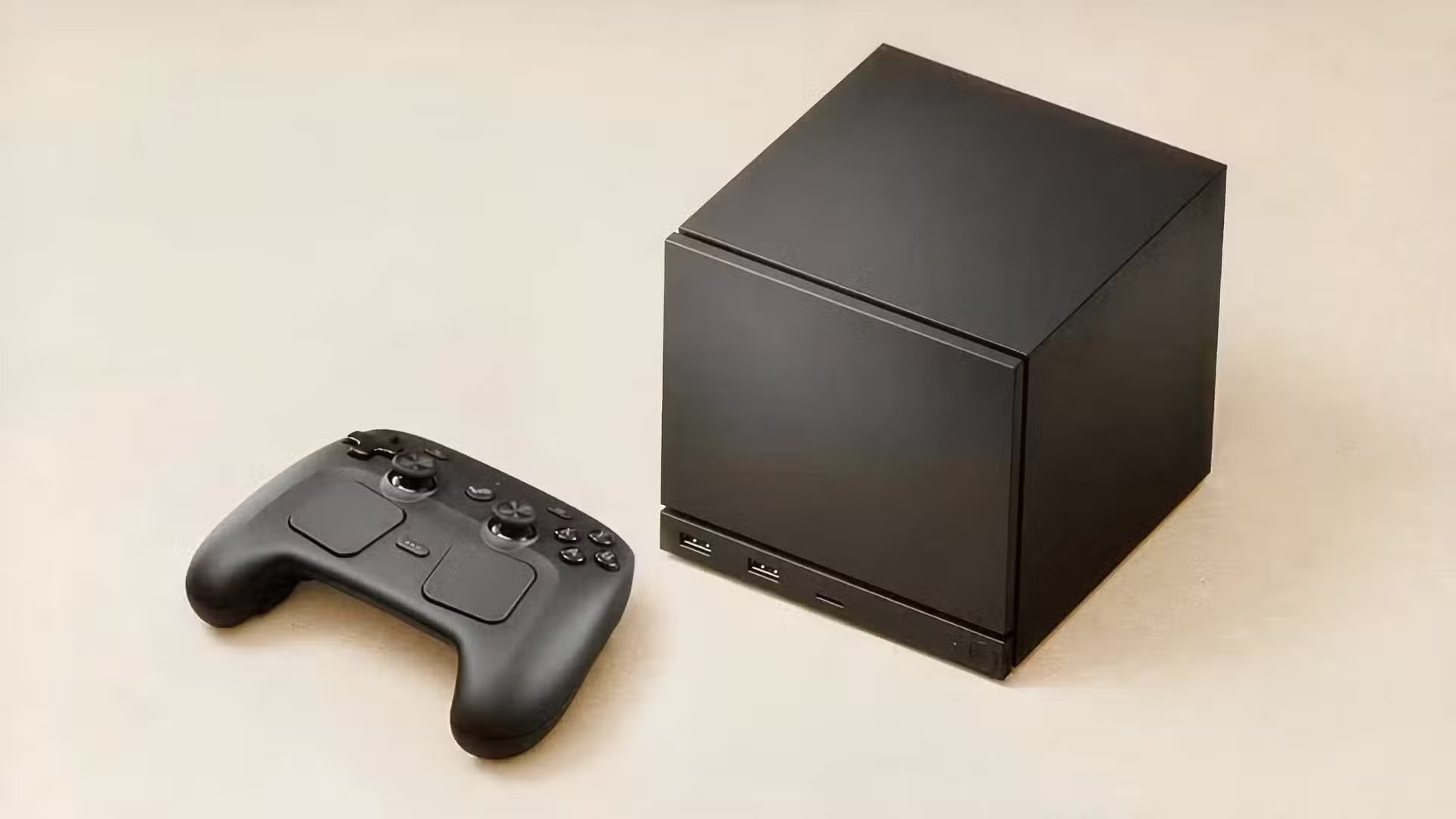
Community made projects have partly filled that gap. Portal has remained a popular subject among 3D printing enthusiasts, with thousands of fan created models covering characters, props, signs, and test chamber equipment.
A free printing project carries different practical and legal considerations from a product sold for profit. However, downloading a design does not guarantee that every use is permitted in every location. Anyone planning to sell printed versions should review the relevant intellectual property rules before doing so.
Printing the case still requires suitable equipment
The files may be free, but producing the shell requires access to a 3D printer, enough filament, and time to complete the individual pieces. Large decorative panels can take several hours to print and may need supports, sanding, painting, or other finishing work.
Print quality will depend on the printer, material, layer height, calibration, and assembly process. Builders should also check that each part fits correctly before operating the Steam Machine for long periods.
Ventilation should remain a priority. Even though the case includes an open rear and several cutouts, incorrectly printed or modified parts could obstruct airflow. Monitoring system temperatures after installation would help confirm that the decorative shell is not affecting cooling.
The Steam Machine is already attracting a growing accessory market. Other manufacturers are preparing alternative faceplates, including designs with electronic ink and dot matrix displays. Additional cases, stands, docks, and cosmetic parts are likely to appear as more systems reach buyers.
For Portal fans with access to a 3D printer, these cube cases provide a distinctive way to personalise the Steam Machine without waiting for an official themed accessory.



Discussion (0)
Be the first to comment.