



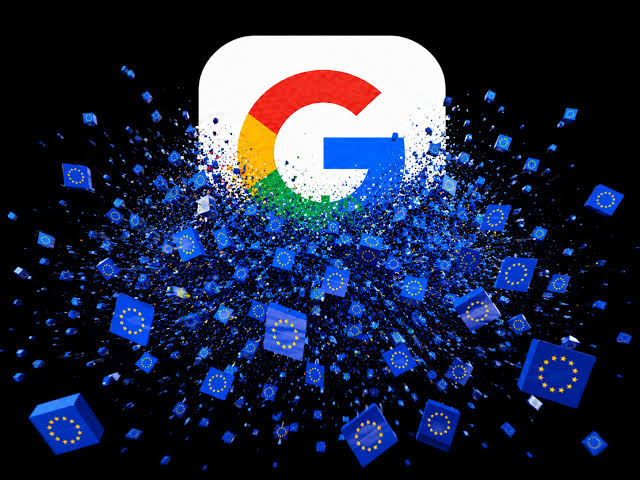
The European Union has issued binding requirements that will force Google to give competing artificial intelligence assistants broader access to Android features.
The measures are intended to reduce the advantages held by Google’s Gemini assistant on Android devices. Services such as ChatGPT and other eligible rivals could gain access to system controls, app information, device sensors and tools that allow actions to be completed across several applications.
The European Commission adopted the requirements under the Digital Markets Act on July 16, 2026. Google must provide access on fair terms and cannot charge AI providers for the Android interoperability covered by the decision. (Digital Markets Act (DMA))
| Requirement | What it could allow |
|---|---|
| System activation | Rival assistants could open through Android controls or voice commands |
| App interaction | Assistants could work with information from supported applications |
| Device access | Approved services could use sensors and selected system features |
| Actions across apps | Assistants could complete tasks involving several applications |
| Fair placement | Google cannot make rival services unnecessarily difficult to enable |
| Search data access | Eligible search competitors could receive anonymised activity data |
Rival assistants could complete more tasks across Android
Many third party AI assistants currently operate mainly inside their own applications. They can answer questions and generate content, but they may not have the same access to Android functions that Google provides to Gemini.
The new requirements are designed to narrow that gap. An eligible assistant could receive permission to open through a hardware control or voice command, interact with supported applications and carry out actions on the owner’s behalf.
This could allow an assistant to prepare and send an email, change an approved device setting, arrange transport or guide a purchase through several applications. The exact capabilities will depend on the permissions granted by the person using the phone and the technical support provided by each application.
Google cannot require a competing assistant to become the default service before it receives access to every eligible feature. It must also avoid placing unnecessary steps in the setup process that would discourage people from choosing an alternative.
Most of the required Android changes must arrive with Android 18 or by August 1, 2027, whichever applies under the final measures. A separate function allowing several assistants to detect their own activation phrases at the same time has a later deadline tied to Android 19 or August 1, 2028.
Device owners will control access to sensitive features
The measures do not give every AI assistant unrestricted access to Android phones. Permission from the device owner remains necessary before a service can use protected information or system functions.
Google may also apply reasonable security and privacy requirements when an assistant requests access to sensitive capabilities. Those conditions must be objective and must not unfairly favour Gemini.

This distinction is important because deeper system access can expose personal messages, location information, contacts, microphone input and information stored by applications. Wider competition could make assistants more useful, but it also increases the need for clear permission controls.
You should be able to decide which assistant receives access to each supported feature. Removing permission should also stop the service from continuing to use that capability.
Google must share selected Search data with competitors
A second binding decision covers information generated through Google Search. Eligible competing search engines will be able to request anonymised data involving queries, rankings, clicks and viewed results.
AI services that provide online search functions may also qualify. This could help rival companies improve result quality by studying how people interact with search pages.
The shared material will not include Google’s search algorithms or identifiable search histories. Google must remove direct identifiers, limit sensitive queries and use safeguards intended to reduce the risk of connecting data to a particular person.
Google may charge for providing the information, but the price must be based mainly on the additional cost of preparing and supplying it, along with a reasonable return. Its pricing structure must be completed by January 2027.
Google has warned that broader system access could create privacy and security risks. The European Union maintains that suitable safeguards can protect sensitive information while allowing fairer competition.
The practical effect will depend on how Google implements the requirements and how quickly rival developers adopt the new tools. Android owners in Europe could eventually gain a wider choice of assistants that can perform meaningful device actions rather than operating as isolated chat applications.



Discussion (0)
Be the first to comment.