


Elon Musk has said SpaceX is planning its computing business without expecting any sales to OpenAI, responding to recent comments from Sam Altman about potential overestimation of demand for AI chips and data center capacity.
The exchange comes as SpaceX expands its computing infrastructure, including its Colossus data centers, while major technology companies continue investing heavily in AI hardware.
Musk questioned OpenAI's demand outlook, suggesting that a company offering successful AI products should experience rapid growth in computing requirements.
His comments followed Altman's discussion of how cloud infrastructure providers may be counting demand from the same customers when planning their chip purchases.
The disagreement highlights growing uncertainty about whether the AI industry's planned infrastructure expansion accurately reflects future demand.
Musk Questions OpenAI's Demand Growth
Musk responded publicly after Altman discussed possible overcounting in the semiconductor supply chain.
In a post on X, Musk stated that SpaceX was assuming zero sales to OpenAI and suggested that weak demand growth would raise questions about the company's products.
The statement does not establish that OpenAI's demand is slowing. Instead, it reflects Musk's response to Altman's concerns about how infrastructure providers estimate future requirements.
Musk and Altman have a longstanding disagreement over OpenAI's direction and business structure.
Their latest exchange comes at a time when AI infrastructure spending has become an important subject for investors, chipmakers and cloud computing providers.
For companies building large GPU clusters, estimating future demand is essential because purchasing advanced accelerators and constructing data centers require substantial capital.
Sam Altman Warns About Double Counting AI Chip Demand
Altman's comments focused on the possibility that infrastructure providers are counting overlapping demand from major AI customers.
Companies that supply computing capacity, sometimes called neocloud providers, may independently estimate future demand from customers such as OpenAI and Anthropic.
However, those customers may eventually choose only some of the available providers.
As a result, multiple infrastructure companies could be planning capacity for the same potential workload.
This creates the possibility that combined chip orders exceed the amount of computing infrastructure AI developers ultimately require.
Altman reportedly raised similar concerns in discussions with Samsung officials.
He subsequently clarified that he continued to believe demand for AI computing and data center construction remained strong.
His concern was that the industry would not necessarily need to purchase every available chip or use every supplier's planned capacity.
That distinction is important because strong underlying demand can coexist with excessive infrastructure investment.
SpaceX Plans to Expand Colossus Data Centers to More Than 1.2 Million NVIDIA GPUs
SpaceX is pursuing its own large computing infrastructure expansion.
Following its reported public listing earlier in 2026, the company has described ambitions that extend beyond its established aerospace operations.
These include terrestrial data center infrastructure and proposed computing systems using satellite constellations.
The company's Colossus facilities are central to its computing strategy.
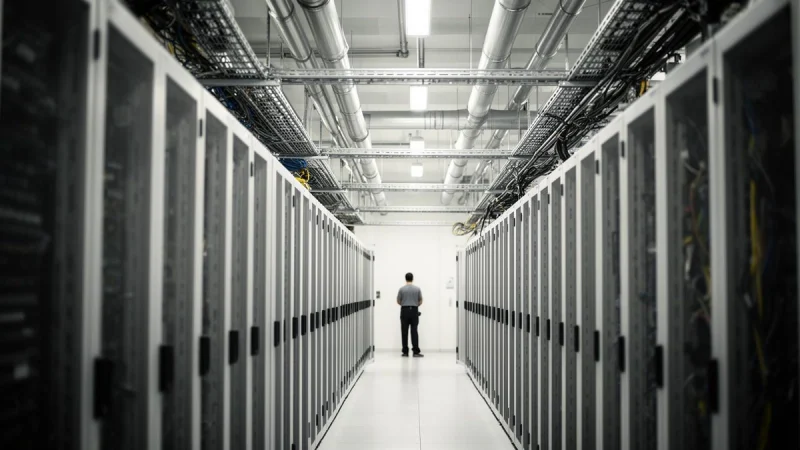
According to the report, the Colossus expansion aims to bring more than 1.2 million NVIDIA GPUs online by the end of 2026.
That figure represents a planned deployment rather than confirmation that all GPUs are already operational.
The report also describes computing capacity agreements involving Google and Anthropic.
Musk's statement indicates that SpaceX does not expect to depend on OpenAI purchases when planning its infrastructure business.
However, it does not provide a detailed breakdown of expected customers, contracted capacity or future revenue.
AI Infrastructure Expansion Raises Questions About Future Utilization
The disagreement comes as semiconductor manufacturers and infrastructure providers attempt to forecast demand for advanced AI accelerators.
NVIDIA remains a major supplier of GPUs used to train and run large AI models.
Meanwhile, cloud providers and specialist infrastructure companies continue building facilities designed to support increasingly demanding workloads.
The central issue is whether those investments will generate sufficient revenue once the planned infrastructure becomes operational.
If different suppliers count the same potential customer demand, the industry could overestimate the number of GPUs required.
Conversely, growing adoption of AI applications could increase computing requirements and support further infrastructure investment.
Musk has previously expressed skepticism about the long term prospects of smaller specialist cloud providers.
Altman's recent comments suggest a different concern: that infrastructure spending may remain justified overall while individual suppliers overestimate their share of future demand.
For now, neither executive has provided evidence establishing the actual size of any potential capacity surplus.
SpaceX's plan to assume no OpenAI sales illustrates its stated approach to customer forecasting, while the broader debate over AI computing demand remains unresolved.


Discussion (0)
Be the first to comment.