




DuckDuckGo says more people are looking for an AI free search experience after Google revealed a heavily redesigned version of Search at I/O. The privacy focused search company reported that traffic to its No AI search page more than tripled after Google’s May 19 keynote, with daily visits still running about 84 percent above normal.
Google’s new search direction puts generative AI much closer to the center of the experience. The company showed AI driven suggestions, conversational follow up questions, more personal results tied to services such as Gmail and Google Photos, and autonomous Search Agents that can handle tasks for you. For Google, this is part of a larger push to make search more helpful and more active. For some people, it is also a reason to look for something simpler.
That is where DuckDuckGo is trying to step in. Its No AI mode removes AI generated answers, turns off the chat interface, and filters out AI generated images from search results. DuckDuckGo does offer AI tools of its own, but the company says they are disabled when you use No AI mode.
| Search option | What it offers |
|---|---|
| Google’s new AI Search | AI suggestions, follow up questions, personal results, and task handling |
| DuckDuckGo No AI mode | Plain search without AI answers, chat, or AI generated images |
| DuckDuckGo mobile browser | Lets you disable Duck.ai and open with standard search |
| DuckDuckGo extensions | Can set No AI as the default search experience on supported browsers |
The timing shows a clear split in what people want from search. Some want faster AI summaries and more automation. Others want traditional links, fewer generated answers, and less personal data involved in the process. DuckDuckGo is appealing directly to that second group.
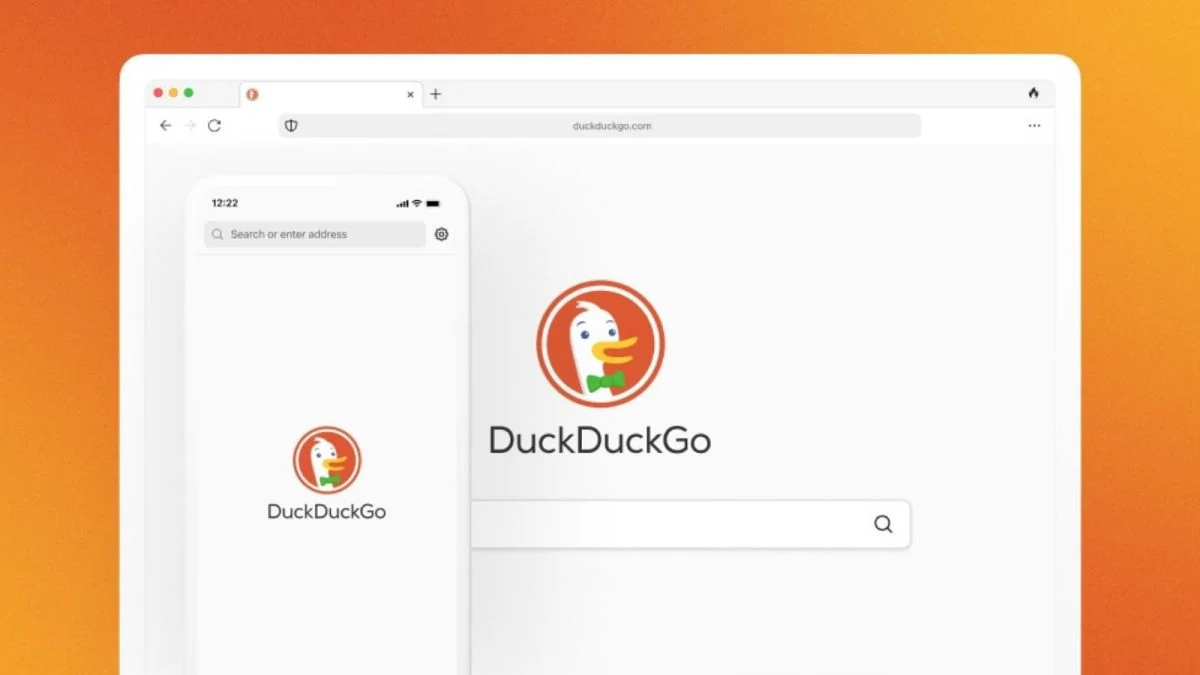
The company is also making No AI easier to use across browsers. While Apple devices already let you set DuckDuckGo as the default search engine, iOS and macOS do not currently offer a built in way to send searches directly to the No AI page. DuckDuckGo is trying to solve that through browser extensions for Chrome and Firefox, with plans to bring the option to its existing extensions for Chrome, Firefox, Edge, and Opera.
Mobile users can also turn off AI features in DuckDuckGo’s browser app. On Android, the menu is in the top right corner, while on iOS it is in the bottom right. From there, you can open Settings, go to AI Features, disable the Duck.ai chatbot, and set the app to open with a regular search interface by default.
DuckDuckGo’s pitch is not only about avoiding AI. It is also about privacy. The company says it earns money through private ads based on search keywords rather than tracking people across the web or selling location data. That gives it a different position from Google, especially as Google connects AI search more deeply with personal services.
DuckDuckGo also offers a paid VPN for people who want extra protection on public Wi Fi or other networks. The service costs $9.99 per month or $99.99 per year, with a seven day free trial for new subscribers.
Google is unlikely to slow its AI push. The company is clearly betting that Search needs to become more conversational and more useful as an assistant. But DuckDuckGo’s traffic jump shows that not everyone wants search to move in that direction.
For now, the message from search habits is simple. AI may be the future for some people, but a large number of searchers still want a clean page, normal results, and fewer automated layers between them and the web.



Discussion (0)
Be the first to comment.