



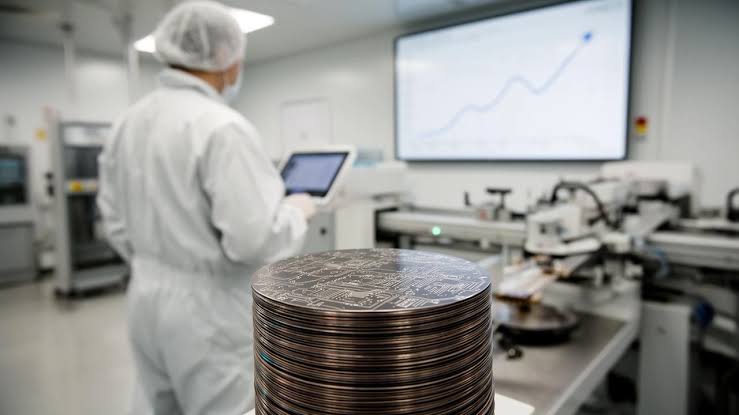
Major memory manufacturers have reportedly secured about $38 billion in advance payments, deposits and collateral as strong AI demand gives suppliers greater control over DRAM pricing and long term contracts.
Samsung, SK hynix and Micron are among the companies benefiting from this shift. Large customers are increasingly committing money in advance to secure future memory supply, reducing uncertainty for manufacturers while giving buyers better access to products that remain in limited supply.
These agreements can extend through 2030 and include mechanisms such as minimum pricing and guaranteed purchases. For memory companies, that creates a more predictable business model than the traditional DRAM market, where periods of oversupply have often led to sharp price declines.
The current advantage may not last indefinitely. Expanding manufacturing capacity and the eventual expiration of existing contracts could begin shifting negotiating power back toward customers around 2029.
Memory suppliers are locking in large commitments
| Area | Reported detail |
|---|---|
| Total advance payments, deposits and collateral | About $38 billion |
| Contract duration | Some agreements extend through 2030 |
| Micron contracted deposits | About $22 billion |
| Micron cash reportedly received | About $18 billion |
| Micron strategic customers | 16 |
| Samsung agreements | Reportedly include five year contracts |
| SK hynix | Payments reportedly secured from 10 customers |
| Key demand driver | AI infrastructure and data centers |
Micron provides one of the clearest examples of how the market has changed. The company has reportedly secured around $22 billion in contracted deposits from 16 strategic customers and has already received approximately $18 billion in cash.
Samsung has also entered longer term agreements and reportedly collected a portion of guaranteed payments in advance. SK hynix has received commitments from multiple customers as well.
The broader memory industry is therefore operating with much stronger financial protection than during earlier supply cycles.
AI demand has changed DRAM negotiations
High performance computing and AI systems require enormous quantities of memory.
Modern AI accelerators use HBM, while server processors are increasingly paired with large amounts of conventional DRAM and LPDDR memory. A single advanced AI rack can consume tens of terabytes of memory, and large cloud providers may deploy thousands of these systems.
That demand has encouraged major technology companies to secure future supply before additional capacity becomes available.
For memory makers, advance payments reduce the financial risk involved in expanding fabrication plants. New facilities and production equipment require billions of dollars in investment, and customer commitments make those projects easier to justify.
The agreements also protect suppliers from sudden price declines by establishing minimum purchase levels or pricing terms.
2029 could bring another change in negotiating power
The current market favors suppliers, but semiconductor cycles rarely remain unchanged for long.
Memory manufacturers are spending heavily to expand production. Those new facilities will eventually begin operating at higher capacity, increasing the amount of DRAM and HBM available to customers.
At the same time, some of today's advance payments and pricing protections will move closer to expiration.
If supply catches up with demand around 2029, customers could regain more negotiating leverage. They may no longer need to provide large deposits simply to guarantee access to memory, while increased competition between suppliers could put pressure on prices.
That outcome is not guaranteed. AI demand could continue growing quickly enough to absorb additional production, particularly as data centers adopt larger memory pools and more advanced accelerators.
For now, however, memory manufacturers have unusual visibility into future revenue and demand.
The roughly $38 billion tied to advance payments and contractual protections shows how dramatically the balance of power has shifted toward suppliers. The next major change may come when new factories reach full production and today's long term agreements begin approaching their final years.



Discussion (0)
Be the first to comment.