



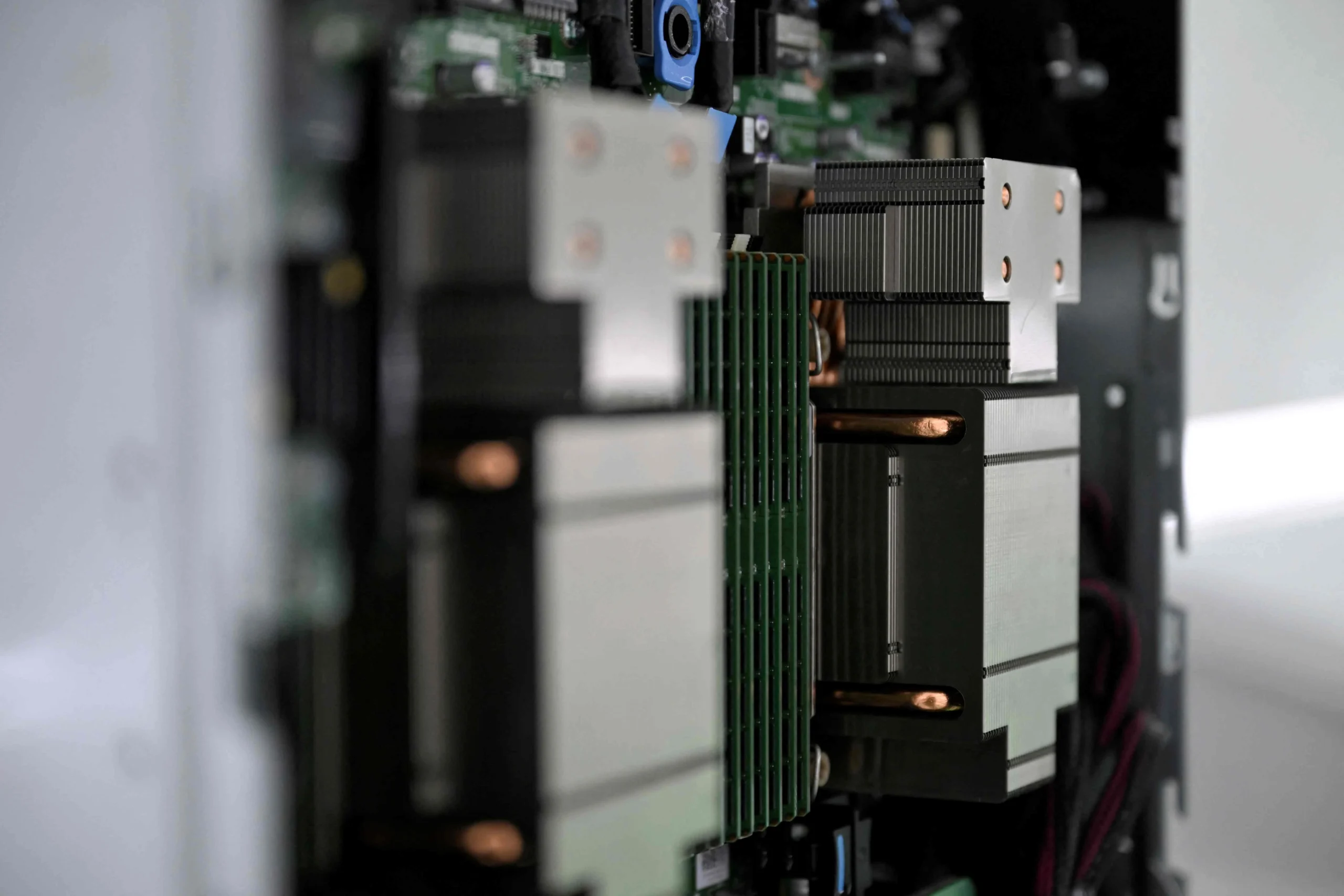
DeepSeek CEO Liang Wenfeng has argued that Huawei’s latest AI systems can replace NVIDIA’s GB200 and GB300 rack-scale platforms, even though the Chinese hardware reportedly requires four accelerators to match the performance of one NVIDIA GPU.
The comments came during an investor call in which Wenfeng discussed China’s shortage of advanced computing resources, DeepSeek’s own infrastructure limits and the company’s plans to expand its AI training capacity.
He said DeepSeek currently has computing resources equivalent to roughly 20,000 NVIDIA H100 GPUs, with much of that capacity added during the previous two months. The company is now expanding its infrastructure more aggressively.
Wenfeng also acknowledged that the gap between Chinese and US AI laboratories remains substantial. Training a model comparable in scale to the largest systems available today would reportedly require around 50,000 NVIDIA GB300 GPUs or approximately 200,000 Huawei Ascend 950 accelerators.
| Detail | Reported figure |
|---|---|
| DeepSeek’s current compute | Equivalent to about 20,000 H100 GPUs |
| GB300 GPUs needed for a very large model | Around 50,000 |
| Huawei Ascend 950 GPUs needed | Around 200,000 |
| Relative accelerator requirement | Four Huawei GPUs for one NVIDIA GPU |
| Estimated technology gap | About two years |
| Huawei system price premium | Potentially 50% to 200% higher |
DeepSeek remains limited by access to advanced compute
Wenfeng said DeepSeek’s available hardware restricts the size of the models it can train efficiently.
According to his comments, the company can currently work with models that activate around 10 billion parameters at a time. The largest models elsewhere in the industry may activate hundreds of billions of parameters during operation.
This distinction matters because active parameter count influences the amount of computation, memory and communication required during training and inference.
A mixture-of-experts model may contain a very large total number of parameters while activating only a portion for each input. Even with that structure, expanding the active portion requires more accelerator capacity and faster networking.
Wenfeng described access to hardware as the largest gap between Chinese AI companies and their US competitors. American firms can deploy enormous clusters of NVIDIA accelerators, while Chinese companies face export restrictions and a smaller supply of advanced domestic chips.
DeepSeek’s recent infrastructure expansion may improve its position, but the company still operates with fewer resources than the largest global AI laboratories.
Huawei’s Atlas 950 SuperPoD is presented as a complete rack replacement
Wenfeng expressed confidence in Huawei’s Atlas 950 SuperPoD, a large AI system built from Ascend accelerators and high-speed interconnect technology.
He claimed that the Huawei system can perform the same categories of work as NVIDIA’s GB200 and GB300 NVL platforms, including tasks with demanding latency requirements.
The comparison does not suggest equal chip-level efficiency. Wenfeng reportedly said four Huawei accelerators are required to provide the capability of one NVIDIA GPU.
That difference increases the number of chips, networking components and supporting systems needed for the same workload. It may also increase power use, cooling requirements and floor space.
However, Wenfeng argued that these disadvantages do not prevent Huawei’s rack-scale systems from serving as practical substitutes.
A complete system can compensate for weaker individual chips by connecting more of them together, provided the networking, memory and software stack can coordinate them efficiently.
Higher prices may be acceptable when NVIDIA hardware is unavailable
Huawei’s system may cost more than an equivalent NVIDIA platform.
Wenfeng suggested that a premium of 50 percent, 100 percent or even 200 percent may still be acceptable because domestic alternatives provide access to computing capacity that Chinese companies might otherwise be unable to obtain.
This reflects the unusual economics created by export controls.
In a normal market, buyers usually compare performance, energy use and price before selecting hardware. When the fastest product cannot be purchased in sufficient quantities, availability becomes more important.
A system that costs twice as much may still be valuable if it allows a company to continue training new models, retain engineering talent and compete in the market.
Domestic hardware also reduces reliance on foreign suppliers and lowers the risk that future restrictions will interrupt expansion plans.
Huawei therefore does not need to match NVIDIA perfectly to become strategically important. It needs to deliver enough performance, software support and supply for Chinese AI companies to keep operating.
NVIDIA still holds a major efficiency advantage
The reported four-to-one comparison shows that NVIDIA remains ahead at the accelerator level.
A smaller number of powerful GPUs can simplify networking and reduce the amount of communication needed during distributed training. This can improve efficiency because large AI workloads frequently exchange data between accelerators.
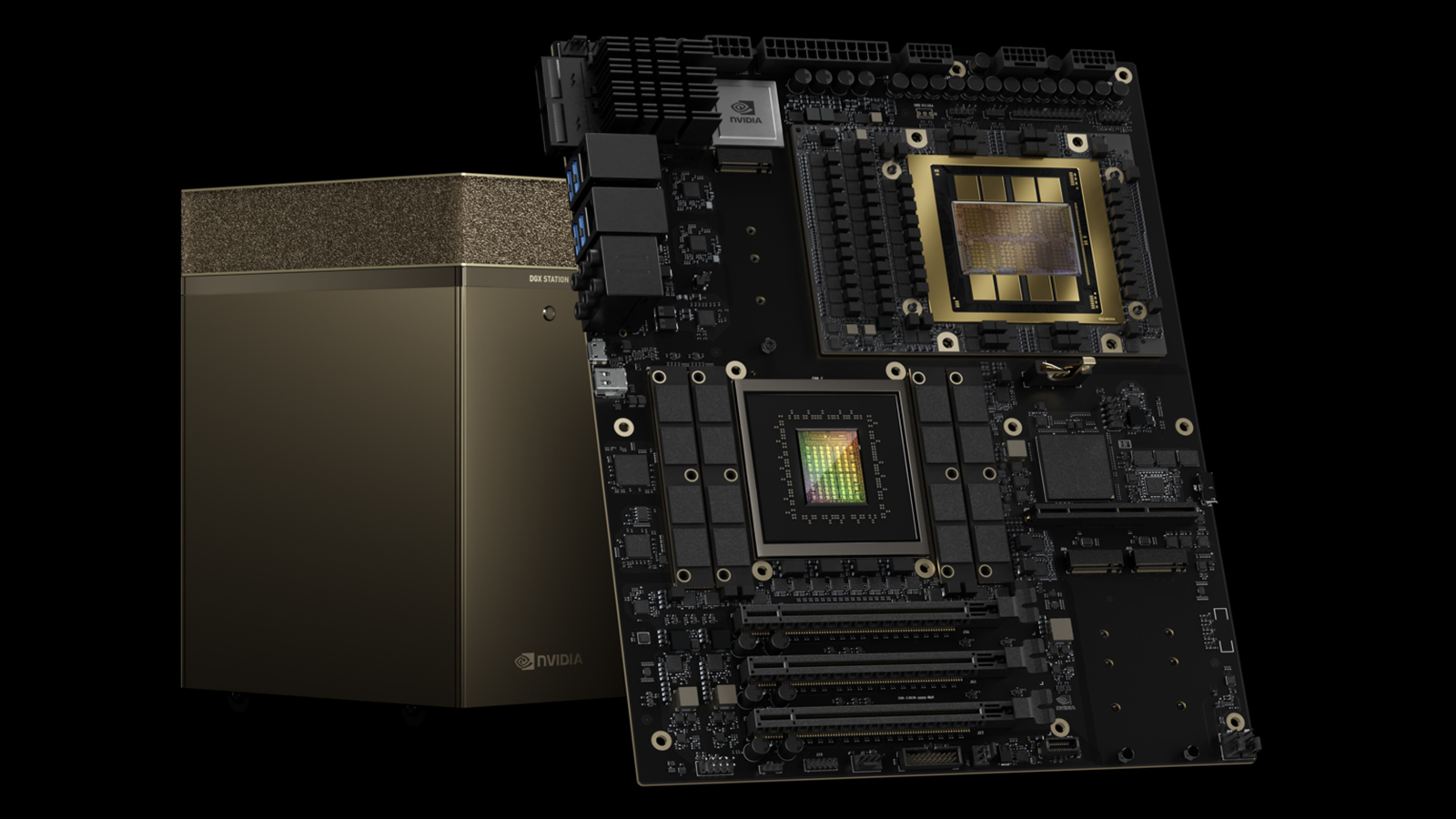
Using four times as many chips may create additional overhead even when the theoretical combined performance appears similar.
NVIDIA also benefits from its mature CUDA software ecosystem, optimised libraries and widespread support across AI frameworks.
Huawei has been developing its own software stack, but matching years of developer tools and application support remains difficult.
Wenfeng’s claim that NVIDIA is harming its own future appears to focus less on current performance and more on market consequences. Restrictions on access to NVIDIA products may encourage Chinese companies to invest faster in alternatives.
If domestic systems become good enough, customers that once depended entirely on NVIDIA may no longer return even when access improves.
Open models remain central to DeepSeek’s strategy
Wenfeng also reportedly emphasised that open development remains a central part of DeepSeek’s plans.
The company has gained international attention by releasing model weights and technical details more openly than several leading proprietary AI firms.
Open releases can help DeepSeek attract developers, researchers and companies that want to run models on their own infrastructure.
They can also strengthen the software ecosystem around Chinese hardware. If models are available openly, developers can optimise them for Huawei accelerators and other domestic platforms.
This creates a connection between DeepSeek’s model strategy and China’s hardware ambitions.
Better domestic chips support larger open models, while popular open models encourage more software work on domestic chips.
Data annotation is becoming another major bottleneck
DeepSeek is also increasing its focus on high-quality data annotation.
Wenfeng said the main limitation in this area is time rather than capital expenditure. Creating useful labelled datasets requires skilled people, careful review and repeated quality checks.
Competitors such as OpenAI and Anthropic began investing in this work earlier and with greater resources.
High-quality annotation can improve model reasoning, instruction following, factual accuracy and safety. It is especially important when preparing specialised datasets for post-training.
More hardware alone will not close the gap if the training data and human feedback are weaker.
DeepSeek therefore appears to be expanding several areas at once, including compute, domestic hardware support, open model development and annotation.
The investor call presents a mixed picture. NVIDIA remains significantly ahead in individual GPU performance, while DeepSeek still faces a large resource deficit. At the same time, Huawei’s rack-scale systems may provide a workable domestic alternative, allowing Chinese AI companies to continue expanding even under tighter access to US hardware.

Discussion (0)
Be the first to comment.