



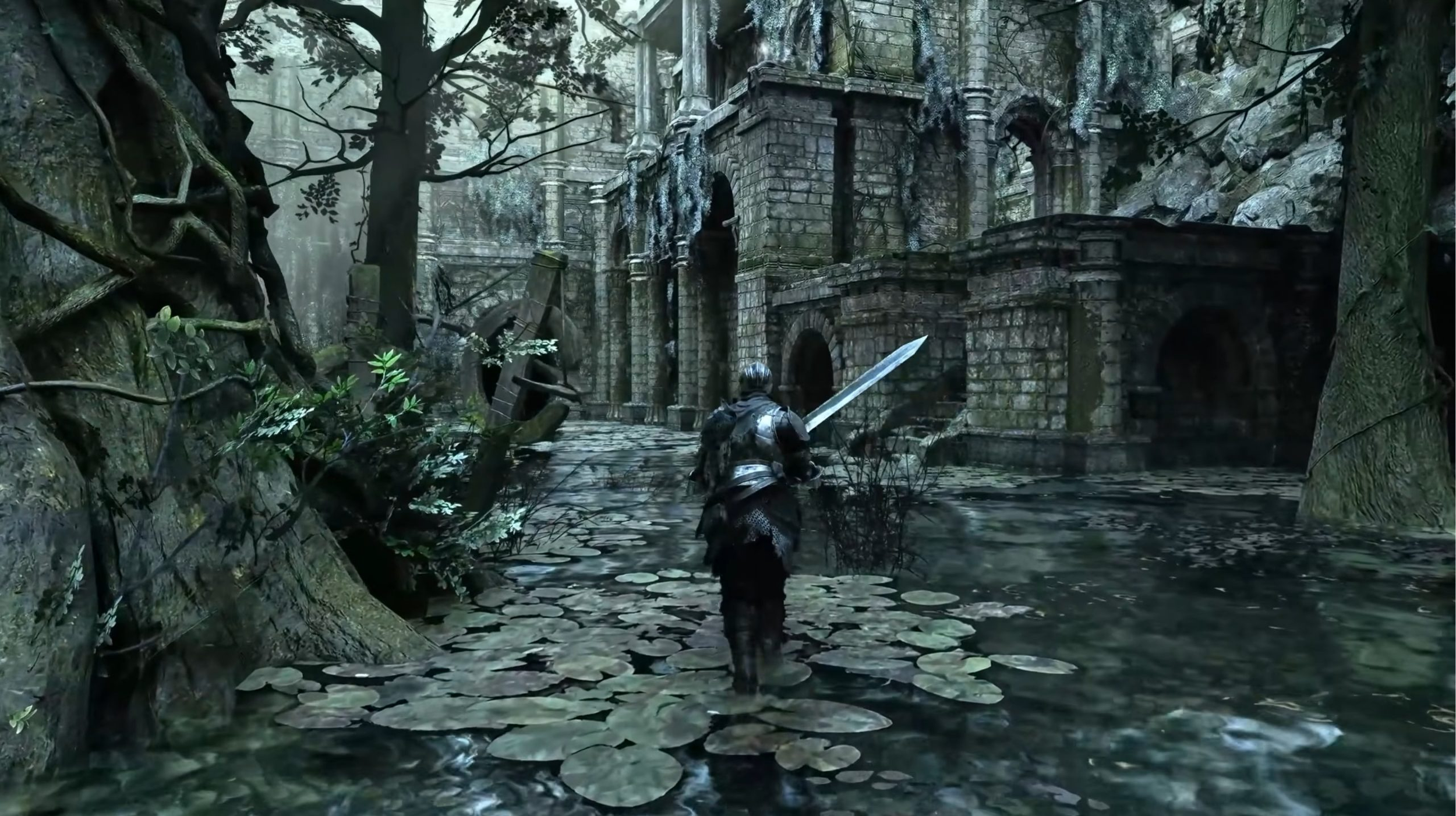
Dark Souls 3 is getting a major visual overhaul on PC through an upcoming path tracing mod that combines fully reworked lighting with NVIDIA DLSS 5.
The project comes from the same developer behind the Dark Souls 2 Lighting Engine mod and is designed to modernize the 2016 game without changing its underlying art direction.
A new showcase focuses on the Crucifixion Woods, demonstrating how path traced lighting can significantly change the appearance of environments, water, shadows and indirect illumination.
More than 80 percent of the game is already prepared
Development appears to be well advanced.
The creator says more than 80 percent of Dark Souls 3 has already been added to the project's BVH structure, which is required for path traced geometry and lighting calculations.
The mod is currently expected to release near the end of 2026.
| Feature | Current information |
|---|---|
| Game | Dark Souls 3 |
| Main upgrade | Path traced lighting |
| DLSS support | NVIDIA DLSS 5 |
| Game coverage | More than 80 percent added to BVH |
| Expected install size | Around 3 to 4 GB |
| Planned release | End of 2026 |
| AMD support | Ray tracing capable Radeon GPUs |
| Default denoiser | NRD SH |
| Mod compatibility | UXM, ME2 and ME3 supported |
Despite containing far more geometry than the earlier Dark Souls 2 project, the expected installation size is relatively modest at around 3 to 4 GB.
The developer estimates the Dark Souls 3 version contains roughly ten times as much geometry as the previous mod.
DLSS 5 is being applied before upscaling
The latest demonstration also uses NVIDIA DLSS 5.
According to the project information, DLSS 5 is applied before the final upscaling stage, allowing its neural rendering features to be used with a lower performance cost.
The combination is intended to improve visual quality while keeping path tracing practical on current hardware.
The new lighting changes are particularly visible in areas with water, vegetation and complex indirect illumination.
Path tracing allows light to bounce more naturally through scenes instead of relying entirely on the original game's baked or manually placed lighting techniques.
NRD SH will remain the default denoiser
The mod will not rely exclusively on NVIDIA Ray Reconstruction.
Its Lighting Engine uses an advanced version of NRD SH as the default denoiser.
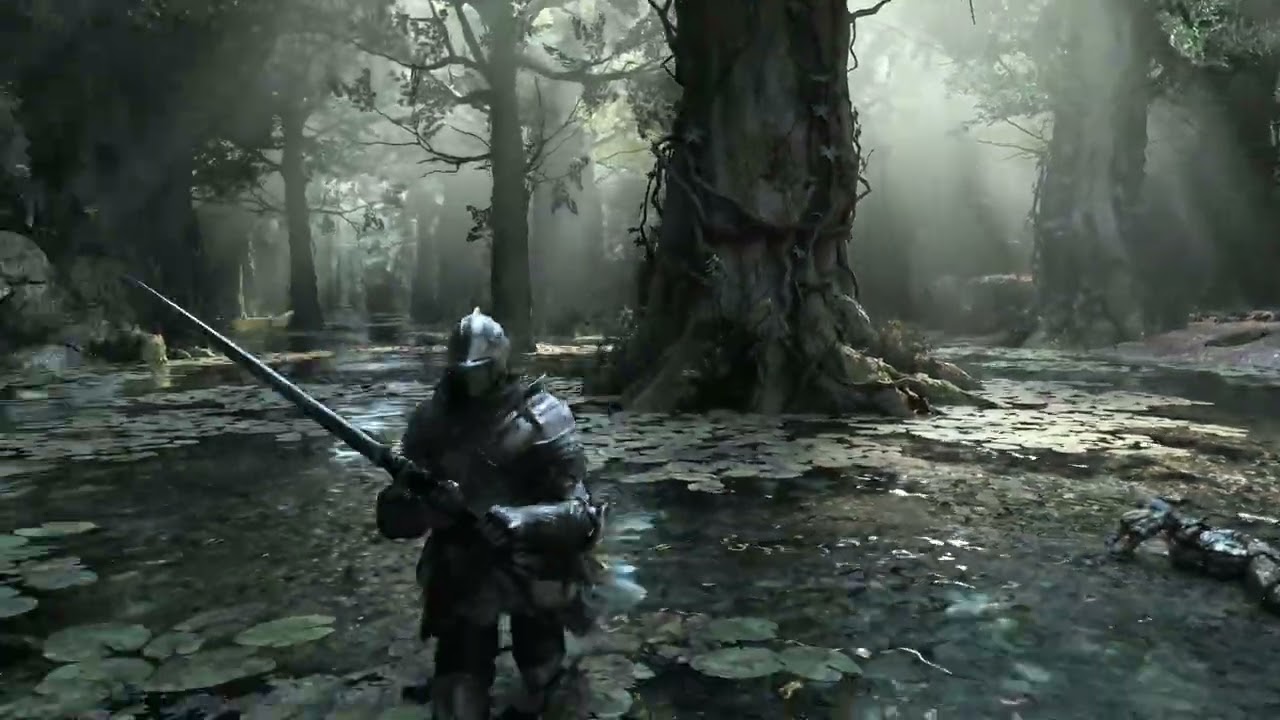
The developer says the technique can offer image quality comparable to Ray Reconstruction while being significantly easier to run on older RTX hardware.
That matters particularly for RTX 20 and RTX 30 series GPUs, where Ray Reconstruction can introduce a considerable performance penalty.
Players with those cards are therefore expected to get better overall performance from NRD SH.
Performance should remain close to the Dark Souls 2 mod
Despite the increased geometric complexity, the developer expects performance to remain broadly similar to the earlier Dark Souls 2 Lighting Engine.
There is one important difference.
A system capable of running the Dark Souls 2 mod with DLSS Quality may need to switch to DLSS Balanced in Dark Souls 3.
That suggests the newer project will still be more demanding, even if the overall performance target remains comparable.
A reasonably powerful GPU will therefore be required.
AMD graphics cards with hardware ray tracing support are also expected to work, although the developer warns that lower end hardware may struggle.
Lighting will be adjusted for gameplay
The project is not attempting to make every area physically accurate at the expense of playability.
The developer plans to add artificial lights in situations where fully realistic illumination would make locations too dark or difficult to navigate.
Unlike the Dark Souls 2 version, torch mechanics will not be a major priority in the default lighting configuration.
Players should therefore be able to progress normally without constantly carrying a torch simply because path tracing creates darker environments.
Lighting and post processing will also continue to be adjusted during testing.
Mod compatibility is still being tested
The project is expected to work with UXM, ME2 and ME3.
Online and Seamless compatibility have not yet been confirmed.
The developer says those combinations remain untested, so players should not assume that every multiplayer or overhaul configuration will work when the mod launches.
That could become important because Dark Souls 3 has a large PC modding community and many players combine several modifications at once.
The mod gives Dark Souls 3 a substantial visual upgrade
Dark Souls 3 still retains a strong visual identity a decade after release, but its lighting technology naturally reflects the hardware and development techniques of its time.
The path tracing project targets that specific limitation rather than rebuilding the game from scratch.
With most of the game already processed, DLSS 5 support demonstrated and a release currently planned for the end of the year, the project is moving beyond an early technical experiment.
If development continues as planned, PC players will soon have access to a version of Dark Souls 3 with substantially more advanced lighting while preserving the environments, assets and core presentation of the original game.



Discussion (0)
Be the first to comment.