




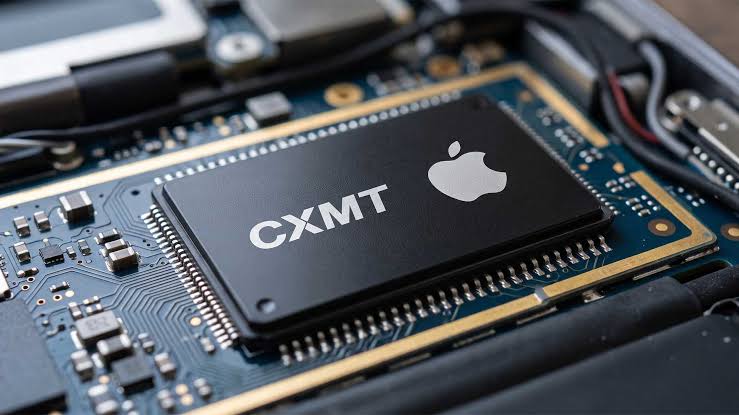
Chinese memory manufacturer CXMT is preparing its supply chain for DDR6 production several years before the new standard is expected to reach the commercial market.
DDR6 memory is currently expected to begin entering products between 2028 and 2029. CXMT’s early preparations suggest that the company wants to compete from the start of the transition rather than wait for Samsung, SK hynix, and Micron to establish their positions.
A key part of the effort involves changing how memory package substrates are manufactured. DDR6 is expected to require more complex multilayer designs than the substrates used for DDR4 and DDR5, making current production methods less efficient as the number of circuit layers increases.
Package substrate supplier Haesung DS has reportedly joined CXMT’s supply chain after passing qualification tests for DDR5 substrates during the first quarter of 2026. The company is now considering a panel based manufacturing process that may be better suited to the requirements of DDR6.
DDR6 package designs may require a new production method
DDR4 and DDR5 memory can use relatively simple single layer or low layer package substrates. These designs can be produced using a lower cost method known as Reel to Reel manufacturing.
In Reel to Reel production, substrate material moves continuously through manufacturing equipment. The approach is efficient for simpler packages and can support high output at a relatively low cost.
DDR6 is expected to introduce more complex multilayer substrates. While Reel to Reel equipment could theoretically continue producing these packages, efficiency and profitability may decline as more circuit layers are added.
A panel based process handles substrates in larger flat sections and can provide greater control over complex layouts. It may be better suited to packages requiring more layers, finer wiring, and tighter tolerances.
| Memory generation | Expected substrate complexity | Likely production approach |
|---|---|---|
| DDR4 | Single or low layer | Reel to Reel |
| DDR5 | Single or low layer | Reel to Reel |
| DDR6 | More complex multilayer design | Panel based process under consideration |
| DDR6 commercial period | Expected around 2028 to 2029 | Preparation already underway |
Moving to a new method will require equipment investment, process development, testing, and qualification. The benefit is that CXMT could enter DDR6 production with a supply chain designed around the new standard instead of adapting older equipment after launch.
Haesung DS adds packaging expertise to CXMT’s supply chain
Haesung DS is described as a major package substrate manufacturer and a recent addition to CXMT’s supplier network.
The company reportedly passed CXMT’s quality qualification process for DDR5 package substrates during the first quarter of 2026. That approval gives it an opportunity to support current production while preparing for the more demanding requirements of DDR6.
A supplier must consistently meet electrical, thermal, mechanical, and reliability standards before its substrates can be used in commercial memory products. Qualification can take considerable time because defects in the package may reduce memory yields or create failures after installation.
Early cooperation gives CXMT and Haesung DS more time to test multilayer substrate designs before DDR6 enters mass production.
It also reduces the risk that packaging becomes a bottleneck after the memory chips themselves are ready.
CXMT wants to narrow the gap with established memory companies
CXMT has expanded its presence in the DRAM market, but its products still face performance and consistency challenges compared with leading alternatives.
Previous assessments of its DDR5 memory have shown weaker performance than SK hynix products at equivalent advertised speeds. Variations between production batches have also made overclocking results less predictable.
DDR6 gives CXMT another opportunity to improve its position. A major memory transition can change competitive relationships because every manufacturer must develop new chips, packaging, controllers, and production processes.
Samsung and SK hynix already have extensive experience, large customer networks, and advanced manufacturing capacity. CXMT therefore needs to prepare early if it wants to avoid entering the market significantly later.
| CXMT opportunity | Main challenge |
|---|---|
| Early DDR6 supply chain preparation | Competing with established manufacturers |
| Growing demand during DRAM shortages | Maintaining consistent product quality |
| New packaging process | Protecting production yields |
| More supplier relationships | Managing complex qualification work |
| Potential large customer interest | Meeting performance and reliability standards |
The DDR6 transition alone will not guarantee success. CXMT must still deliver competitive speeds, efficiency, yields, and pricing.
Current DRAM shortages are increasing interest in CXMT
The global memory shortage has made alternative suppliers more valuable to device manufacturers.
Companies that cannot secure enough DRAM from Samsung, SK hynix, or Micron may consider CXMT as a way to reduce supply risk. Even when its products do not lead in performance, additional supply can help manufacturers keep production lines running.
This gives CXMT an opportunity to expand relationships before DDR6 arrives.
The company’s growing visibility is therefore linked partly to market conditions. Tight supply encourages customers to qualify more vendors rather than depend on a small group of established manufacturers.
That does not mean every customer will adopt CXMT memory. Large technology companies usually conduct extensive validation covering performance, reliability, power use, security, and long term availability.
Passing those tests would be an important step toward wider international adoption.
Apple is reportedly evaluating CXMT memory
Apple has reportedly explored a possible relationship with CXMT and tested its memory products.
No confirmed supply agreement has been announced, and the report does not state whether the testing relates to DDR5, mobile DRAM, or future DDR6 products.
Testing by a large customer would still be significant. Apple purchases memory in very large volumes and applies strict qualification standards across its supply chain.
A successful agreement could help CXMT improve manufacturing discipline and gain credibility with other customers.
However, geopolitical restrictions, export controls, and regional sourcing policies could complicate any partnership between a Chinese memory producer and a major US technology company.
Panel based production could protect DDR6 yields
Manufacturing yield measures how many usable products emerge from a production line.
As substrate designs become more complex, the risk of defects increases. A problem in one circuit layer can make the complete package unusable, raising costs and reducing output.
The panel method may offer better control for multilayer DDR6 substrates, helping manufacturers maintain acceptable yields as complexity rises.
It may also support larger production volumes once the process is mature. The transition itself could be expensive, however, and early output may still face lower yields while equipment and materials are optimised.
CXMT’s decision to begin preparing several years ahead of commercial DDR6 products gives the company time to resolve these issues.
DDR6 could weaken the existing market structure
Samsung, SK hynix, and Micron currently dominate the global DRAM market. Their size gives them advantages in research, production scale, customer relationships, and investment capacity.
CXMT is unlikely to overturn that structure quickly, but DDR6 could provide a route to gradual market share growth.
If the company reaches mass production close to its larger competitors, it could compete for customers seeking lower prices or more diverse supply chains. Delays would make that much harder because device manufacturers often choose suppliers long before products launch.
The report does not provide a timetable for CXMT’s DDR6 mass production. It only indicates that supply chain and packaging preparations are already underway.
That early work shows the company is treating DDR6 as a strategic opportunity. Its eventual impact will depend on whether the panel based manufacturing process improves yields and whether CXMT can deliver memory that matches the performance, reliability, and scale expected by major customers.



Discussion (0)
Be the first to comment.