



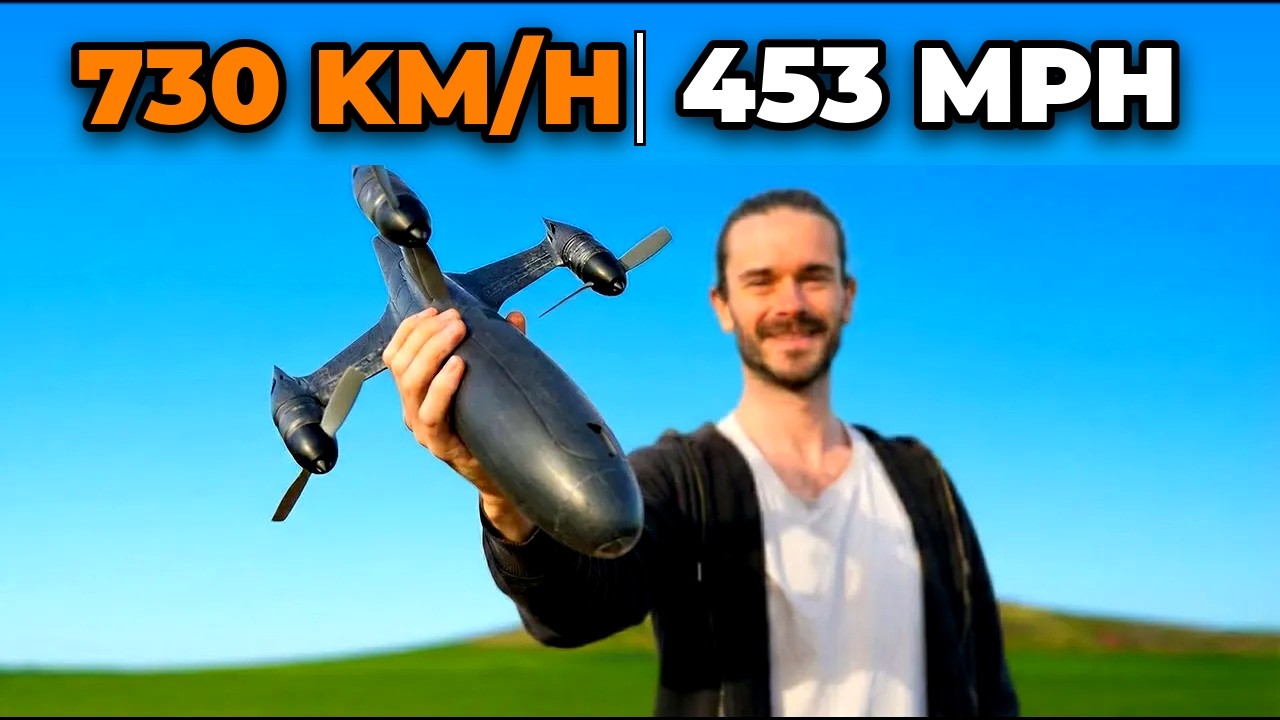
A custom built drone has unofficially broken the drone speed world record after reaching a peak speed of 453 mph during a test run. The drone, called Blackbird, was built by Aidan and Ben from Drone Pro Hub, who were trying to reclaim the record after previously reaching 388 mph in December 2025.
Their older record was later beaten by the Bell father and son team, whose Peregreen V4 drone reached 408 mph. That pushed the Drone Pro Hub team to redesign parts of Blackbird and test a new set of custom propellers built specifically for high speed flight.
Custom carbon fiber propellers helped Blackbird reach extreme speeds
The most important upgrade appears to be the drone’s handmade carbon fiber propeller blades. These blades use an aggressive high pitch design, meaning they are angled more toward the direction of flight than normal propellers. That helps at very high speeds because the blades can work more efficiently with the airflow instead of fighting against it.
There is a tradeoff. High pitch propellers are not as effective at low speeds, so the drone needs more battery power during takeoff and slower flight. But for a speed record attempt, that is acceptable because the drone only needs to survive the launch and then accelerate hard.
| Drone record detail | Result |
|---|---|
| Drone name | Blackbird |
| Team | Aidan and Ben from Drone Pro Hub |
| Previous team record | 388 mph |
| Record they wanted to beat | 408 mph |
| Peak speed in test | 453 mph |
| Wind adjusted downwind speed | 419 mph |
| Final averaged result | 425 mph |
| Main upgrade | Custom carbon fiber propellers |
The propellers also use sawtooth leading edges. These small tooth like shapes help control airflow over the blade surface. They generate tiny vortices that keep air moving more cleanly across the propeller and help delay stall at steeper blade angles. In simple terms, the design helps the propellers stay useful at speeds where normal blades may lose efficiency.
The first test run reached 393 mph, but the drone lost connection at high speed. The team blamed antenna geometry, Doppler effect, and signal overload. At that speed, recovery was not realistic. Even if the drone lost signal near the controller, it could still travel a long distance before crashing.
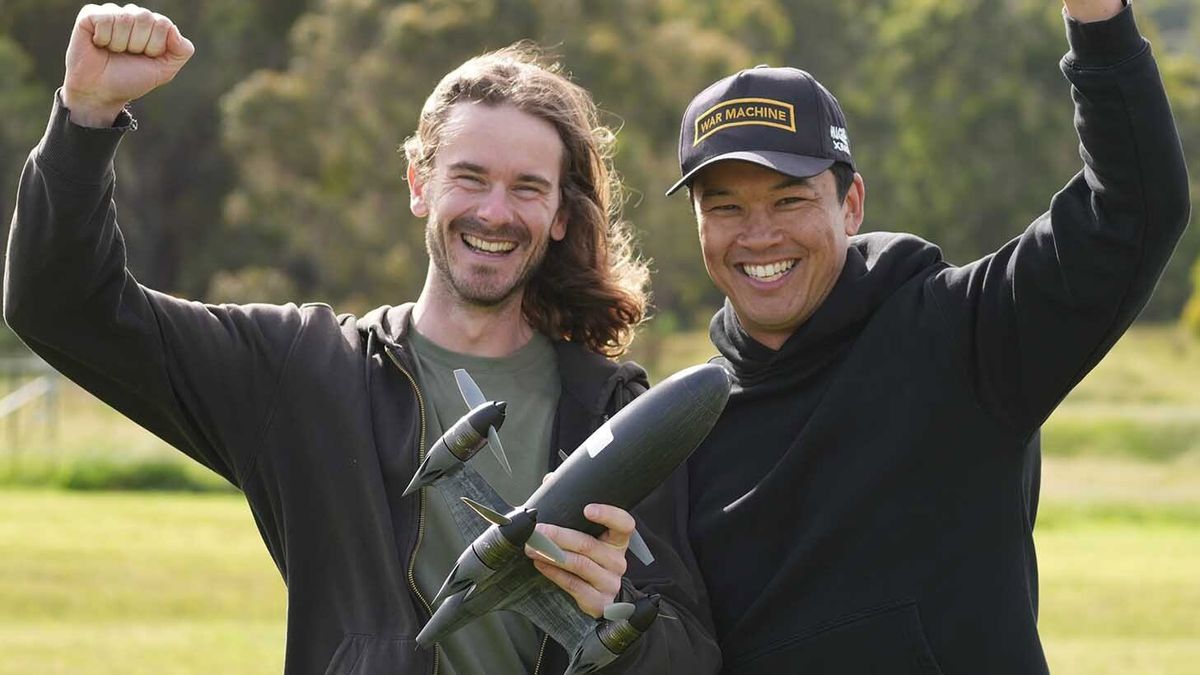
The team had one more drone and another set of updated propellers, so they tested again the next day. Weather was getting worse, and they only had enough batteries for two runs. They performed one downwind flight and one upwind flight to get a fairer average.
The downwind run reached 453 mph, which was far above their original target. After accounting for a 34 mph tailwind, the actual airspeed was estimated at 419 mph. The upwind run reached 397 mph. Averaging both results gave them 425 mph, enough to beat the current record, though still short of their hoped for 434 mph target.
The second drone also suffered damage after landing hard when its batteries ran flat just above the ground. The damage appears repairable, which means the team may be able to prepare for an official record attempt later.
This is not a normal consumer drone achievement. Blackbird is a custom speed machine built for one purpose, and its design pushes the limits of control, signal reliability, battery output, aerodynamics, and propeller strength. But the result shows how far small drone builders can go with careful engineering and a willingness to experiment.
For now, the 453 mph run is unofficial. Still, even the wind adjusted and averaged results suggest the team has built one of the fastest drones ever flown. The next step is turning that test success into an officially recognized record.

Discussion (0)
Be the first to comment.