



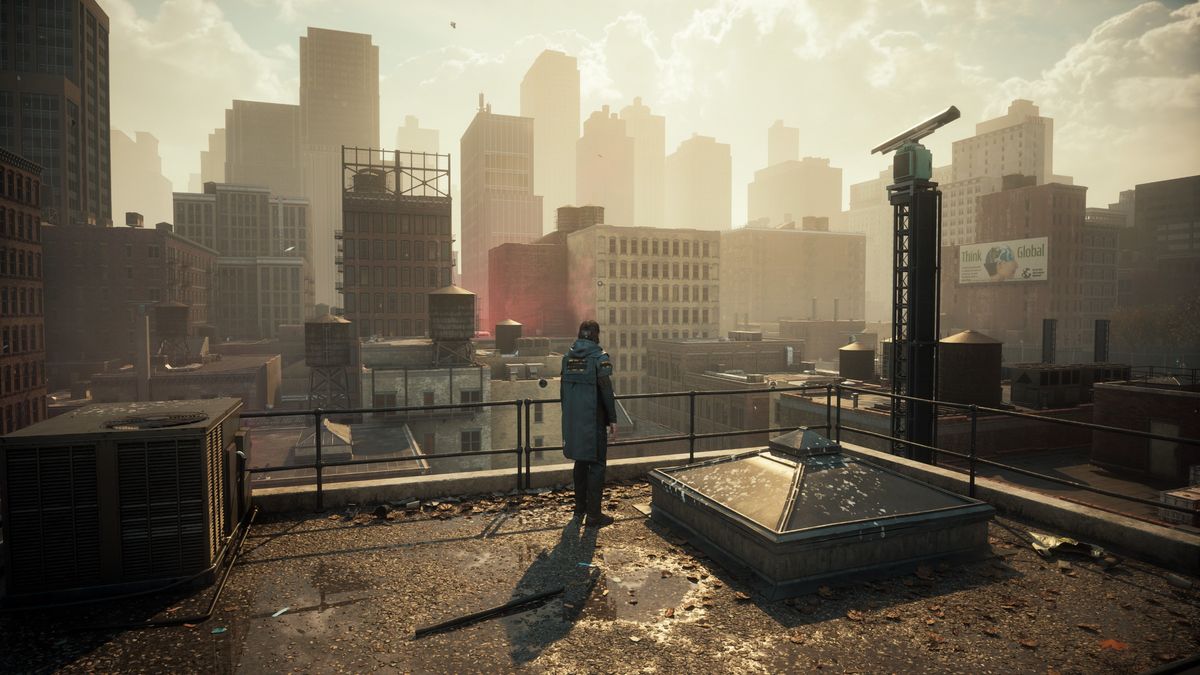
Control Resonant appears to scale unusually well to lower graphics settings, with the game maintaining much of its visual identity even when running at the Low preset with ray tracing disabled.
Testing at 1080p and 1440p shows that the game still retains strong lighting, detailed city environments, convincing reflections and a clear sense of scale despite major graphics options being reduced.
That could be useful for players using midrange or older graphics cards, since lowering settings can improve performance without making the game look dramatically worse during normal gameplay.
Strong art direction helps Low settings hold up
A large part of the result appears to come from the game’s art direction rather than individual graphics effects.
Manhattan’s streets maintain strong contrast between bright and dark areas, while building shapes and environmental details remain easy to distinguish. Background structures are often covered by haze, which reduces visible detail at long distances but also fits naturally with the atmosphere.
Non ray traced puddles still provide convincing reflections, while the lighting continues to give streets and interiors a distinctive appearance.
| Setting or feature | Result at Low |
|---|---|
| Resolution tested | 1080p and 1440p |
| Graphics preset | Low |
| Ray tracing | Disabled |
| Environmental detail | Remains visually convincing |
| Lighting | Strong contrast retained |
| Reflections | Screen based effects still look effective |
| Character faces | Noticeably simpler in some cutscenes |
| Texture quality | Some signs and surfaces show lower resolution |
| Performance | Improves compared with higher presets |
The visual differences become easier to notice when examining individual objects or cutscenes closely.
Character faces can look more artificial at minimum settings, while certain shop signs and environmental textures lose clarity. These compromises are more visible in still images than during movement.
Destructible environments still remain effective
Control Resonant also relies heavily on environmental movement and destruction.
Objects and broken fragments can react to Dylan as he moves through the world, while combat sends debris across rooms and streets. These effects help keep scenes visually active even when more demanding rendering options are disabled.
The important point is that lowering the graphics preset does not remove the broader visual design of the world.
Buildings, lighting, particle effects and environmental interaction continue working together, so the game still looks coherent rather than stripped down.
That is particularly useful in an action game where you spend much of your time moving quickly instead of examining individual textures from close range.
Lower settings could make the game accessible to more PCs
Players with less powerful hardware may therefore have more flexibility than expected.
Dropping from higher presets can provide additional performance while keeping the overall presentation close enough that the compromise may be difficult to notice during regular play.
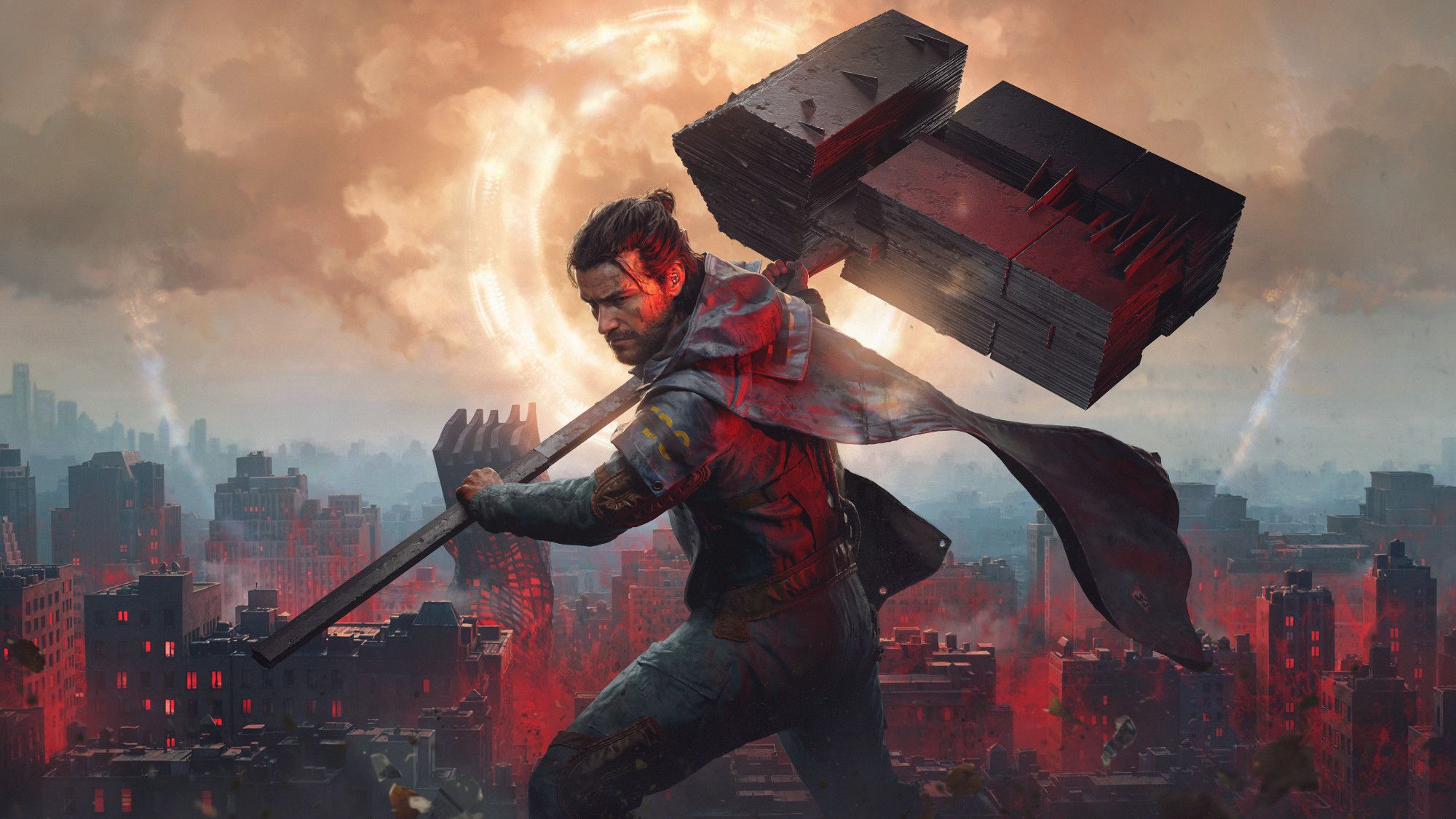
That matters at a time when newer high end graphics cards remain expensive and many players are keeping older hardware for longer.
Low settings have traditionally been associated with heavily reduced shadows, flat lighting, blurry textures and visibly simplified environments. Control Resonant shows that a well designed graphics pipeline can preserve much of a game’s appearance even after demanding effects are reduced.
The result suggests that maximum settings are not necessary to experience the game’s strongest visual qualities. Higher presets still provide better textures, character rendering and advanced lighting, but players focused on smoother performance may be able to reduce settings substantially without losing the atmosphere that defines Control Resonant.


Discussion (0)
Be the first to comment.