



Chinese companies are reportedly paying huge premiums for older Nvidia AI hardware as enforcement against chip smuggling tightens and legal import channels remain blocked. Servers built around Nvidia’s five year old A100 accelerator are now selling for as much as 600,000 Chinese Yuan, or roughly $82,000, after prices tripled in recent months.
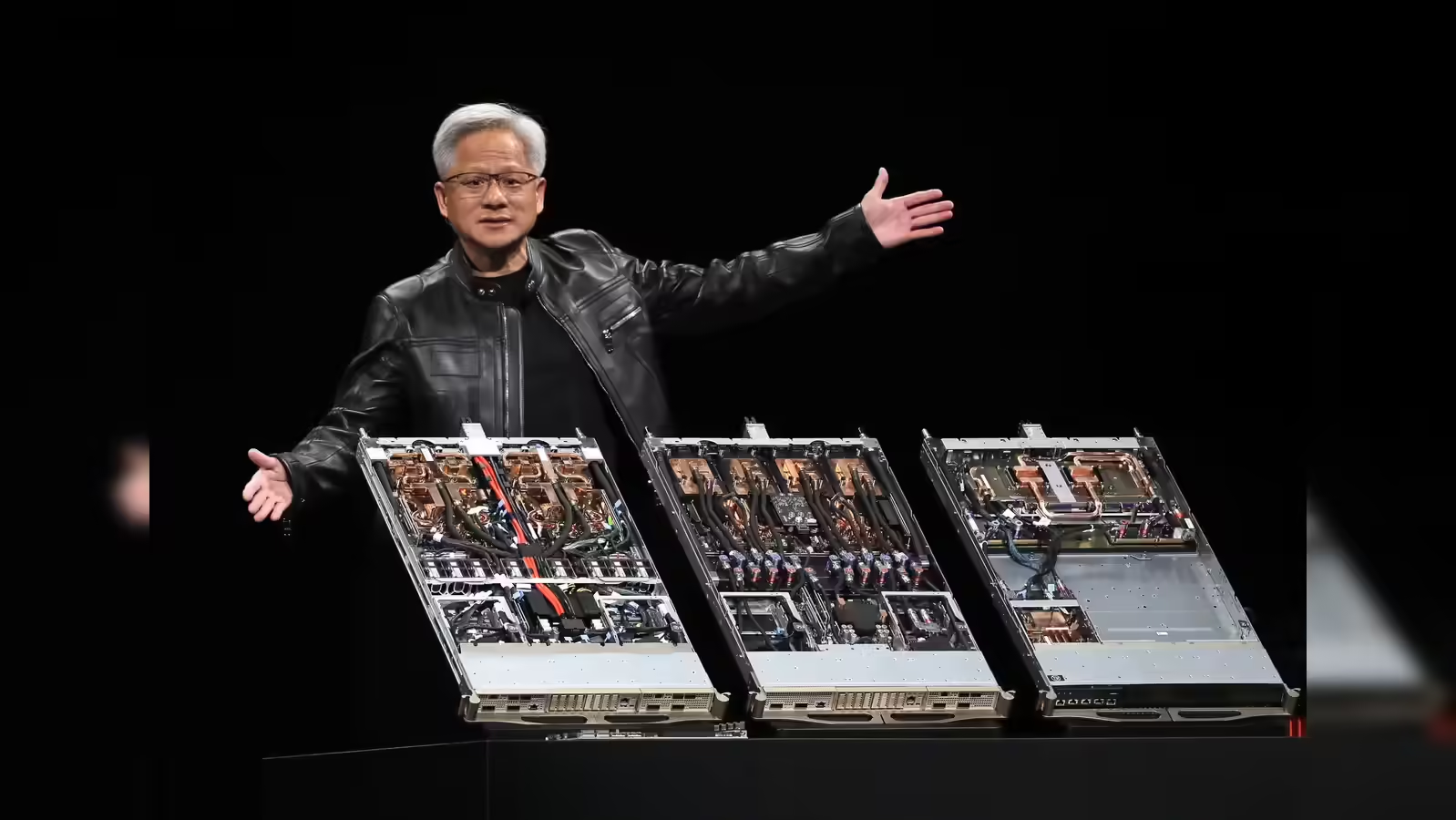
The shortage is pushing buyers toward aging data center hardware, modified gaming GPUs, and expensive black market systems. Nvidia’s newest restricted products are even harder to obtain, with some high end AI servers reportedly selling for more than $1 million in China.
The situation shows how difficult it has become for Chinese companies to access powerful AI hardware as supply routes narrow from both sides.
Older Nvidia A100 Servers Are Becoming Far More Expensive
The Nvidia A100 launched in 2020, but it remains valuable for AI training and inference workloads. With newer Nvidia accelerators facing export restrictions, older A100 systems have become a major target for buyers who still need access to CUDA based computing.
A server based on A100 hardware was reportedly available for around 200,000 Chinese Yuan late last year. That price has now climbed as high as 600,000 Chinese Yuan, reflecting the shortage of suitable alternatives.
| Hardware type | Reported previous price | Reported current price |
|---|---|---|
| Nvidia A100 server | About $22,300 | Up to $82,000 |
| RTX 6000 Pro workstation GPU | About $5,580 | Up to $14,500 |
| Nvidia DGX B300 system | Near $400,000 in the US | More than $1.1 million in China |
Some buyers are also turning to gaming graphics cards that can be adjusted for certain AI inference tasks. These cards cannot fully replace dedicated data center accelerators, but they offer another route for organizations unable to secure official enterprise hardware.
Smuggling Crackdowns Are Reducing Available Supply
The sharp price increase follows tougher enforcement against routes that had previously helped move restricted Nvidia systems into China. Authorities in several regions have opened investigations into suspected re-export and smuggling activity involving AI servers.
As those channels become more difficult to use, traders have fewer ways to supply Chinese buyers with restricted Nvidia products. That has raised prices across the secondary market and made GPU rental costs more expensive inside China.
The higher prices are also changing how companies plan AI infrastructure. Buyers that once relied on lower cost imported hardware may now need to delay expansion, rent capacity at higher rates, or look for domestic alternatives.
Huawei Is Trying to Fill the Gap
Huawei is positioning its Ascend 950PR as a domestic option for AI inference workloads. The accelerator could help Chinese companies reduce their reliance on imported Nvidia hardware, but supply remains limited and the surrounding software ecosystem is still developing.
Nvidia’s CUDA platform has years of software support, developer tools, libraries, and optimized applications behind it. Moving workloads to another platform can require time, code changes, retraining, and new engineering work.
That makes it difficult for domestic chips to absorb all of the demand created by restricted imports in the short term.
Rising Memory Costs Add Another Problem
The AI hardware shortage is also being made worse by higher DRAM and high bandwidth memory prices. AI systems need large amounts of fast memory, and demand from data centers is already affecting prices across the wider PC hardware market.
Until domestic hardware production grows or import rules change, older Nvidia systems are likely to remain extremely valuable in China. For companies that depend on Nvidia’s ecosystem, the cost of accessing AI computing power may continue to rise.



Discussion (0)
Be the first to comment.