



China’s attempt to build a serious homegrown gaming graphics card has taken an important step forward, but early performance tests show it still has a long way to go. Lisuan Tech’s LX 7G100, a locally developed GPU aimed at gamers, has been tested across several modern PC titles and failed to match Nvidia’s older GeForce RTX 4060 in most cases.
The result matters because the LX 7G100 is not being positioned as a low cost experiment. It is priced at around $485, which places it close to the GeForce RTX 5060 Ti 16GB in the current market. That makes the performance gap harder to ignore, especially for buyers who want the best frame rates for their money.
Testing showed that the LX 7G100 could run many modern games at 1080p, but it often trailed well behind established cards from Nvidia, AMD, and Intel. The RTX 4060 was between 20 percent and 70 percent faster in the tested games, while the Radeon RX 6600 XT and Intel Arc B580 also stayed ahead in many results.
The card did manage playable frame rates in some titles. Cyberpunk 2077, Horizon Zero Dawn, Marvel’s Spider Man Remastered, and Hogwarts Legacy were among the games where the LX 7G100 showed that it can handle modern workloads. However, it struggled more clearly in titles such as Forza Horizon 5, Assassin’s Creed Shadows, and Red Dead Redemption 2, where it had trouble keeping frame rates consistently above 60 FPS.
| Graphics card | Market position in the test |
|---|---|
| Lisuan Tech LX 7G100 | China developed gaming GPU, but weak for its price |
| GeForce RTX 4060 | Older Nvidia card that still performed much better |
| Radeon RX 6600 XT | Older AMD option that stayed ahead in many games |
| Intel Arc B580 | Budget focused card that also beat the LX 7G100 in several tests |
| GeForce RTX 5060 Ti 16GB | Similar price range, but much stronger overall value |
The biggest positive for the LX 7G100 is not raw speed. It is compatibility. Chinese graphics cards have often struggled with drivers, game support, and basic reliability in modern titles. This card appears to be a better effort on that front, with support for a wide range of AAA games and Microsoft WHQL certification. That means Lisuan Tech has made progress where earlier domestic GPU efforts often fell short.
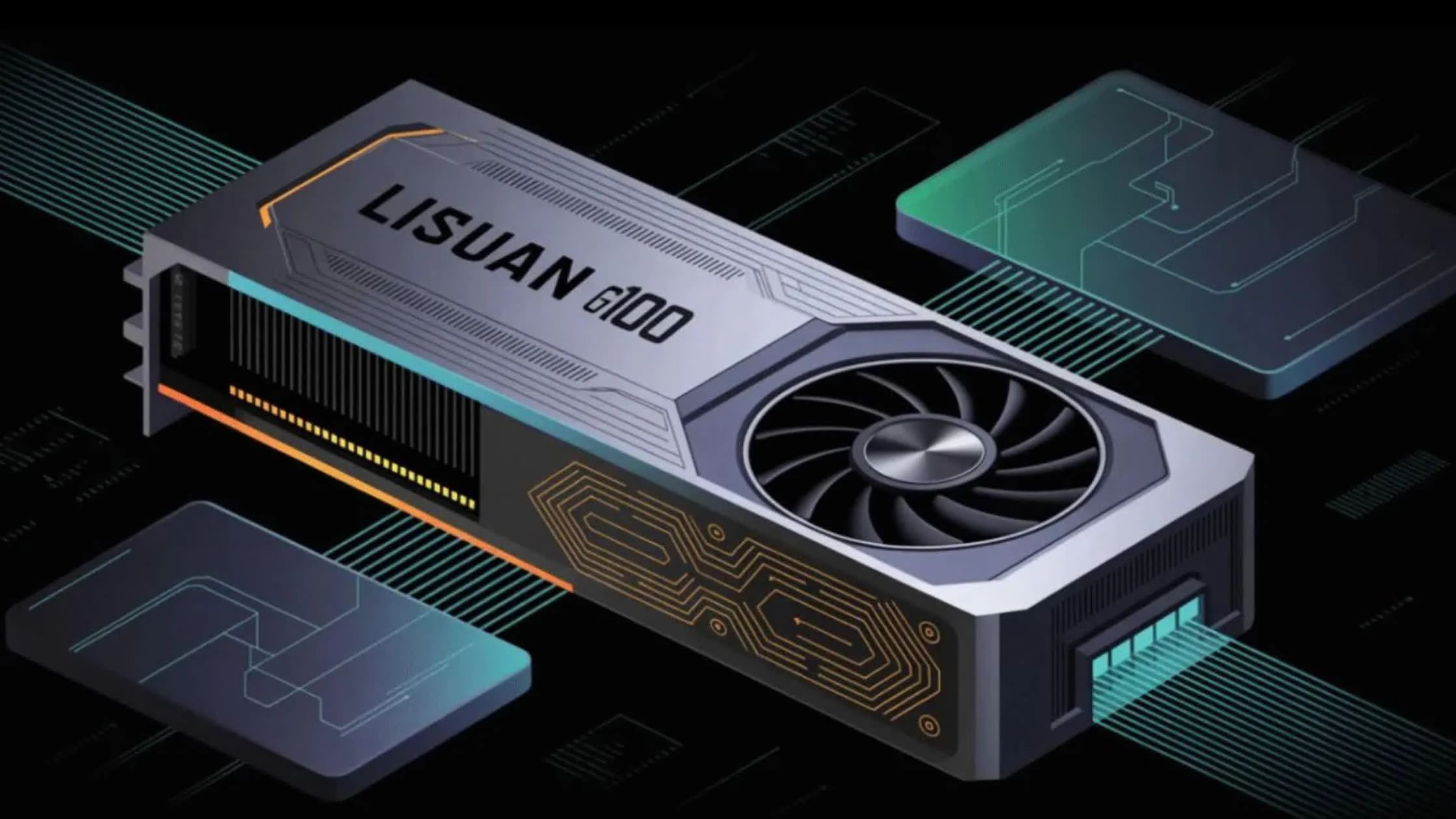
Still, driver maturity and compatibility are only part of the story. Gaming GPUs live or die by performance and pricing. At nearly $500, the LX 7G100 has to compete with cards that are faster, better supported, and already trusted by PC gamers. That is a difficult position, even for buyers who may want to support domestic hardware.
The benchmark results also show how hard the GPU market is to enter. Nvidia, AMD, and Intel have years of driver development, developer support, and software features behind them. Matching that ecosystem is just as difficult as building the chip itself.
For China’s semiconductor industry, the LX 7G100 is still a meaningful product. It proves that a domestic company can ship a gaming GPU that runs modern titles out of the box. That alone is a step forward. But for everyday gamers, the current value is weak.
The LX 7G100 looks more like a foundation for future progress than a card most buyers should choose today. It shows ambition and improving software support, but its performance and price make it hard to recommend against cheaper and faster alternatives.
Discussion (0)
Be the first to comment.