



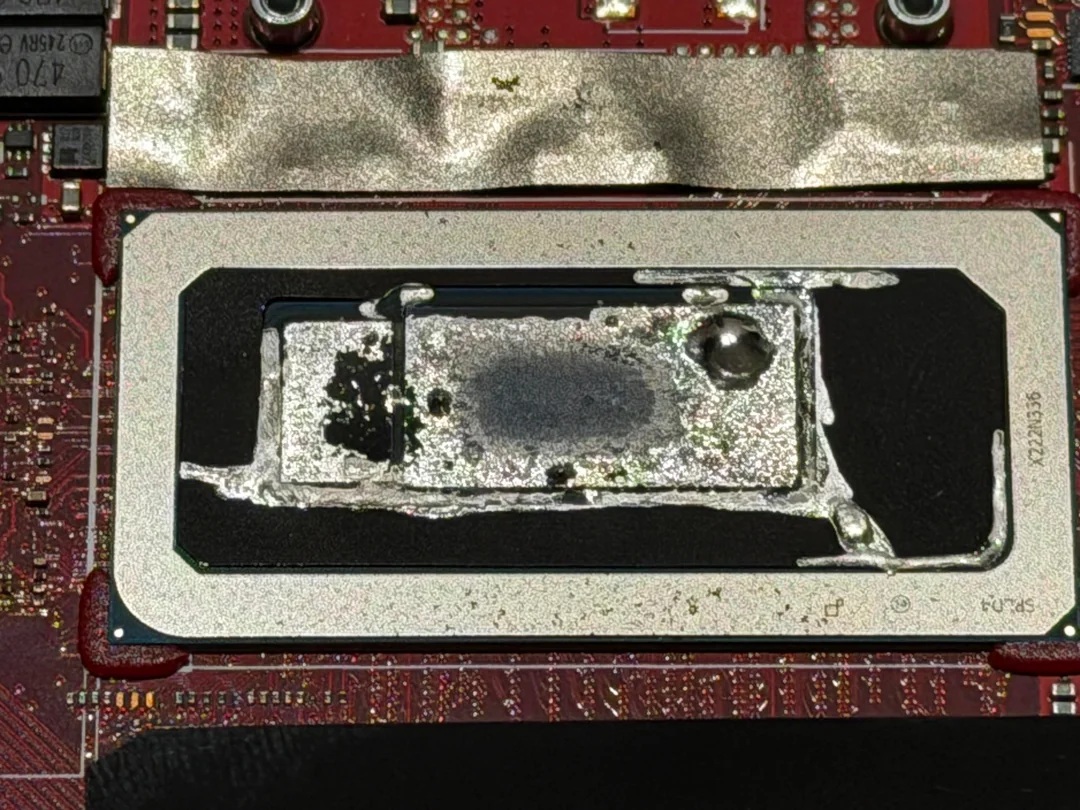
An ASUS Zephyrus M16 owner has reported serious corrosion around the laptop's cooling system after opening the machine to investigate unexpected shutdowns and suspected overheating.
The laptop, purchased in February 2023, had not reportedly been subjected to unusually heavy gaming or sustained engineering workloads. After the system powered off, the owner disassembled it to replace the thermal interface material and discovered visible damage around the heatsink and exposed silicon.
The case centers on the use of liquid metal, a high performance thermal compound that can improve heat transfer but carries additional risks because it is electrically conductive and chemically reactive.
| Detail | Reported information |
|---|---|
| Laptop | ASUS Zephyrus M16 |
| Purchase date | February 2023 |
| Reported problem | Shutdown and suspected overheating |
| Thermal material | Liquid metal |
| Visible damage | Heatsink and processor die area |
| Temporary replacement | G900 thermal paste |
| Planned replacement | PTM7950 |
| Reported result after repaste | Up to 3x higher FPS in games |
Liquid metal can react with certain metals
Liquid metal compounds commonly contain gallium, which gives them strong thermal conductivity but also makes them more difficult to use safely than conventional thermal paste.
Gallium can react aggressively with aluminum and may damage unsuitable surfaces over time. For that reason, liquid metal is generally paired with compatible cooling surfaces such as nickel plated copper or pure copper.
Laptop manufacturers often use barriers and gaskets around the processor to reduce the risk of the material moving outside the intended contact area.
The report claims that additional material around the liquid metal may also have contributed to the visible damage. However, the supplied evidence does not establish exactly which substance caused the corrosion, so it would be premature to state that ASUS intentionally used an abrasive chemical responsible for the damage.
The liquid metal itself remains one possible cause because of its reactive properties.
PTM7950 offers a less risky alternative
The owner decided to remove the existing thermal material and temporarily repaste the system using G900 thermal paste while waiting for PTM7950.
PTM7950 is a phase change thermal material that has become popular for CPUs and GPUs because it can provide strong thermal performance without the electrical conductivity and handling risks associated with liquid metal.
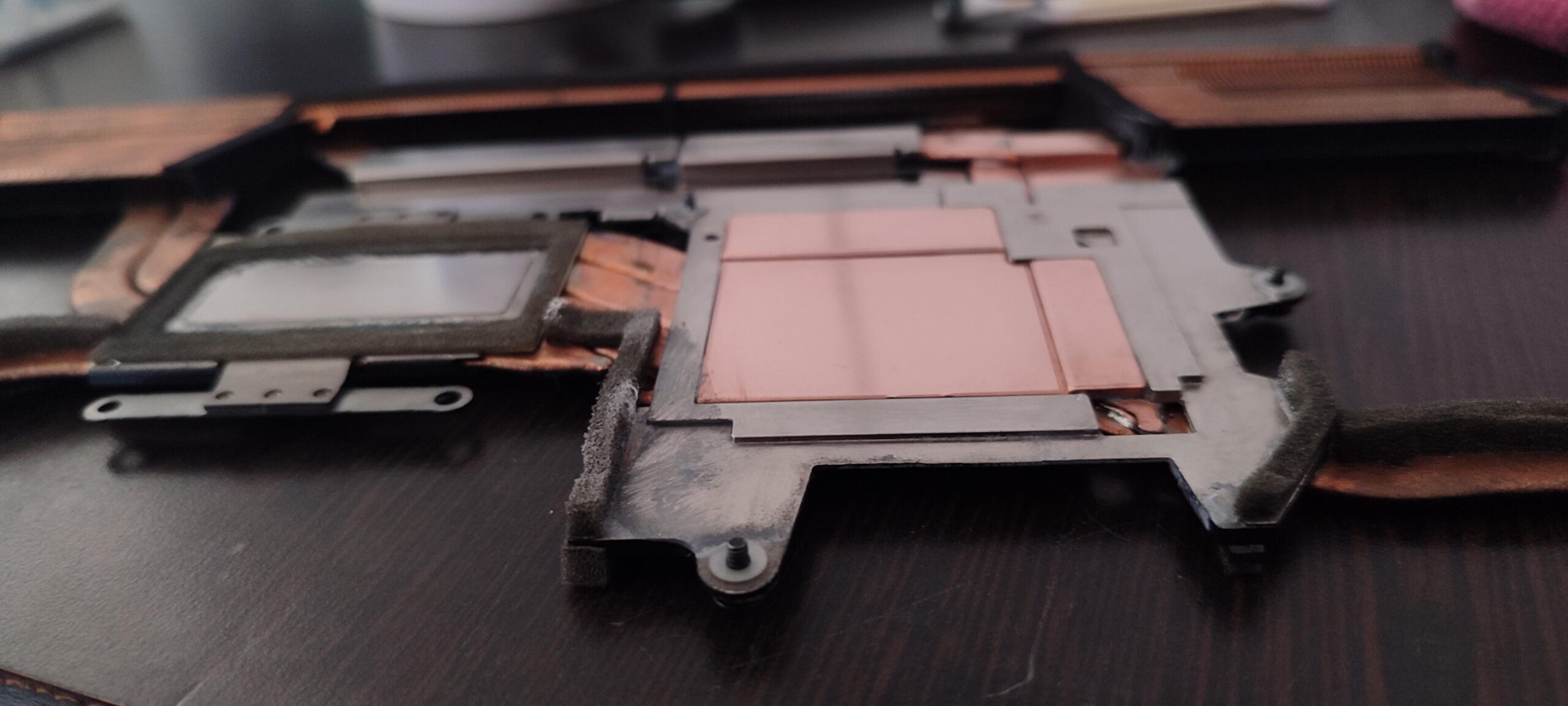
Unlike conventional thermal paste, the material changes consistency as operating temperatures rise, helping it form a thin thermal interface between the processor and heatsink.
That makes it an attractive option for laptops, where repeated heating and cooling cycles can make long term thermal performance important.
Performance reportedly improved significantly after repasting
According to the owner, gaming performance improved by as much as three times after replacing the original thermal material.
That figure should be treated as an individual result rather than a general expectation for Zephyrus M16 systems.
A large performance improvement would be possible if the original cooling problem was severe enough to cause heavy CPU or GPU thermal throttling. Once temperatures returned to a safer range, the hardware could maintain higher clock speeds and deliver substantially better frame rates.
However, the report does not provide standardized before and after benchmarks, detailed temperature measurements or enough diagnostic information to determine precisely how much of the improvement came from the thermal material change.
The case highlights the tradeoff that comes with liquid metal in laptops. It can provide excellent thermal conductivity when properly contained and paired with suitable materials, but servicing it is more complicated than working with conventional thermal paste or phase change pads.
Owners should also be cautious about removing factory applied liquid metal themselves, since incorrect handling can damage components and may affect warranty coverage.



Discussion (0)
Be the first to comment.