



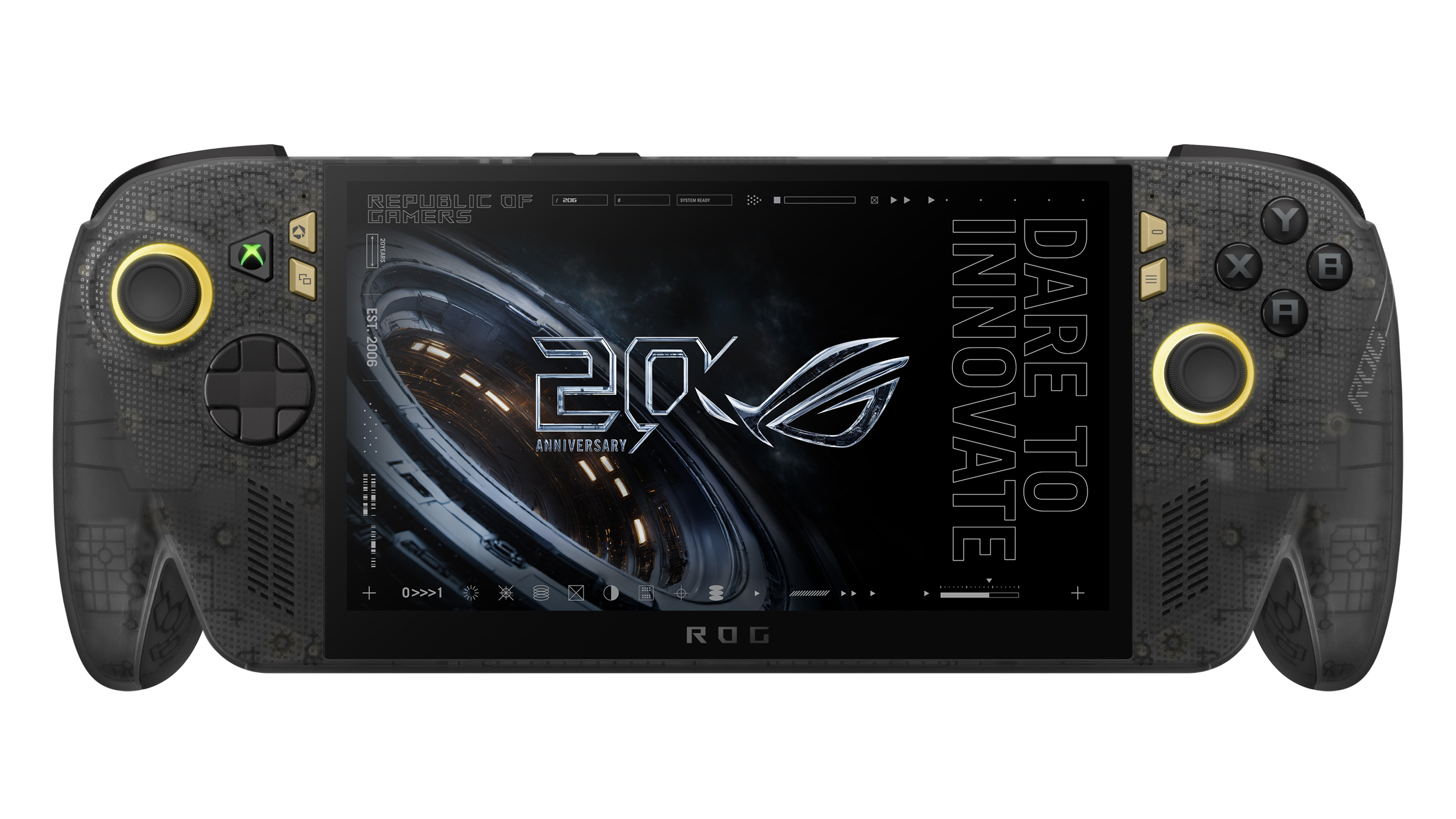
ASUS has confirmed that the ROG Xbox Ally X20 will receive a standalone release, giving buyers the option to purchase the handheld without the ROG XREAL R1 Edition 20 gaming glasses.
When the device was revealed in June, ASUS only presented it as part of a bundle with the augmented reality glasses. That created uncertainty about whether the upgraded handheld would be available separately.
An ASUS spokesperson has now confirmed that the company is actively discussing the release schedule for a standalone version. A launch date and price have not been announced, but further details are expected in a later update.
The confirmation makes the X20 more practical for players who want the hardware improvements but have no interest in AR glasses. It also means ASUS can position the device as a direct premium upgrade over the existing ROG Xbox Ally X.
| Detail | Current information |
|---|---|
| Standalone release | Confirmed |
| Release date | Not announced |
| Price | Not announced |
| Original bundle | Includes ROG XREAL R1 Edition 20 glasses |
| Main display upgrade | Larger OLED screen |
| Other improvements | TMR sticks, new D-pad, redesigned buttons and grips |
| Expected release period | Possibly during 2026 |
The OLED display is the biggest upgrade over the current Ally X
The most visible difference between the ROG Xbox Ally X20 and the existing ROG Xbox Ally X is the larger OLED display.
An OLED panel can offer stronger contrast, deeper black levels and more vivid colours than a typical LCD screen. These qualities can be especially noticeable in darker games and titles with high contrast environments.
The larger screen should also improve readability in games with small text or detailed interfaces. However, ASUS has not yet provided complete information about resolution, refresh rate, brightness or power consumption in the standalone announcement.
Battery life will be an important consideration. A larger OLED panel may require more power depending on its brightness and resolution, although OLED technology can also be efficient when displaying darker content.
The final balance between screen quality and battery performance will likely influence whether existing Ally X owners consider the X20 a meaningful upgrade.
ASUS has redesigned several controls and exterior elements
The X20 includes more than a display change.
ASUS has added TMR joysticks, which are designed to offer accurate input while reducing the risk of traditional stick drift. TMR technology uses magnetic sensing rather than relying entirely on physical contact between internal components.
The handheld also includes a transforming D-pad, redesigned face buttons and rubberised grips. These changes are intended to improve comfort and control during longer gaming sessions.
The D-pad may be particularly important for fighting games, platformers and older titles where precise directional input matters. ASUS has not yet explained exactly how its transforming mechanism works across different game types.
Early hands-on impressions have reportedly been positive, suggesting the changes are more substantial than a cosmetic revision. The X20 uses a transparent black and gold design, but the control and screen upgrades appear to be the main reasons for its premium positioning.
The standalone model is likely to cost more than $1,000
Pricing remains the largest unanswered question.
The existing ROG Xbox Ally X is already priced at £799.99 in the UK and $999.99 in the United States. The X20 adds a larger OLED screen and several control upgrades, making a lower price unlikely.
A US price above $1,000 appears possible, while the UK version could approach or exceed £1,000 depending on the final configuration.
That would place the X20 in a high-end market alongside powerful gaming laptops, premium handheld PCs and complete console setups. Buyers will need to decide whether portability and the upgraded display justify the cost.
The standalone option should still be cheaper than the package that includes the AR glasses. It also prevents customers from paying for an accessory they may not use.
Storage configuration will affect the final value as well. Players considering larger SSD upgrades, a dock or additional chargers may face a considerably higher total cost than the handheld’s retail price alone.
A separate release gives buyers more choice
Selling the X20 only with the ROG XREAL R1 Edition 20 glasses would have limited its audience.
AR glasses are still a specialist accessory. They can provide a large virtual display in a compact format, but they are not essential for normal handheld play and may not suit every player.
The standalone model allows ASUS to market the X20 to existing handheld PC buyers rather than only those interested in an experimental display setup.
It also creates a clearer product range. The current Ally X can remain the more affordable premium option, while the X20 serves customers who prioritise OLED quality, improved controls and a larger screen.
ASUS has not explained whether the standalone device will launch at the same time as the bundle or arrive later. The company’s statement suggests the schedule is still being finalised.
The lack of a date means a 2026 release is not guaranteed, although the number of previews already conducted suggests the hardware is at an advanced stage. The next announcement will need to clarify availability, regional pricing, specifications and whether the standalone version uses the same internal configuration as the bundled model.



Discussion (0)
Be the first to comment.