



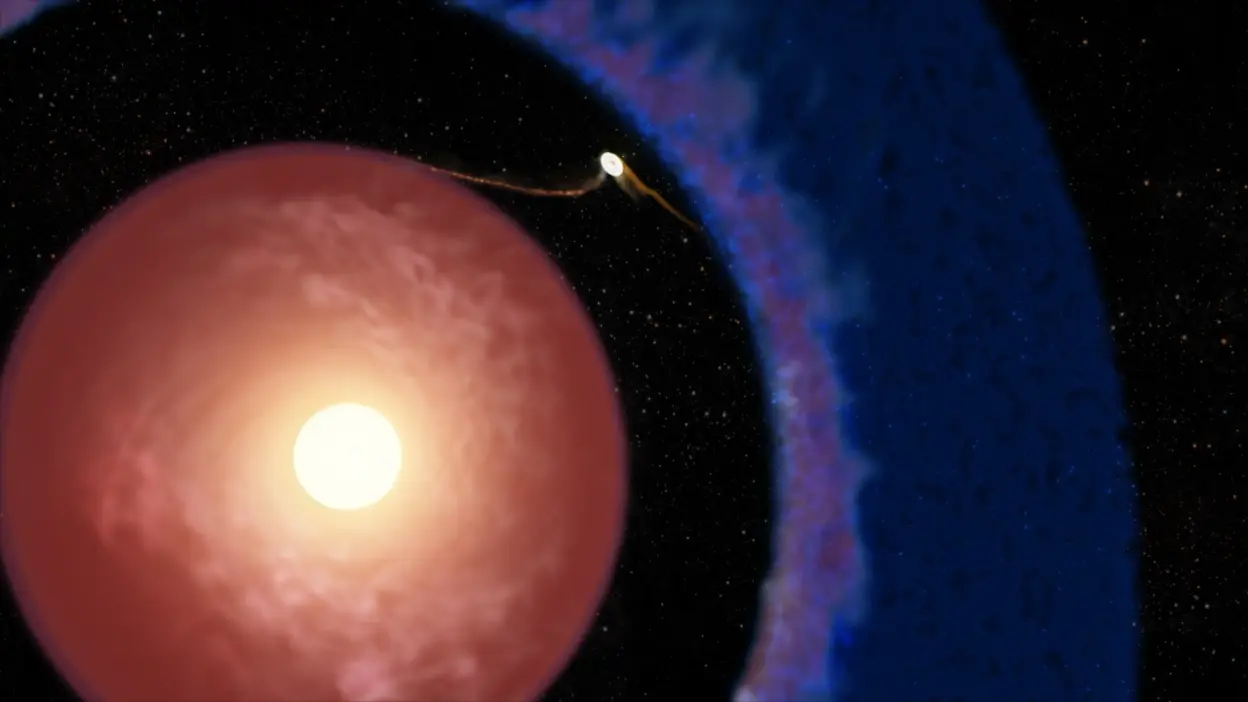
Astronomers have identified what appears to be the youngest exoplanet ever detected, offering a rare look at how giant planets form during the earliest stages of a star system.
The planet, called Elias 2 24 b, is less than one million years old and still actively growing. It is located about 450 light years from Earth inside the ρ Ophiuchi star forming region and orbits a young orange dwarf star.
Its estimated mass is roughly comparable to Jupiter, but its age makes it particularly important. Previously confirmed young planets around stars such as PDS 70 and WISPIT 2 are more than five million years old.
Elias 2 24 b therefore provides astronomers with a much earlier snapshot of planet formation than they have been able to study directly before.
Elias 2 24 b key details
| Feature | Details |
|---|---|
| Planet | Elias 2 24 b |
| Estimated age | Less than one million years |
| Distance from Earth | About 450 light years |
| Approximate mass | Similar to Jupiter |
| Host star | Young orange dwarf |
| Location | ρ Ophiuchi star forming region |
| Detection methods | Millimeter observations and infrared imaging |
| Earlier evidence | Disk gap noticed in 2017 |
The discovery is also interesting because the planet appears to have formed much faster than some standard models predict.
One widely used theory, known as core accretion, proposes that planets begin as small particles of dust that gradually collide and combine. These materials eventually build larger rocky bodies, which can collect enough mass to attract large amounts of surrounding gas.
Creating a Jupiter sized planet through this process is generally expected to take millions of years.
Elias 2 24 b appears to have reached a large mass in less than one million years. That could mean planet formation can sometimes happen faster than expected or that other mechanisms are contributing to the process.
Astronomers tracked the planet inside a dusty disk
Detecting such a young world is difficult because newly forming planets are surrounded by thick disks of gas and dust.
Common exoplanet detection techniques are not always effective in these environments. Transit measurements, for example, rely on observing a planet passing in front of its star, but dense material around a young system can make these observations much harder.
Researchers instead combined several types of observations.
High resolution millimeter data revealed a clear circular gap in the star's protoplanetary disk. Such gaps can be created when a forming planet uses its gravity to clear material along its orbit.
Infrared observations then detected a faint source of light located directly inside that gap.
To determine whether the object was actually moving around the star, astronomers examined older observations from 2018 and 2020. Those images showed that the light source had moved along a path consistent with an orbiting planet.
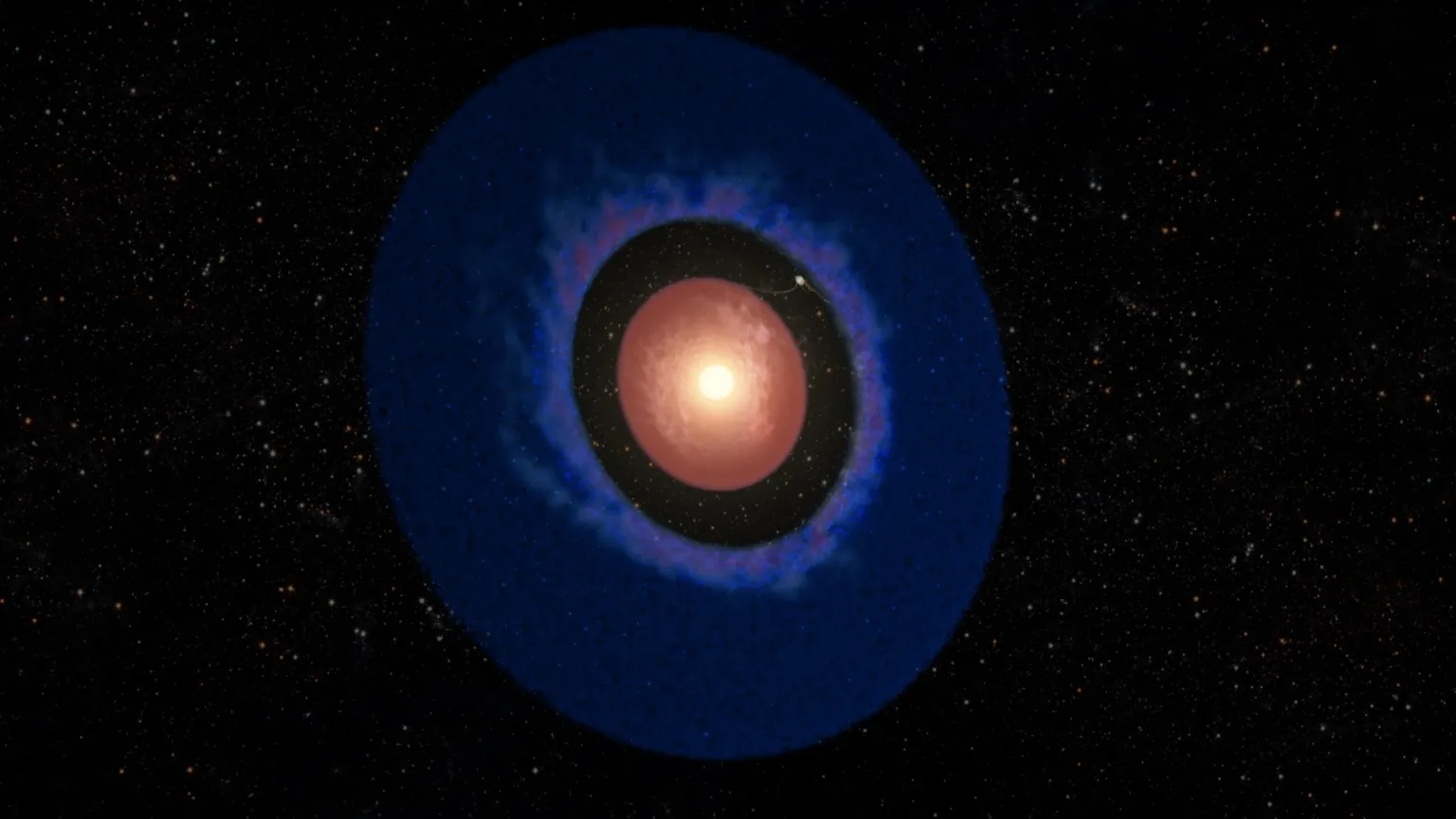
That motion strengthened the case that Elias 2 24 b is a real planet rather than a background object or an unusual feature in the disk.
The planet is apparently still interacting with its surroundings and clearing material as it travels around its star.
Studying Elias 2 24 b could help scientists understand how gas giants gain mass, how quickly planetary systems develop, and why some planets appear to form much faster than traditional models suggest.
Because the world is still in the middle of that process, astronomers are effectively observing planetary formation while it is still happening rather than reconstructing the event from an older, mature system.



Discussion (0)
Be the first to comment.