



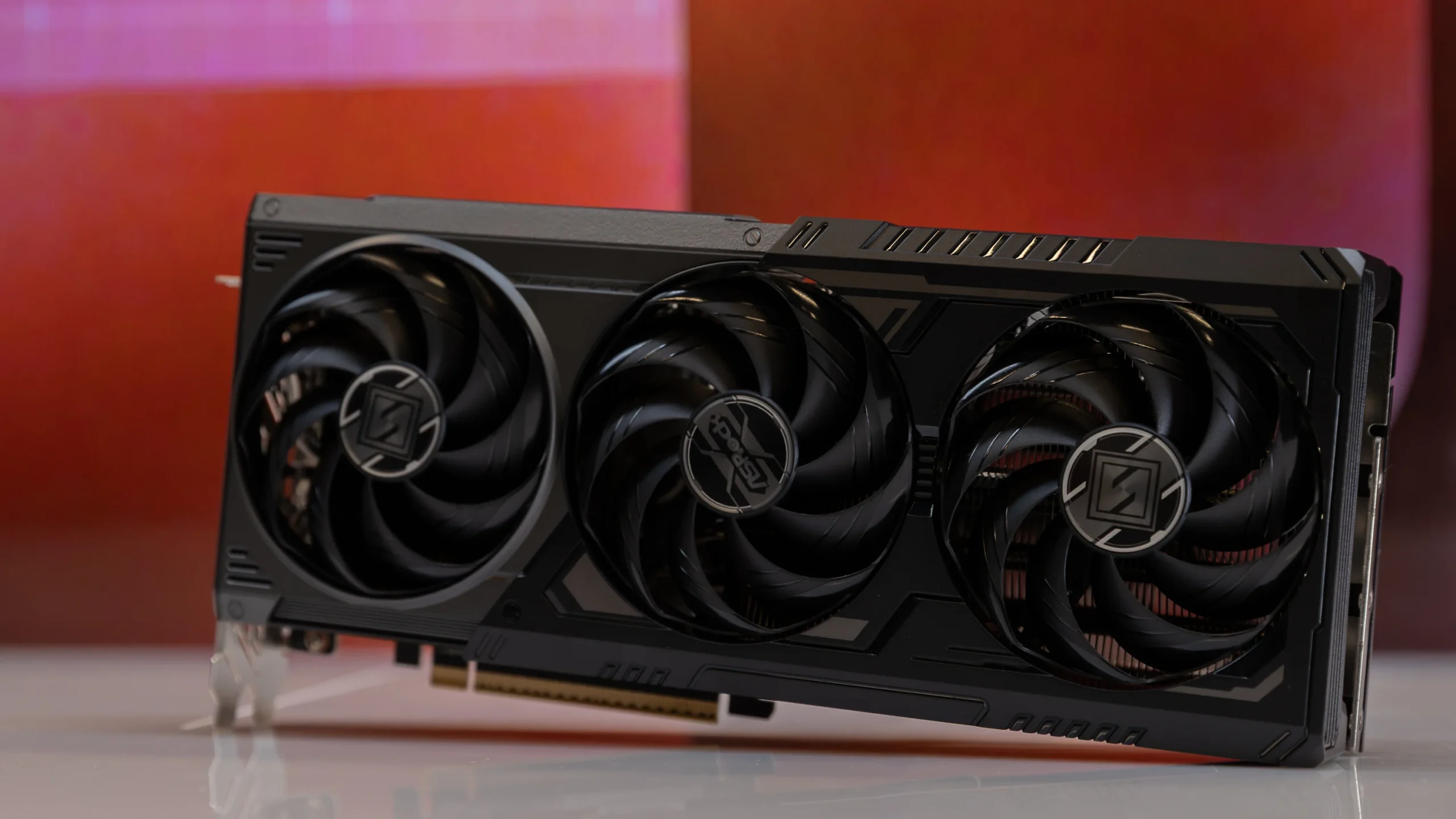
ASRock has introduced its Radeon RX 9070 GRE Steel Legend Dark 12GB OC graphics card, becoming one of the first board partners to reveal a custom design based on AMD’s newly expanded RX 9070 GRE. The card takes AMD’s cut down RDNA 4 GPU and gives it a darker Steel Legend design, triple fan cooling, RGB lighting, and a factory overclock that pushes the boost clock up to 2920MHz.
The Radeon RX 9070 GRE was originally limited to China, but AMD has now brought the card to the global market. It is based on a trimmed version of the Navi 48 GPU, with 48 Compute Units, 48 ray tracing cores, 96 AI accelerators, and 12GB of VRAM connected through a 192 bit memory interface.
That memory setup is one of the biggest differences between the RX 9070 GRE and the higher end RX 9070 or RX 9070 XT. The GRE model has less memory bandwidth and fewer shaders, which places it below AMD’s stronger RDNA 4 cards. Still, it is meant to give buyers another option at a time when graphics card prices remain difficult.
ASRock’s version is called the Steel Legend Dark, and the name is important because it marks a design shift for the Steel Legend series. These cards usually use a white or light grey theme, but this model moves to a black and grey color scheme. That should make it easier to match with darker PC builds.
| Feature | ASRock Radeon RX 9070 GRE Steel Legend Dark |
|---|---|
| GPU architecture | AMD RDNA 4 |
| GPU die | Cut down Navi 48 |
| Compute Units | 48 |
| Ray tracing cores | 48 |
| AI accelerators | 96 |
| Memory | 12GB VRAM |
| Memory bus | 192 bit |
| Boost clock | Up to 2920MHz |
| Cooling | Triple fan design |
| Lighting | RGB Steel Legend logo with Polychrome Sync |
The cooler uses ASRock’s triple fan setup, with Striped Ring fans, Air Deflecting Fin technology, and Ultra fit Heatpipes. The company says these features are meant to improve heat dissipation and keep the GPU stable under load. The card also includes a reinforced metal frame and a grey backplate with Steel Legend branding.
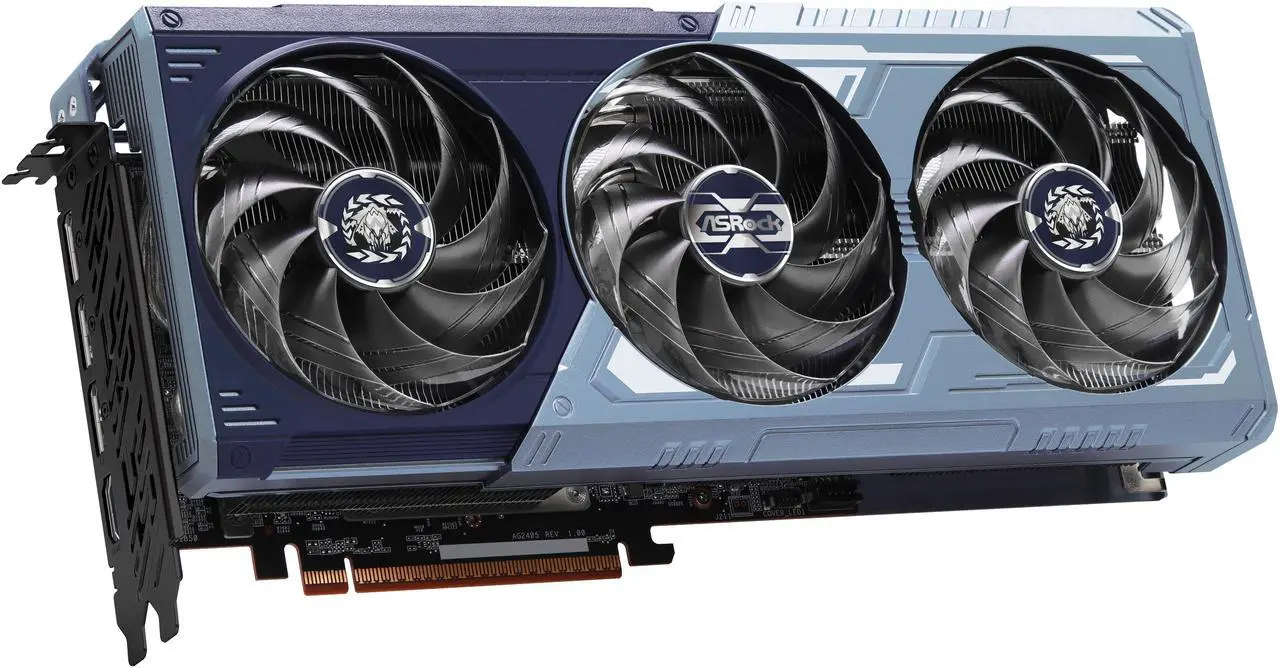
The RGB lighting is placed on the side of the card around the Steel Legend logo. It can be customized through ASRock’s Polychrome Sync software, giving builders some control over how the card looks inside a case.
The higher boost clock is another key part of this model. ASRock lists the Steel Legend Dark at up to 2920MHz, which is higher than the reference RX 9070 GRE. That should help performance slightly, though buyers should not expect a major leap over standard models. Factory overclocks usually add a small gain rather than changing the card’s whole performance class.
AMD claims the RX 9070 GRE is about 22 percent faster than Nvidia’s GeForce RTX 5060 Ti 16GB across 40 games. That comparison is useful, but it does not tell the whole story. The RX 9070 GRE is priced at $549, which also places it near the GeForce RTX 5070. A comparison with Nvidia’s 70 class card would be more helpful for buyers trying to judge value.
The current graphics card market also complicates pricing. Memory shortages and higher component costs have pushed some GPUs above their expected price range. The regular RX 9070 has reportedly moved beyond $600 in some markets, which gives AMD more room to position the RX 9070 GRE at $549. Still, buyers will need to compare real retail prices, not just official launch pricing.
For ASRock, the Steel Legend Dark gives the RX 9070 GRE a more distinct identity. It offers a darker look, a strong cooler, RGB customization, and a higher boost clock. It is not a radical redesign, but it should appeal to builders who want an AMD card that fits a black themed setup.
The RX 9070 GRE itself sits in an unusual place. It has newer RDNA 4 features and a competitive price on paper, but its 12GB VRAM and 192 bit bus may make some buyers pause, especially when comparing it with other cards near the same price. Performance reviews will be needed before it becomes clear how well this card competes in real games.
For now, ASRock’s Radeon RX 9070 GRE Steel Legend Dark looks like a clean custom take on AMD’s latest global GPU release. It gives builders another RDNA 4 option, adds a more understated Steel Legend design, and pushes clock speeds higher than reference. Whether it becomes a strong buy will depend on final retail pricing and how it performs against Nvidia’s nearby options.



Discussion (0)
Be the first to comment.