




Apple has warned that limited access to artificial intelligence and machine learning computing capacity could affect the availability, performance, and launch timing of future products and services.
The risk appeared in the company’s latest 10-Q filing with the US Securities and Exchange Commission. Apple said growing demand for AI infrastructure has created constrained supply, longer lead times, and higher costs across the industry.
The company relies on both its own systems and third-party infrastructure to support AI workloads. If it cannot secure enough computing capacity on reasonable commercial terms, Apple said some services could be restricted or delayed.
The warning does not confirm that any specific product has already been postponed. It shows that AI infrastructure has become a formal business risk alongside component shortages and supply chain dependence.
Apple Depends on Sufficient AI Infrastructure
Apple said its artificial intelligence and machine learning services require access to enough computing resources to meet customer demand.
This includes hardware used for training models, running cloud-based AI features, processing requests, and supporting services that cannot operate entirely on a customer’s device.
Demand for this infrastructure has increased sharply as technology companies expand generative AI products. The resulting pressure affects access to data centre capacity, advanced processors, networking equipment, memory, and power.
| AI infrastructure issue | Possible effect on Apple |
|---|---|
| Limited computing capacity | Reduced service availability |
| Longer equipment lead times | Slower infrastructure expansion |
| Rising hardware costs | Higher operating expenses |
| Third-party capacity limits | Dependence on outside providers |
| Stronger customer demand | Greater pressure on existing systems |
| Delayed infrastructure access | Later product or service launches |
Apple stated that it may be unable to secure sufficient capacity at acceptable prices or at all. If that happens, the company could limit the functionality or availability of affected products and services.
It could also delay the deployment of new offerings until enough infrastructure becomes available.
Third-Party Providers Remain Important
Apple has built its own Private Cloud Compute platform for handling certain AI requests that require more processing than a device can provide locally.
However, the company also relies on external infrastructure.
Apple confirmed in June that it had worked with Google and NVIDIA to extend Private Cloud Compute workloads to NVIDIA hardware through Google Cloud. This arrangement gives Apple access to additional computing capacity without requiring it to build every part of the infrastructure itself.
| Infrastructure source | Role |
|---|---|
| Apple-owned systems | Supports internal and customer workloads |
| Private Cloud Compute | Processes selected cloud-based AI requests |
| Google Cloud | Provides external infrastructure capacity |
| NVIDIA hardware | Accelerates demanding AI workloads |
| On-device processors | Handles supported tasks locally |
Using third-party providers can help Apple expand more quickly, but it also creates new dependencies. Capacity may be limited, prices can rise, and outside suppliers may prioritise other customers during periods of high demand.
Apple’s filing makes clear that access to external computing resources is not guaranteed.
Apple Has Spent More Carefully Than Some Rivals
Several large technology companies have committed enormous amounts of money to AI data centres, custom processors, and cloud infrastructure.
Google and Amazon have developed their own AI chips, while other companies have ordered large numbers of accelerators from NVIDIA and competing suppliers.
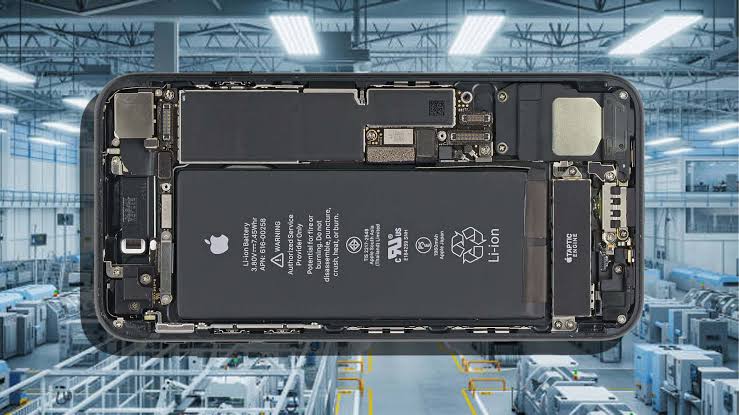
Apple has taken a more restrained approach. It has focused heavily on on-device processing and privacy while using outside infrastructure when additional capacity is required.
That strategy can reduce capital spending, but it may leave Apple more exposed when cloud capacity is scarce.
| Approach | Potential advantage | Potential risk |
|---|---|---|
| Heavy internal investment | Greater control over capacity | Very high construction and hardware costs |
| Third-party infrastructure | Faster access without full ownership | Dependence on suppliers |
| On-device AI | Lower cloud demand and stronger privacy | Limited by device performance and memory |
| Mixed infrastructure model | Flexible workload distribution | Greater technical and operational complexity |
Apple’s warning suggests that its current combination of internal and external capacity may face pressure as AI demand grows.
Memory Shortages Create a Separate Supply Risk
The filing also addressed shortages in NAND flash and DRAM.
Apple said disruption in the memory industry could make it difficult to obtain enough components and products on reasonable terms.
NAND is used for storage, while DRAM supports active workloads in products such as iPhones, Macs, iPads, and data centre systems. Higher memory costs can affect both consumer devices and AI infrastructure.
| Memory type | Main use |
|---|---|
| NAND flash | Device and server storage |
| DRAM | System memory |
| High bandwidth memory | AI accelerators |
| LPDDR memory | Phones, tablets, and laptops |
The current AI expansion is increasing demand for several types of memory. Large data centre customers are buying high capacity products, placing additional pressure on manufacturing supply.
Apple relies on a limited group of suppliers for many components. This can improve quality control and purchasing efficiency, but it also increases exposure to shortages or price changes affecting those suppliers.
Product Launches Could Be Affected
Apple did not identify which products or services face the greatest risk.
The warning could apply to new AI features, cloud services, developer tools, or products that depend on server-side processing. It may also affect the pace at which existing services become available in additional regions or languages.
A capacity shortage could have several outcomes.
Apple might restrict access to a service, introduce a waiting period, limit usage, reduce the number of supported devices, or delay a wider rollout.
| Possible response | What it could mean for customers |
|---|---|
| Limited regional launch | Feature available only in selected countries |
| Device restrictions | Support limited to newer hardware |
| Usage limits | Fewer requests allowed |
| Staged rollout | Customers receive access gradually |
| Reduced functionality | Some features omitted temporarily |
| Delayed release | Product or service launches later |
None of these outcomes has been confirmed. They are possible consequences described by the broader risk language in Apple’s filing.
On-Device AI May Reduce Some Pressure
Apple’s emphasis on local processing could help reduce its dependence on cloud infrastructure.
When an AI feature runs directly on an iPhone, iPad, or Mac, the request does not need to consume the same remote computing resources. This can improve response time and privacy while lowering data centre demand.
However, on-device processing has limits. Complex models may require more memory and computing power than a consumer device can provide.
Apple therefore uses a mixed approach. Smaller or more sensitive tasks can run locally, while larger workloads move to Private Cloud Compute or partner infrastructure.
The balance between those systems will become more important as Apple adds more AI capabilities.
The Filing Reflects a Wider Industry Problem
Apple’s warning shows that AI computing capacity is no longer only a technical issue. It is now a supply chain and business planning concern.
Companies need access to accelerators, memory, networking hardware, storage, power, cooling, and data centre space. A shortage in any one of those areas can slow deployment.
Apple must also compete for capacity with cloud providers, AI laboratories, governments, and large enterprise customers.
The company has not said that it currently lacks enough computing resources. Its filing instead warns that future shortages could affect operations if demand continues to rise faster than supply.
Apple’s ability to secure additional capacity will influence how quickly it can expand AI features while maintaining performance, privacy, and availability. The risk is now serious enough for the company to tell investors that limited infrastructure could delay products and services.



Discussion (0)
Be the first to comment.