



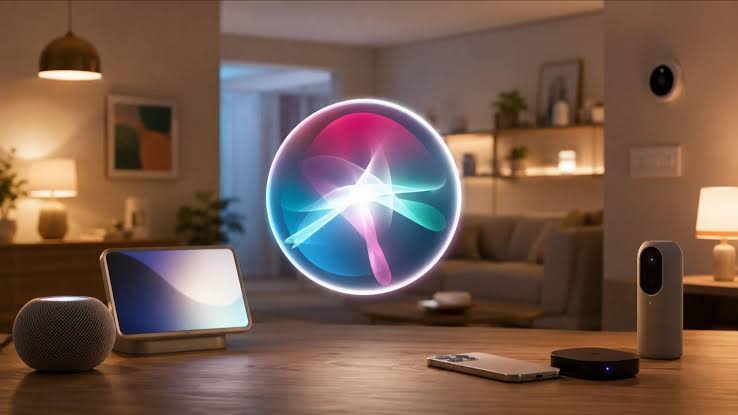
Apple is reportedly preparing two new products for its smart home lineup, including an updated Apple TV 4K and a separate display based hub built around Siri and artificial intelligence.
Both devices are said to be close to completion, but their release may be tied to Apple’s next major operating system updates in the fall. Those software releases are expected to introduce improved AI features that will support the new hardware.
The current Apple TV 4K arrived in October 2022 and uses the A15 Bionic processor. It remains capable of streaming high resolution video and running casual games, but the chip was designed before Apple began placing greater emphasis on local AI processing.
A replacement would likely need a newer processor that supports Apple Intelligence. The A17 Pro is the oldest Apple chip with that capability, although a more recent option such as the A19 could provide stronger performance and a longer useful life.
Apple has not confirmed the processor, storage choices, price, or launch date for the refreshed Apple TV 4K.
The new Apple TV could become more than a streaming box
The next Apple TV 4K may continue handling films, television, music, games, and connected home controls, while adding more advanced Siri features.
A faster processor could allow the device to understand more requests locally, provide better recommendations, manage smart home routines, and respond more quickly without sending every task to remote servers.
The added processing power may also improve gaming performance. Apple has gradually expanded the number of console style games available across its platforms, although the Apple TV remains primarily a media device.
The current model starts at $199 for the 64 GB configuration following recent pricing changes. Apple may use the stronger processor and AI features to support that premium position, but no final price has been reported.
| Product | Expected role |
|---|---|
| New Apple TV 4K | Streaming, gaming, Siri, and smart home control |
| Siri home hub | Central display for connected devices and household information |
| Likely software base | A version of tvOS |
| Possible AI support | Apple Intelligence and improved Siri features |
| Expected release period | Fall 2026 |
| Confirmed pricing | Not yet announced |
Apple’s smart home hub may recognise different household members
The second product is described as a small screen attached to a rounded base resembling part of a HomePod mini. It would compete with smart displays already available from Amazon and Google.
The device is expected to use software based on tvOS and provide a central interface for compatible lights, cameras, locks, thermostats, and other connected equipment.
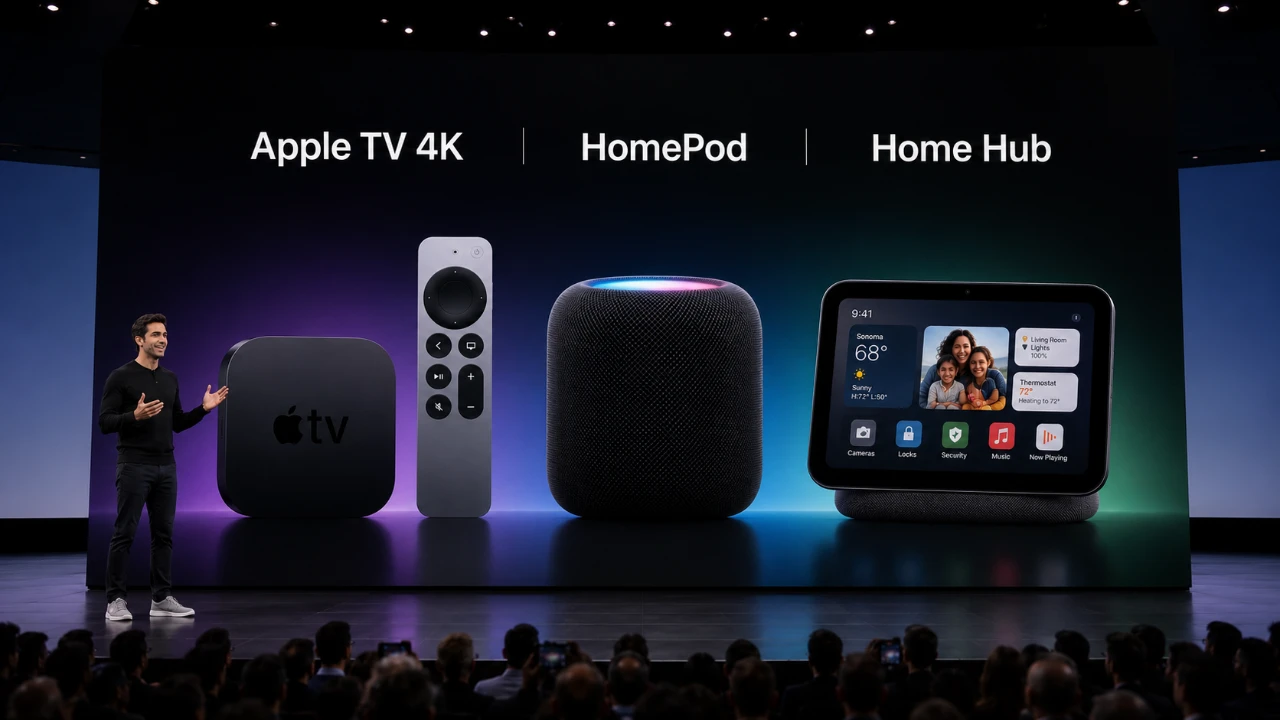
Facial recognition could allow the hub to identify the person standing nearby and adjust the interface automatically. One household member might see personal reminders, calendar events, and preferred controls, while another could receive a different layout.
This would make the hub more useful in shared spaces such as kitchens, living rooms, and entry areas. However, facial recognition inside the home may also raise privacy questions. Apple will need to explain where recognition data is processed, how long it is stored, and whether household members can disable the feature.
The company has often presented privacy as an important part of its products, so local processing would be a likely part of the design.
Improved Siri will be central to both devices
The success of both products will depend heavily on Siri. A smart home display needs reliable voice control, accurate responses, and simple management of connected devices.
Apple has faced criticism for allowing Siri to fall behind newer AI assistants in several areas. The company’s latest software effort is expected to improve the assistant’s ability to understand context, work across applications, and complete more complicated requests.
A new Apple TV and home hub could give Apple more places to deliver those improvements inside the home. They would also strengthen the connection between the iPhone, HomePod, Apple TV, and accessories using Apple’s Home platform.
Neither device has been officially announced, and the final features may change before release. Still, the reported hardware shows that Apple wants AI to become a more important part of its living room and smart home strategy.
The expected fall launch would give the company time to introduce the products alongside its next software generation and explain how the new Siri experience will work across the home.



Discussion (0)
Be the first to comment.