



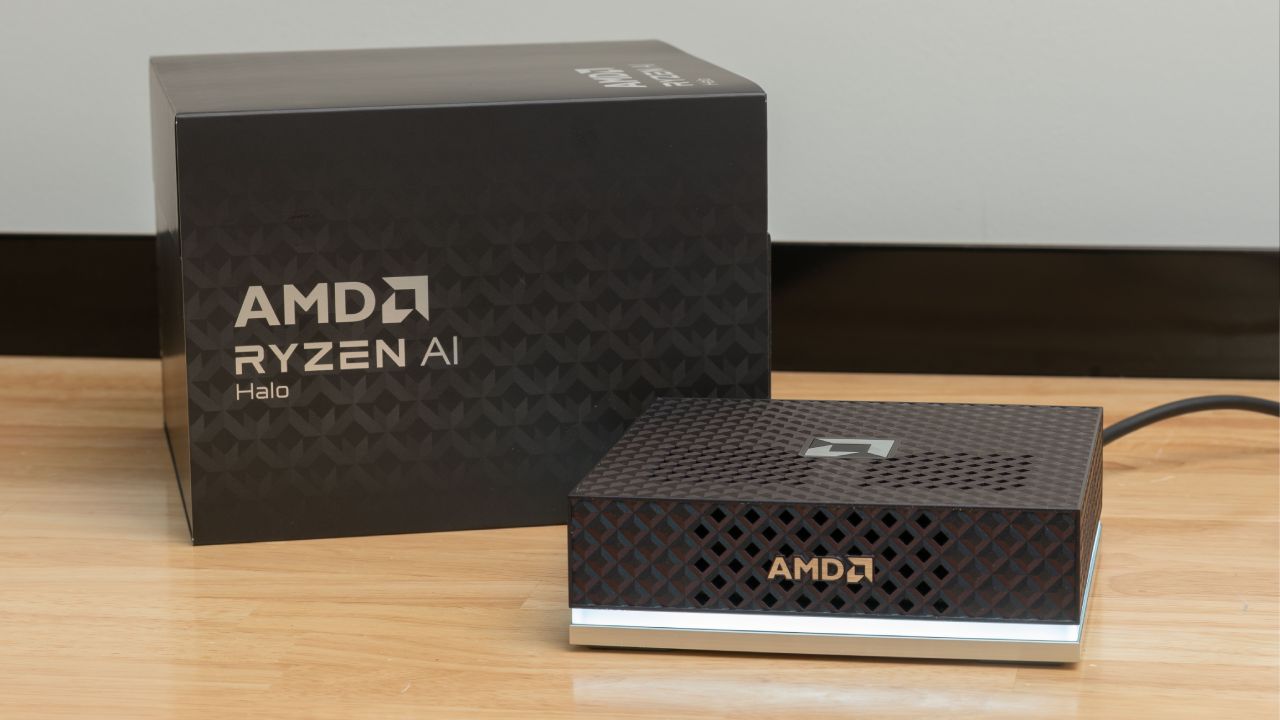
AMD’s Ryzen AI Halo platform has been tested as a compact SteamOS gaming machine, and the results show both the strength of AMD’s high end mobile silicon and the value of Valve’s dedicated Steam Machine hardware. The Ryzen AI Halo system is clearly faster on paper, but the gaming performance gap is not as simple as the specifications suggest.
The test compared AMD’s Ryzen AI Halo workstation against Valve’s Steam Machine, with SteamOS used to create a living room console style setup. The Ryzen AI Halo system has a much stronger hardware foundation, including AMD’s Ryzen AI Max+ 395 class processor and a massive unified memory pool that can reach 128GB in some configurations. That gives it far more headroom than the lower cost semi custom hardware inside Valve’s Steam Machine.
In raw performance, Ryzen AI Halo does come out ahead. It can deliver stronger frame rates, and its integrated graphics are powerful enough to make the machine feel like a serious compact gaming system. However, the largest gains appear at 4K, where the GPU side has more room to separate itself. At 1080p, the results are more mixed, with signs that the Ryzen AI Halo system can run into CPU related limits despite its high end design.
Ryzen AI Halo is powerful, but it was never built mainly for gaming
That context is important because Ryzen AI Halo is not a gaming first product. AMD designed it primarily for AI workstation use, local model workloads, and compact high performance computing. Gaming is something it can do well, but it is not the main reason this hardware exists.
| System or option | Main purpose | Gaming takeaway |
|---|---|---|
| AMD Ryzen AI Halo workstation | AI and local workstation workloads | Strong SteamOS gaming, especially at 4K |
| Valve Steam Machine | Living room PC gaming | Better value for its target audience |
| GMKtec EVO X2 AI | Compact Ryzen AI Max+ 395 system | Similar class of performance with 64GB memory |
| ASUS ROG NUC 2025 | Small gaming PC with mobile RTX 5070 | Likely stronger dedicated gaming option |
| NVIDIA DGX Spark style systems | Local AI development | Better AI focus than gaming value |
The comparison ends up being good news for Valve. The Steam Machine may not match Ryzen AI Halo in every benchmark, but it holds up well considering its lower cost and more modest hardware. For living room gamers who want a compact SteamOS box, that makes Valve’s system look more efficient and better targeted.
It also shows that spending far more money on AI workstation hardware does not automatically produce a dramatically better gaming experience in every case. If most of your gaming happens at 1080p or on a TV where price, convenience, and console like operation matter more than peak benchmark numbers, the Steam Machine remains attractive.
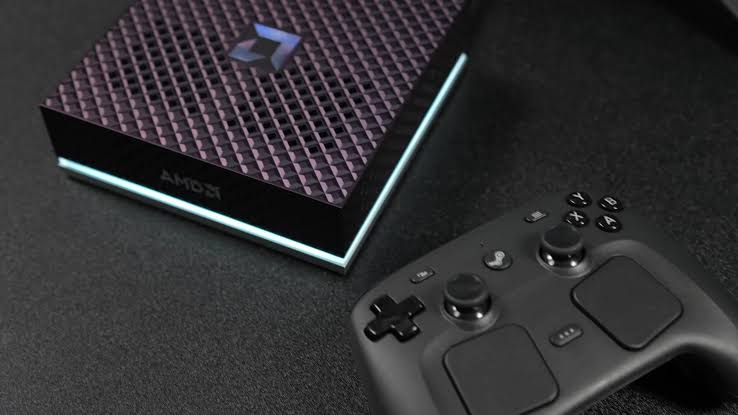
Ryzen AI Halo looks more compelling when viewed as a dual purpose system. If you already need the hardware for local AI workloads, development, or workstation tasks, turning it into a SteamOS gaming box during downtime makes sense. It can run games well, and its small form factor gives it a strong living room appeal. But buying one only for gaming is harder to justify.
The GMKtec EVO X2 AI is also mentioned as a more affordable alternative using the same Ryzen AI Max+ 395 CPU, but with 64GB of shared memory instead of 128GB. That should still be enough to approximate much of the gaming performance, while lowering the entry cost compared with the higher end Halo workstation configuration.
For buyers who only care about small form factor gaming, a system like the ASUS ROG NUC 2025 with a mobile GeForce RTX 5070 may make more sense. A discrete NVIDIA GPU can offer stronger game specific performance, better ray tracing support, and broader tuning for modern PC titles, even if the system is taller or less workstation focused.
The bigger takeaway is that compact PCs are becoming much more capable. Ryzen AI Halo can behave like a premium SteamOS console, Valve’s Steam Machine delivers good value in its intended role, and newer mini PCs are closing the gap between desktop power and console convenience.
AMD’s hardware looks impressive in the tests, but the result is not a simple win over Valve. Ryzen AI Halo is the more powerful and flexible platform, especially for AI and heavy workloads. Steam Machine remains the smarter choice for many living room gamers. The best option depends on whether you want a gaming box first or a compact workstation that can also play games very well.



Discussion (0)
Be the first to comment.