



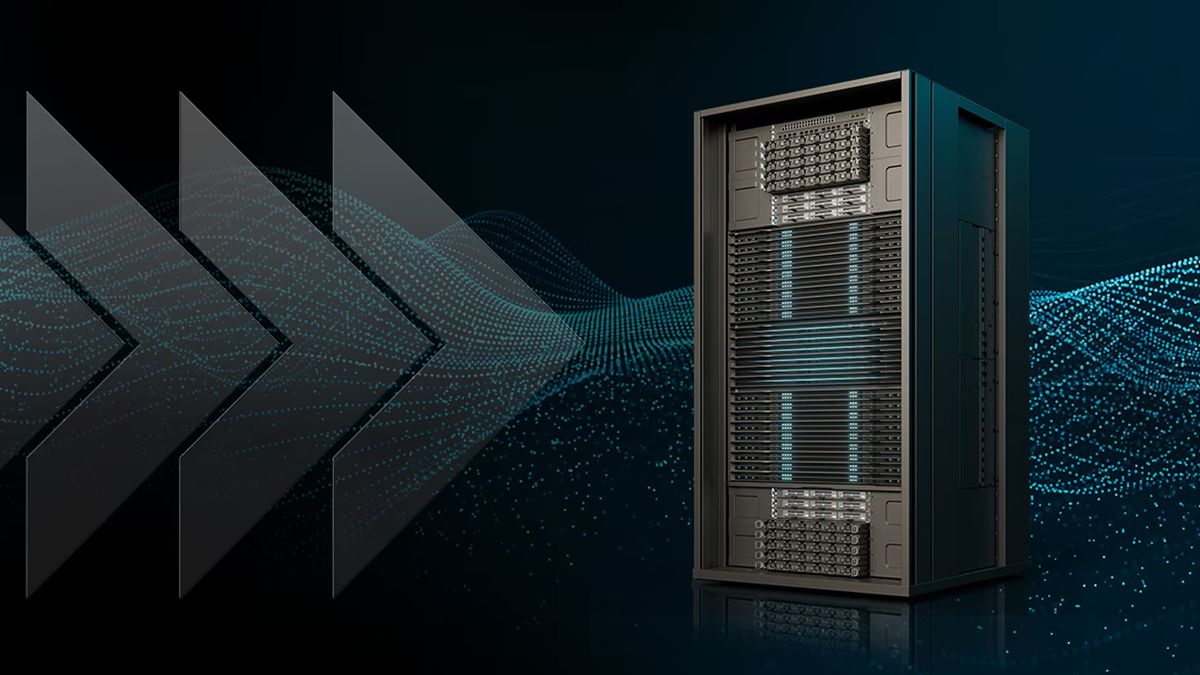
AMD is close to securing HBM4 memory from Samsung as it prepares to expand production of its Instinct MI455X accelerators and Helios rack scale AI systems.
CEO Lisa Su said the agreement was nearly complete while speaking with journalists after the company’s Advancing AI 2026 event. AMD and Samsung had already signed a memorandum of understanding in March covering priority access to memory supplies.
The arrangement has not yet been described as a final commercial contract, and Samsung has provided limited public detail. However, the discussions indicate that AMD is working to secure the large volumes of advanced memory required for its next generation AI infrastructure.
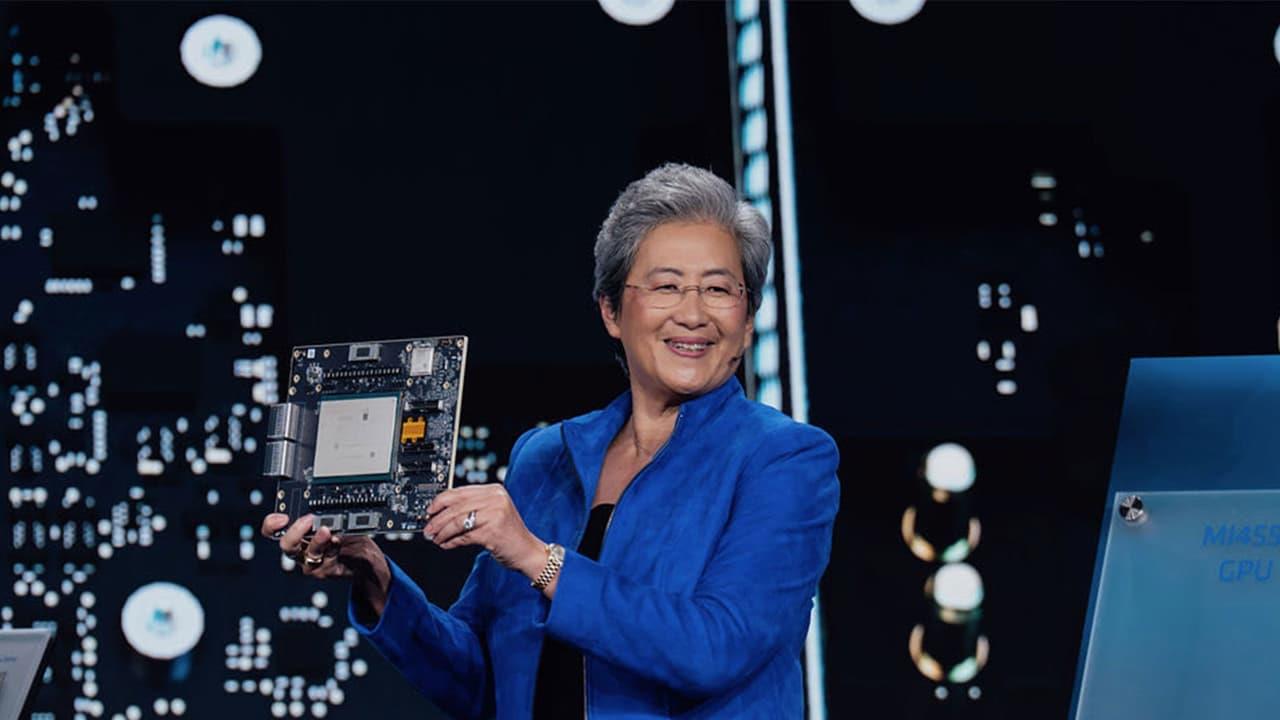
HBM4 is a central part of the MI455X design. Each accelerator carries 432GB of memory, which is 50% more than the 288GB configuration associated with NVIDIA’s Rubin GPU. That capacity allows the chip to hold larger models and datasets locally while reducing the need to move information between accelerators.
| Product or agreement | Key detail |
|---|---|
| AMD Instinct MI455X | 432GB of HBM4 memory |
| MI455X AI performance | Up to 40 PFLOPs at FP4 |
| MI455X transistor count | Around 320 billion |
| AMD Helios | Uses 72 MI455X accelerators |
| Total Helios HBM4 capacity | Around 31TB |
| Samsung agreement status | Reportedly close to completion |
| Earlier agreement | Priority supply memorandum signed in March |
| Helios shipment target | By the end of the third quarter of 2026 |
Helios requires a substantial supply of advanced memory
AMD’s Helios system is the company’s first complete rack scale platform built for large AI data centres.
The design combines 72 Instinct MI455X accelerators with sixth generation EPYC processors, Pensando networking components, Infinity Fabric and the ROCm software stack.
Together, the accelerators provide around 31TB of HBM4 memory across one rack. This creates a large memory requirement even before AMD begins supplying multiple systems to cloud providers and enterprise customers.
AMD says Helios has entered full scale production and is scheduled to begin shipping by the end of the third quarter of 2026.
Meeting that timeline depends on more than manufacturing the accelerator dies. AMD also needs enough HBM4 stacks, advanced packaging capacity, networking components and supporting processors to assemble complete systems.
A supply agreement with Samsung would help AMD reduce the risk of memory shortages as Helios production increases.
It could also allow AMD to source HBM4 from more than one supplier, improving flexibility if demand exceeds expectations or one producer encounters manufacturing delays.
The MI455X uses more HBM4 than NVIDIA Rubin
Memory capacity is one of the clearest ways AMD is differentiating the Instinct MI455X from NVIDIA’s Rubin accelerator.
The MI455X includes 432GB of HBM4 with memory bandwidth of around 19.6TB per second in the Helios configuration described by AMD.
NVIDIA Rubin is associated with 288GB of HBM4 and approximately 22TB per second of bandwidth.
This gives AMD more capacity, while NVIDIA holds an advantage in the reported bandwidth figure.
The difference reflects separate design priorities. More memory can help large models remain on a single accelerator or smaller group of accelerators, potentially reducing communication overhead.
Higher bandwidth allows data to move more quickly between memory and processing units, which can improve performance in workloads limited by memory movement.
Neither specification alone determines overall AI performance. Software efficiency, networking, numerical precision, power consumption and workload structure will also influence results.
AMD claims the MI455X can deliver up to 40 PFLOPs of FP4 compute and 20 PFLOPs of FP8 performance. NVIDIA Rubin is reported to offer 50 PFLOPs at FP4 and 17.5 PFLOPs at FP8.
Samsung must qualify its HBM4 for AMD’s requirements
Memory suppliers typically need to complete a qualification process before their products can be used in advanced accelerators.
This testing confirms that the memory meets the chip designer’s requirements for speed, power use, reliability, heat output and long term operation.
HBM is especially demanding because several memory dies are stacked vertically and connected closely to the main processor through advanced packaging.
Even small manufacturing or thermal problems can affect the performance and reliability of the completed accelerator.
AMD’s reported progress with Samsung suggests that the supplier has either completed important qualification stages or is close to meeting the required standards.
A final agreement could cover delivery volumes, pricing, product specifications and priority access to future production.
The exact terms have not been disclosed.
AI demand is reshaping the global memory market
The discussions come during an unusually strong period for memory manufacturers.
AI accelerators require far more high bandwidth memory than conventional consumer graphics cards. Each new accelerator generation is also increasing both capacity and bandwidth.
This has created intense competition for HBM production among AMD, NVIDIA and other AI chip companies.
Memory manufacturers must decide how much factory capacity to allocate to HBM instead of conventional DRAM products used in PCs, smartphones and servers.
HBM also requires complex stacking and packaging, meaning production cannot be increased as quickly as standard memory output.
Securing priority supply can therefore become a competitive advantage. A company may have a capable accelerator design but still struggle to ship complete products if it cannot obtain enough memory.
AMD’s agreement with Samsung appears intended to protect the Helios rollout from that risk.
Samsung could gain an important AI customer
A large AMD contract would strengthen Samsung’s position in the HBM market.
SK hynix has held a strong position in supplying high bandwidth memory for leading AI accelerators, while Micron has also expanded its presence.
Samsung has the manufacturing scale and technical experience to compete, but it must secure qualification and volume orders from major accelerator companies.
Supplying AMD would give the company another significant customer and reduce its dependence on any single AI platform.
The relationship could also extend beyond the current MI455X generation if Samsung meets AMD’s requirements for performance, supply consistency and pricing.
AMD has already outlined an annual accelerator roadmap, with MI500 expected in 2027 and MI600 planned for 2028.
Future products are likely to require even more advanced memory, potentially including HBM4E and later standards.
The agreement remains close but not fully confirmed
Lisa Su described AMD as being almost ready to finalise the HBM4 arrangement.
Samsung executives reportedly confirmed that an important meeting with AMD was approaching but did not provide further details.
This means the deal should not yet be treated as complete.
The companies have confirmed earlier cooperation through the March memorandum, but final supply volumes, delivery schedules and commercial terms remain unknown.
AMD’s need for HBM4 is clear because the MI455X and Helios depend heavily on large memory capacity. Samsung also has a strong incentive to secure a major role in the expanding AI accelerator market.
A completed agreement would give AMD another important source of HBM4 as it begins shipping Helios systems and attempts to compete more directly with NVIDIA’s Rubin based platforms.



Discussion (0)
Be the first to comment.