



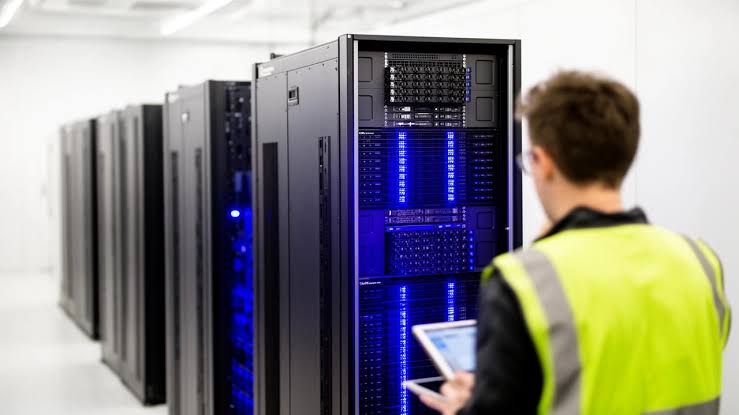
AMD’s upcoming Helios rack scale AI platform could carry a price between $5 million and $5.5 million per rack, according to an industry estimate. That would place it roughly 40 percent above the expected $3.5 million to $4 million price range for NVIDIA’s second generation Rubin systems.
The estimate suggests AMD may no longer be positioning itself mainly as the lower cost alternative in the data centre market. Instead, the company appears confident that customers will pay more for a complete AI platform combining accelerators, processors, networking hardware, and software.
Microsoft has already confirmed plans to deploy Helios systems for Azure AI services. AMD is also working with organisations including OpenAI, Meta, Oracle, HPE, TCS, Celestica, Nutanix, and the US Department of Energy.
The reported prices should still be treated cautiously. Rack scale AI systems are rarely sold using simple public retail pricing, and final costs can vary based on volume, support agreements, software, networking, cooling, and customer negotiations.
Helios combines AMD hardware and software in one rack scale platform
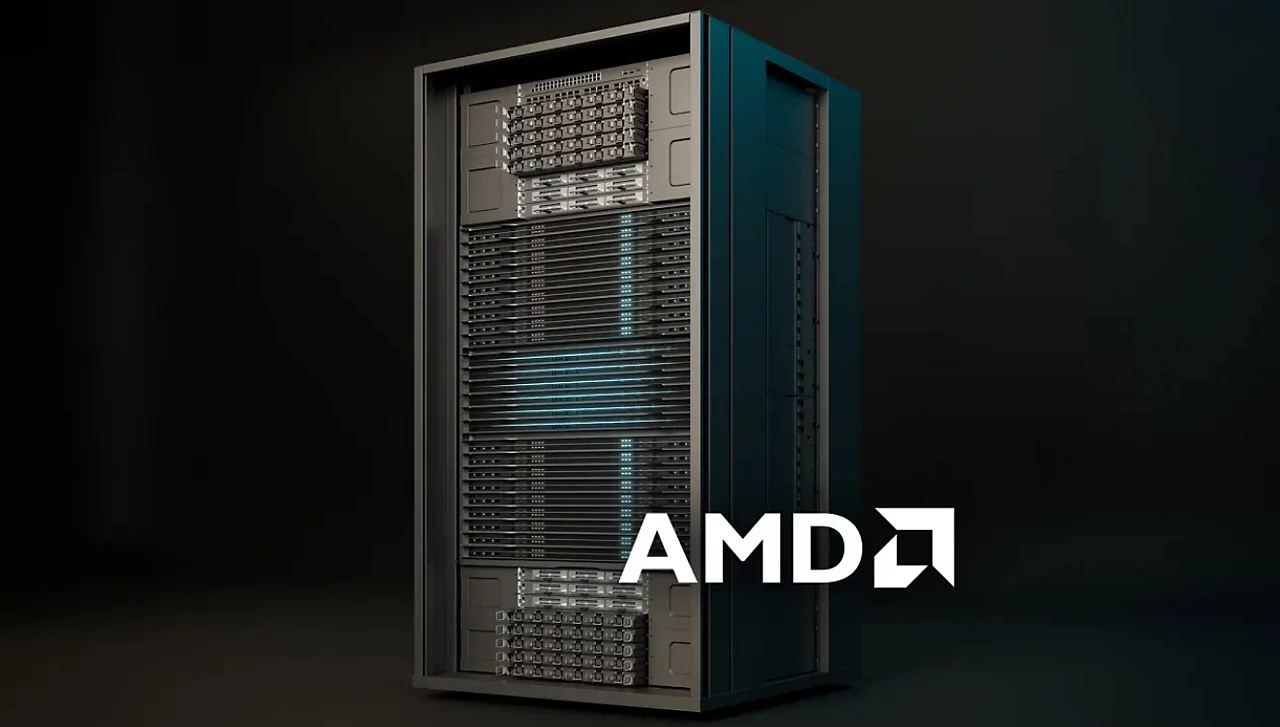
Helios is AMD’s first complete rack level system designed specifically for large AI training and inference workloads.
The platform combines Instinct MI455X accelerators, sixth generation EPYC processors, Pensando networking products, Infinity Fabric interconnects, and the ROCm software stack.
| Helios component | Main role |
|---|---|
| Instinct MI455X | AI training and inference acceleration |
| Sixth generation EPYC | General processing and system management |
| Pensando Vulcano 800 NIC | High speed scale out networking |
| Pensando Salina DPU | Networking, storage, and security offload |
| Infinity Fabric | Communication between AMD components |
| ROCm | AI software and development platform |
| Reported rack price | $5 million to $5.5 million |
Selling a complete system gives AMD greater control over how its parts work together. It also allows customers to purchase a validated platform instead of combining hardware from several suppliers.
This strategy closely follows the rack scale approach used by NVIDIA, where the company sells tightly integrated systems rather than individual GPUs alone.
MI455X offers more HBM4 capacity than Rubin
The Instinct MI455X is based on AMD’s CDNA 5 architecture and supports newer AI data formats designed to improve throughput.
AMD lists the accelerator at 40 PFLOPS of FP4 performance and 20 PFLOPS of FP8 performance. NVIDIA Rubin is reported to provide 50 PFLOPS at FP4 and 17.5 PFLOPS at FP8.
| Specification | AMD MI455X | NVIDIA Rubin |
|---|---|---|
| FP4 compute | 40 PFLOPS | 50 PFLOPS |
| FP8 compute | 20 PFLOPS | 17.5 PFLOPS |
| HBM4 capacity | 432GB | 288GB |
| Memory bandwidth | 19.6TB/s | 22TB/s |
Rubin has the advantage in FP4 performance and memory bandwidth, while MI455X provides more FP8 throughput and significantly more HBM4 capacity.
That larger memory pool could be valuable for training large models or running inference workloads that require extensive parameter storage. More memory may allow customers to fit larger models on fewer accelerators, although actual performance will depend on software efficiency, interconnect speed, and workload design.
Raw specifications cannot determine the better platform on their own. Customers will compare total rack performance, energy use, software compatibility, reliability, and the cost of operating the system over several years.
Sixth generation EPYC provides up to 256 Zen 6 cores
Helios uses AMD’s sixth generation EPYC processors, known internally as Venice.
The chips are based on the Zen 6 architecture and are expected to be manufactured using TSMC’s 2nm process. The largest configurations will provide up to 256 cores and 512 threads.
The design reportedly uses eight compute dies and two large input and output dies. These processors handle system management and workloads that cannot run efficiently on the AI accelerators.
High CPU core counts can also help prepare data, manage networking, coordinate storage, and keep the GPUs supplied with work. A rack scale AI system depends on the balance between its accelerators and supporting processors rather than GPU performance alone.
Pensando networking is central to the Helios design
AMD is using its Pensando technology to connect Helios racks and manage data movement.
The Vulcano 800 AI network interface card supports 800Gbps Ethernet throughput. AMD says it can deliver up to 2.4Tbps of scale out bandwidth per GPU when used in the intended configuration.
The Salina DPU includes 16 Arm N1 cores and handles networking, security, and storage tasks. Offloading this work can reduce pressure on the main EPYC processors and improve overall system efficiency.
Networking performance is critical in large AI clusters. Thousands of accelerators must exchange data quickly, and slow communication can reduce the benefit of adding more hardware.
AMD will need to demonstrate that Helios can scale efficiently across many racks if it wants to compete with NVIDIA’s mature data centre ecosystem.
Microsoft’s involvement strengthens AMD’s position
Microsoft’s decision to bring Helios to Azure is important because it gives AMD a major customer for the complete platform.
Cloud providers buy AI infrastructure at enormous scale and closely evaluate performance per dollar, energy efficiency, software support, and deployment risk. Microsoft’s participation suggests that Helios offers enough value to justify testing or deploying it despite the reported premium.
Other listed partners cover cloud computing, enterprise hardware, software services, and government research. Broad customer interest would help AMD establish Helios as a credible alternative rather than a specialised product used by only a few organisations.
However, confirmed collaboration does not reveal how many racks each customer will purchase or what prices they will actually pay.
The reported price premium needs more context
The estimated 40 percent premium may not reflect the full cost of each platform.
A Helios rack includes AMD processors, GPUs, networking hardware, and software. A Rubin price estimate may include a different mix of components, services, or system configurations.
Volume discounts and long term agreements can also change pricing substantially. Large customers rarely pay a simple public list price for data centre systems.
The most useful comparison will be total cost of ownership. This includes purchase price, electricity, cooling, networking, maintenance, software migration, and the amount of work completed over the system’s lifetime.
AMD appears confident that Helios can compete on those broader measures, even if its initial hardware price is higher. The platform’s success will depend on whether customers see enough value in its memory capacity, FP8 performance, networking design, and ROCm software stack to justify that premium.



Discussion (0)
Be the first to comment.