



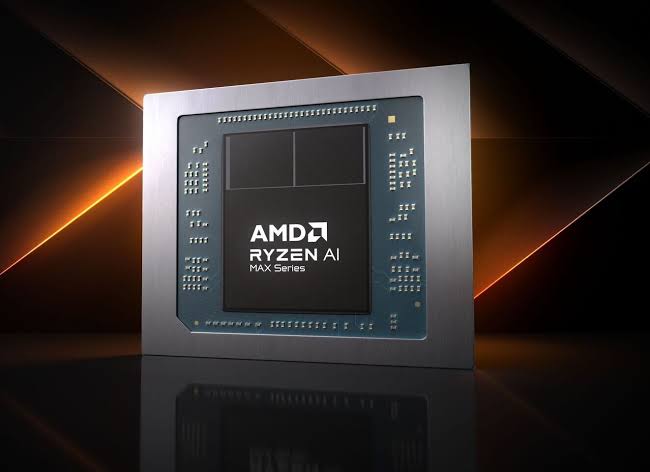
AMD has added official Ryzen AI MAX PRO 400 support to ROCm 7.14, giving developers access to the software tools needed to prepare applications for the upcoming professional processors before they reach the market.
The new chips are part of the Gorgon Halo family and are expected to target professional workstations, compact systems, and high performance PCs designed for local AI, content creation, engineering, and compute workloads.
The supported lineup includes the Ryzen AI MAX+ PRO 495, Ryzen AI MAX PRO 490, and Ryzen AI MAX PRO 485. Their appearance in the latest ROCm release suggests AMD is preparing for a commercial launch in the coming weeks, although the company has not confirmed an exact release date.
ROCm is AMD’s open source software platform for artificial intelligence and high performance computing. It provides drivers, optimized libraries, development tools, profiling software, and framework support for workloads that use AMD graphics and integrated compute hardware.
Adding support before the processors launch should allow software developers to begin testing, optimizing, and troubleshooting their applications without waiting for a later update.
ROCm 7.14 brings the full development environment to Gorgon Halo PRO
ROCm 7.14 extends several important tools to the Ryzen AI MAX PRO 400 series rather than adding only basic hardware recognition.
Developers will be able to use AMD’s compute libraries, GPU programming tools, supported AI frameworks, and performance analysis software on the new processors.
The update also brings support to the ROCm Systems Profiler and ROCm Compute Profiler. These tools help developers understand how applications use the processor, graphics hardware, memory, and other system resources.
| ROCm 7.14 feature | Benefit for developers |
|---|---|
| Ryzen AI MAX PRO 400 support | Allows applications to recognize and use the new chips |
| ROCm Systems Profiler | Tracks system level performance and workload behaviour |
| ROCm Compute Profiler | Examines GPU kernels and compute efficiency |
| Updated AI frameworks | Adds access to newer PyTorch and JAX releases |
| GPU compute libraries | Supports machine learning and scientific workloads |
| Improved SMI tools | Monitors utilization, power, temperature, and memory |
| Strix Halo compatibility | Expands profiling support across related AMD platforms |
The Compute Profiler also receives a compatibility layer for Strix Halo and Strix Point processors. This could help developers maintain applications across several Ryzen AI product families instead of creating separate optimization workflows for each platform.
Improved monitoring gives developers more detailed system data
AMD has expanded its System Management Interface in ROCm 7.14, allowing developers to monitor important hardware information through command line tools.
Available data includes GPU utilization, memory consumption, temperature, power use, and other operating measurements.
This information can help identify performance limits, memory pressure, overheating, or inefficient code. It can also be used during long AI or rendering workloads to confirm that a system is operating within expected power and thermal limits.
Command line monitoring is particularly useful for development environments, automated testing systems, and remote workstations where a graphical monitoring utility may not be practical.
Better telemetry also helps developers compare performance between processors and determine whether an application is using available hardware effectively.
PyTorch 2.12 and JAX 0.10.0 support improve AI readiness
ROCm 7.14 adds support for newer versions of popular machine learning frameworks, including PyTorch 2.12 and JAX 0.10.0.
These frameworks are widely used for model training, inference, research, and software development. Official support means developers can use newer features on AMD hardware without waiting for another major ROCm update.
The Ryzen AI MAX PRO 400 processors are expected to combine powerful CPU cores, integrated graphics, large shared memory support, and dedicated AI hardware. That design could make them useful for running large models locally without requiring a separate professional graphics card.
Shared system memory may be especially important for AI applications. Traditional graphics cards are restricted by their dedicated video memory, while an integrated platform can potentially give the GPU access to a larger portion of installed system RAM.
Actual performance will depend on memory bandwidth, power limits, software optimization, and the final processor specifications.
Early software support could help AMD avoid launch compatibility problems
Hardware launches are more useful when the necessary software is available from the first day.
By adding Ryzen AI MAX PRO 400 support before the processors arrive, AMD is giving developers time to validate applications and prepare updates. This reduces the risk that buyers will receive new systems but have to wait for important development tools or AI frameworks to work correctly.
The PRO branding also suggests that the chips will include features intended for businesses and managed environments. These may include additional security, administration, reliability, and extended support options, although AMD has not detailed the complete platform yet.
ROCm support could strengthen the processors’ appeal for developers, engineers, researchers, and creators who want a compact AMD system capable of handling local compute workloads.
AMD has not announced pricing or availability for the Ryzen AI MAX PRO 400 family. However, official support in ROCm 7.14 indicates that the software foundation is now in place and that the Gorgon Halo PRO launch is approaching.



Discussion (0)
Be the first to comment.