



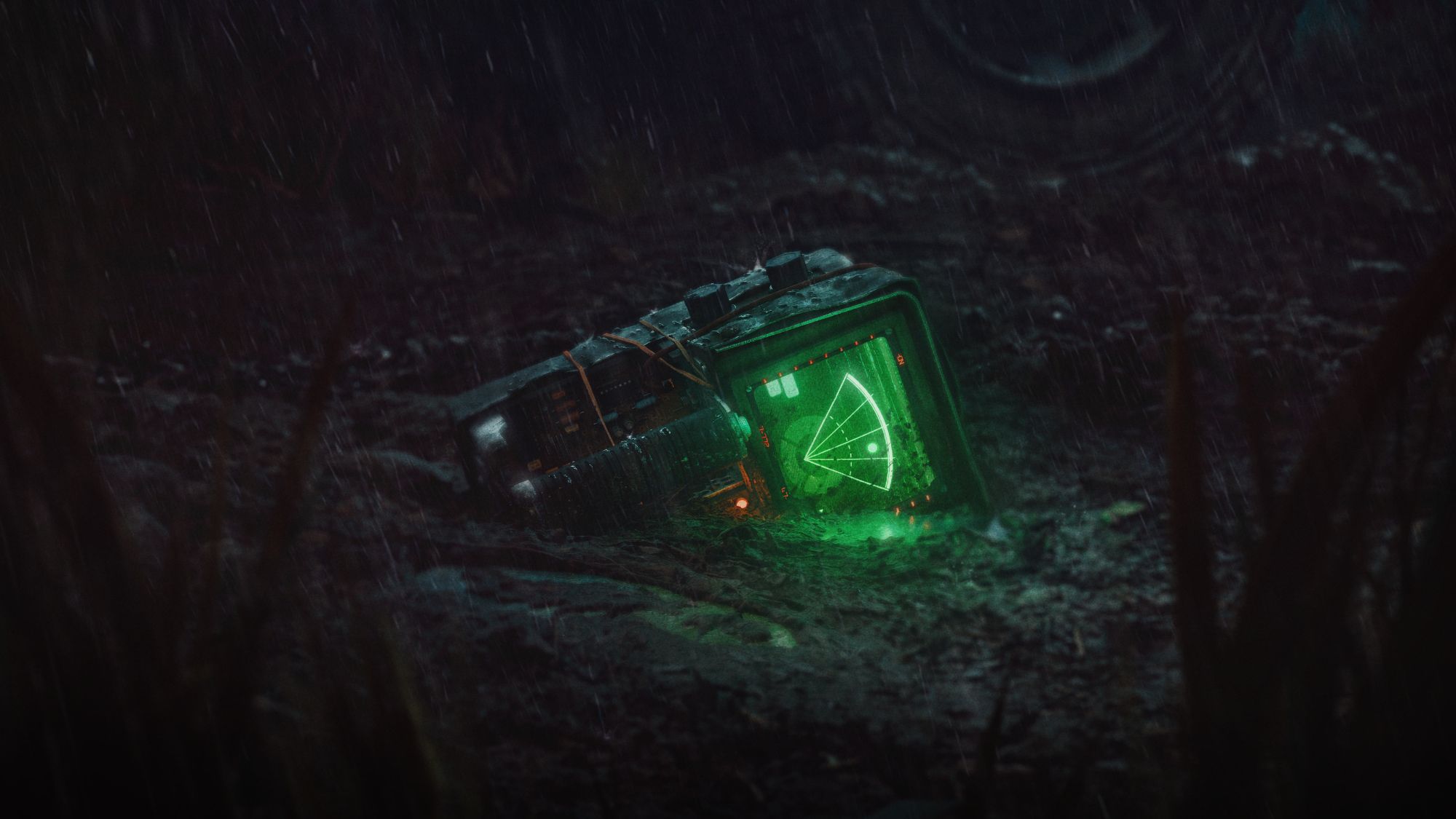
Alien: Isolation 2 is being developed with Unreal Engine 5, but Creative Assembly says the engine alone could not deliver every element needed for the sequel's dark and reactive environments.
The studio has built custom lighting and audio technology on top of Unreal Engine 5 to improve environmental response, reflections and spatial sound. The goal is to create scenes where weather, alarms, fire and other effects react immediately while maintaining the atmosphere expected from an Alien survival horror game.
Principal environment artist Archie Whitehead explained that lighting and audio are particularly important for horror, making them areas where the team wanted more direct control.
Custom lighting targets fast reactions in dark environments
Unreal Engine 5 provides the foundation for Alien: Isolation 2, but Creative Assembly wanted a lighting solution better suited to extremely dark scenes.
One focus is environmental reactivity.
The developers want events such as lightning, flickering fire and rotating warning lights to produce immediate visual changes throughout an environment.
| Technology area | Role in Alien: Isolation 2 |
|---|---|
| Unreal Engine 5 | Main development foundation |
| Custom lighting | Faster environmental response in dark scenes |
| Environmental effects | Thunder, fire, sirens and changing weather |
| Metal rendering | Better reflections in low light |
| Custom audio | Spatial sound and realistic reverberation |
| Platforms | PS5, Xbox Series X and S, Switch 2 and PC |
Whitehead said Unreal Engine 5's Lumen lighting system is generally optimized around brighter scenes. Alien: Isolation 2 frequently works at the opposite end of that spectrum, with large areas containing very little direct illumination.
Creative Assembly therefore developed technology designed to provide more precise frame by frame responses in these darker spaces.
That approach should allow environmental changes to affect a scene immediately rather than relying entirely on the standard lighting systems available through Unreal Engine 5.
Dark environments created problems for metallic surfaces
Metal materials presented another technical challenge.
A metallic surface gets much of its appearance from the environment reflected around it. That becomes harder to reproduce convincingly when most of the surrounding world is dark.
Alien environments naturally contain large amounts of industrial metal, machinery and worn technology, so inaccurate reflections could noticeably affect the visual presentation.
Creative Assembly says its custom lighting system helps manage this balance.
The technology allows the team to retain convincing metallic materials even when scenes contain limited light, while still maintaining the dark presentation required for the game's horror atmosphere.
Audio technology builds on the first Alien: Isolation
The sequel also uses an upgraded spatial audio system.
Creative Assembly describes it as an evolution of technology associated with the original Alien: Isolation rather than an entirely new approach.
The underlying audio technology has continued to develop through other studio projects, giving the sequel access to a more mature version of the system.
Its purpose is to understand the spatial relationship between areas of the game world.
For example, if a sound originates in another room connected through a ventilation shaft, the game can calculate how that sound should travel and reverberate before reaching the player.
This can change how distant movements, machinery and other noises are perceived depending on the surrounding architecture.
In a survival horror game where sound may provide information about nearby threats, that spatial behavior has a direct gameplay role as well as an atmospheric one.
Unreal Engine 5 remains the foundation
Creative Assembly is not replacing Unreal Engine 5.
Instead, the studio is using the engine as its primary development platform and adding specialized systems where it believes greater control is necessary.
This hybrid approach gives the team access to Unreal Engine 5's broader development tools while retaining custom technology for areas that are particularly important to Alien: Isolation 2.
Lighting and audio are natural targets because both were central to the identity of the original game.
The sequel is also introducing exterior environments, which create different technical requirements from the enclosed corridors and rooms commonly associated with the first Alien: Isolation.
Weather, changing light sources and larger spaces place additional demands on both visual and audio systems.
Creative Assembly's custom technology is intended to preserve the series' tension while supporting those expanded environments.
Alien: Isolation 2 is currently in development for PlayStation 5, Xbox Series X and Series S, Nintendo Switch 2 and PC. A release date has not been announced.


Discussion (0)
Be the first to comment.