



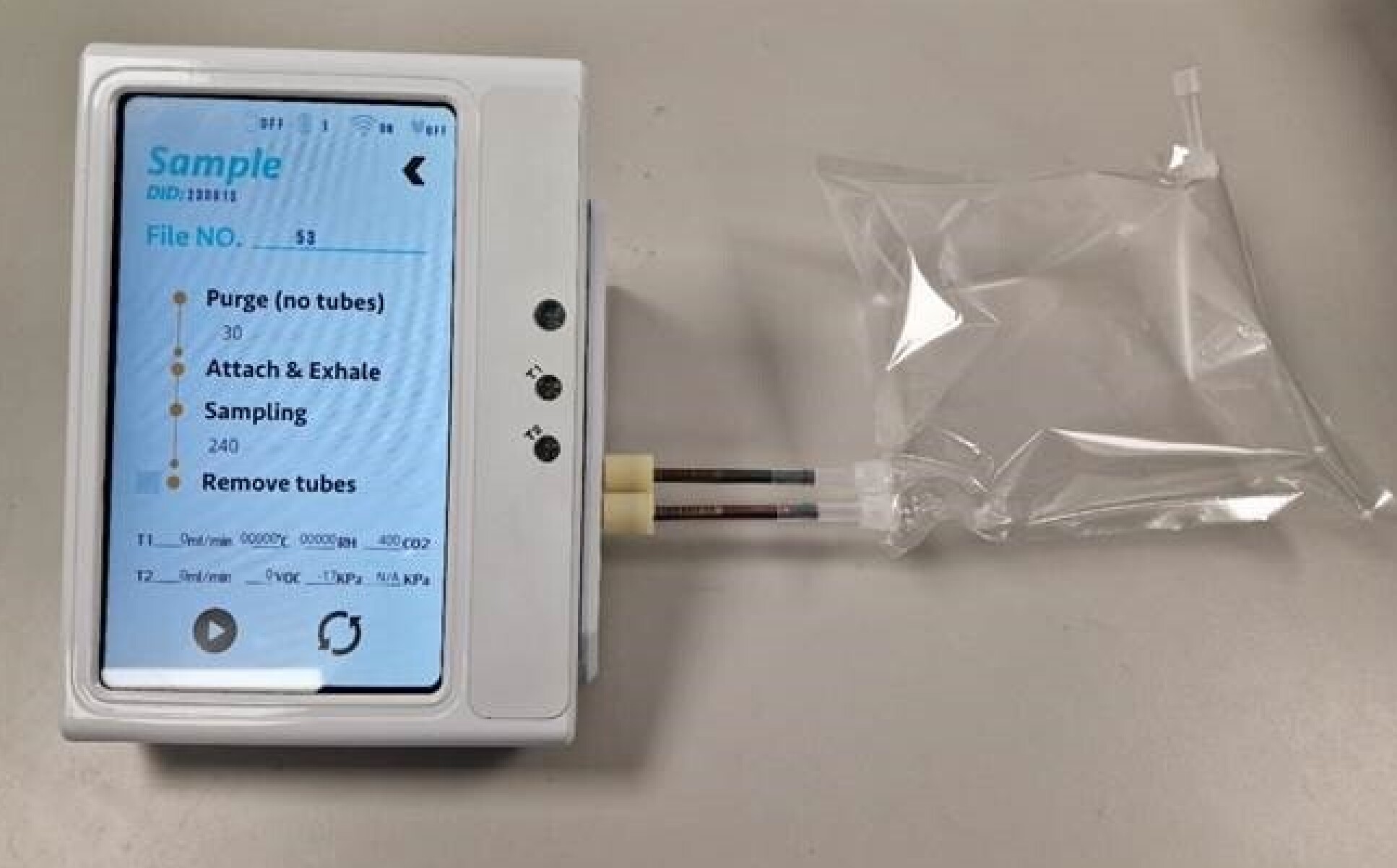
A new AI powered breath analysis system is being developed to detect possible signs of illness by studying the chemical compounds a person exhales. The technology could eventually help doctors distinguish between serious lung and heart conditions without relying first on invasive blood tests or long laboratory waits.
The project uses an electronic nose and artificial intelligence to examine volatile organic compounds, known as VOCs, in a patient’s breath. These compounds are released naturally by the body and may change when someone has an infection, inflammation, metabolic problem, or other medical condition.
Researchers hope the system could become especially useful for emergency departments, where doctors must quickly identify why a patient is struggling to breathe.
The AI system studies chemical patterns in breath
The technology does not literally smell illness in the same way a person would. Instead, it uses sensors to detect tiny chemical differences in exhaled air.
The system then converts those chemical readings into digital patterns that an AI model can analyse. Each breath sample can create a unique chemical signature, sometimes described as a breath print.
The goal is to train the AI to recognise patterns linked to different health problems.
| System component | Role in the process |
|---|---|
| Electronic nose | Detects chemical compounds in breath |
| VOC sensors | Measure airborne molecules at very low levels |
| AI model | Looks for patterns linked to illness |
| Clinical database | Compares samples with known patient outcomes |
| Breath print | A digital chemical profile from a patient’s breath |
This approach could help medical teams make faster early decisions, although it would still need to be tested carefully against established diagnostic methods.
The first focus is severe shortness of breath
The initial research is centred on patients with dyspnea, the medical term for severe shortness of breath. This symptom can be caused by many conditions, including lung disease, heart failure, infection, asthma, and other emergencies.
A major challenge is that different illnesses can create similar symptoms. Someone with an acute worsening of chronic obstructive pulmonary disease may arrive at hospital with breathing problems that look similar to someone experiencing acute heart failure.
However, those conditions need different treatment. Identifying the cause quickly can make a major difference to care.
The researchers plan to gather breath samples from emergency patients and compare them with samples from control groups. The AI will then look for chemical patterns that may help separate lung related problems from cardiovascular causes.
Breath testing could reduce reliance on invasive procedures
Traditional diagnostic testing can involve blood draws, imaging scans, laboratory reagents, and waiting for results. Breath testing could offer a quicker and non invasive option if the technology proves accurate in clinical trials.
A patient would simply breathe into a sensor device, allowing the system to analyse the sample in real time. This could be useful in busy emergency departments where doctors need more information before choosing the next step.
Potential future uses could include:
- Emergency room triage
- Ambulance based assessments
- Outpatient screening
- Remote monitoring for high risk patients
- Home healthcare devices
However, the technology is still under development. It should not be viewed as a replacement for doctors, medical imaging, blood tests, or established emergency procedures.
AI could make breath analysis more useful
Breath analysis is not a new idea, but AI may help make it more practical. Human breath contains a complex mixture of gases and organic compounds, and finding useful medical patterns can be difficult without advanced data analysis.
The AI model is designed to detect chemical combinations that may be too subtle for traditional methods to identify quickly. It may also improve over time as more validated clinical data becomes available.
That could make breath testing more flexible than a device designed to search for only one specific illness.
Clinical testing will decide whether the idea works
The most important stage will be real world validation. The system must prove that it can accurately distinguish between conditions and provide useful results quickly enough for emergency care.
False results could be dangerous, particularly when patients have severe breathing problems. For that reason, the system will need extensive testing against final diagnoses and established clinical assessments.
Even so, the research shows how AI may become part of future healthcare tools. A simple breath test could eventually give doctors another fast source of information when every minute matters.



Discussion (0)
Be the first to comment.