



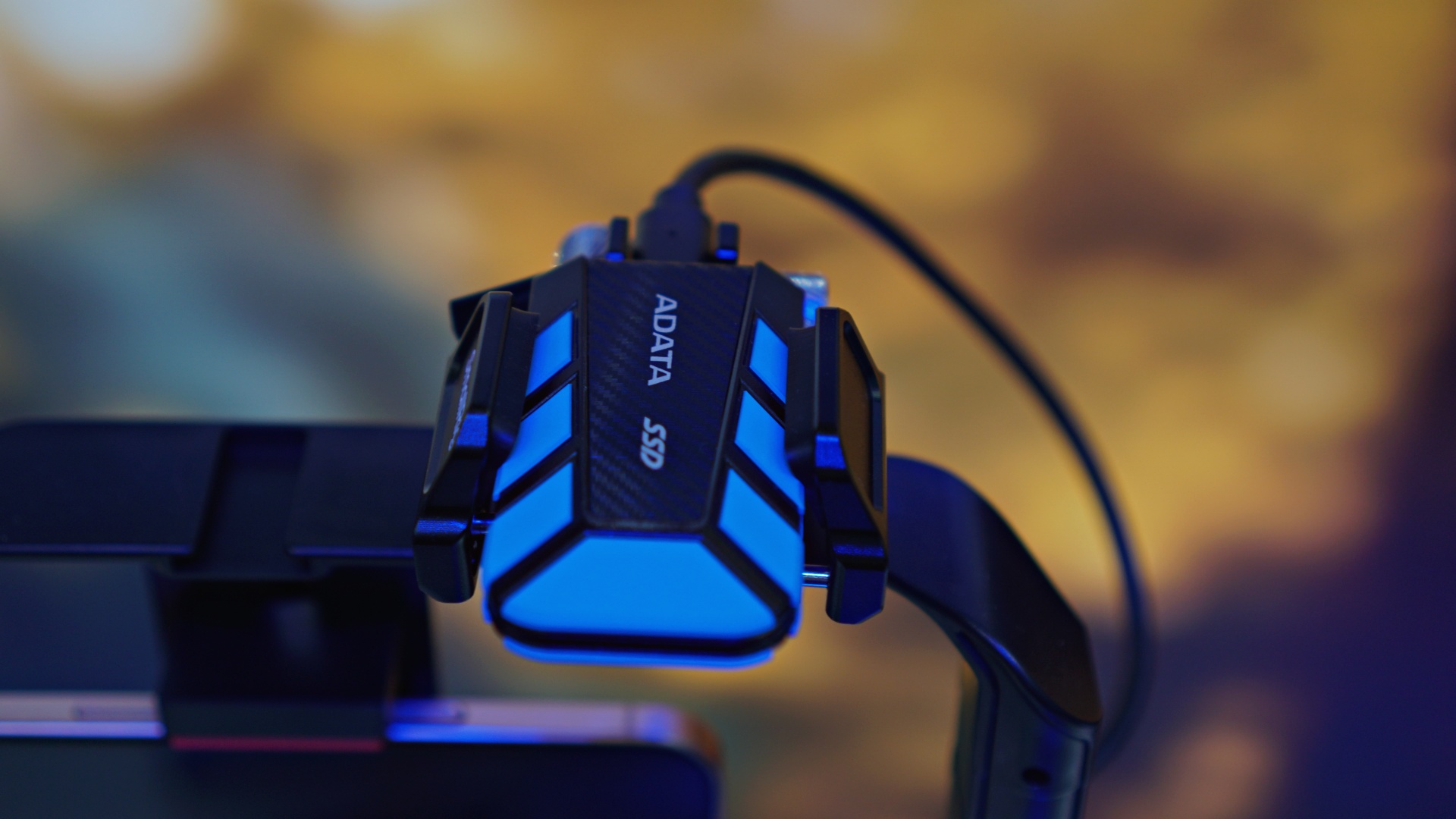
ADATA’s enterprise storage brand TRUSTA has introduced a new AI memory solution designed to reduce one of the biggest problems in enterprise AI deployment: limited GPU memory. The new TRUSTA AI Scaler Extended Memory Solution uses a mix of GPU memory, system DRAM, and high speed SSD storage to help run and fine tune AI models without relying only on expensive GPU VRAM.
The idea is simple. Large AI models usually need a lot of GPU memory, and that makes deployment expensive. Companies often need multiple high end GPUs just to run or fine tune models at a useful scale. TRUSTA says its AI Scaler Toolkit can extend model deployment beyond GPU memory and make better use of the full system memory hierarchy.
That means AI workloads can be spread across GPU memory, DRAM, and SSDs. In some tested inference scenarios, TRUSTA says workloads that normally require multiple GPUs can be optimized to run on one GPU with expanded system memory. For fine tuning, the system can dynamically allocate resources across GPU, DRAM, and SSD storage.
TRUSTA is targeting enterprises that want on premises AI without massive GPU costs
The timing matters because more companies are moving AI work beyond cloud services and into their own infrastructure. Privacy, compliance, cost control, and data location all matter when businesses decide whether to run AI locally. But local AI infrastructure can become expensive quickly when GPU memory becomes the main bottleneck.
TRUSTA says its approach can reduce AI deployment costs by more than 50 percent in model inference and fine tuning scenarios. That is a major claim, especially for enterprises that want to test or deploy AI agents without building large GPU clusters from the start.
| Area | TRUSTA AI Scaler focus |
|---|---|
| Main problem | GPU memory limits in AI inference and fine tuning |
| Solution | Use GPU memory, DRAM, and SSD storage together |
| Claimed benefit | More than 50 percent lower deployment cost |
| Target users | Enterprises, research institutions, and developers |
| Platform status | Free and open source toolkit |
| Supported model families | Llama, Qwen, Mistral, Mixtral, GPT OSS, DeepSeek, Phi, Gemma |
The AI Scaler Toolkit is designed to be free and open source, and TRUSTA says it is not tied to one fixed hardware configuration. That could make it more useful for companies with different server setups, budgets, and deployment needs.
The platform supports several mainstream model families, including Llama, Qwen, Mistral, Mixtral, GPT OSS, DeepSeek, Phi, and Gemma. TRUSTA also says support for more models is still expanding. The toolkit also works with AI agent applications such as OpenClaw, NemoClaw, and Hermes Agentic, which shows that the company is aiming beyond simple model hosting.
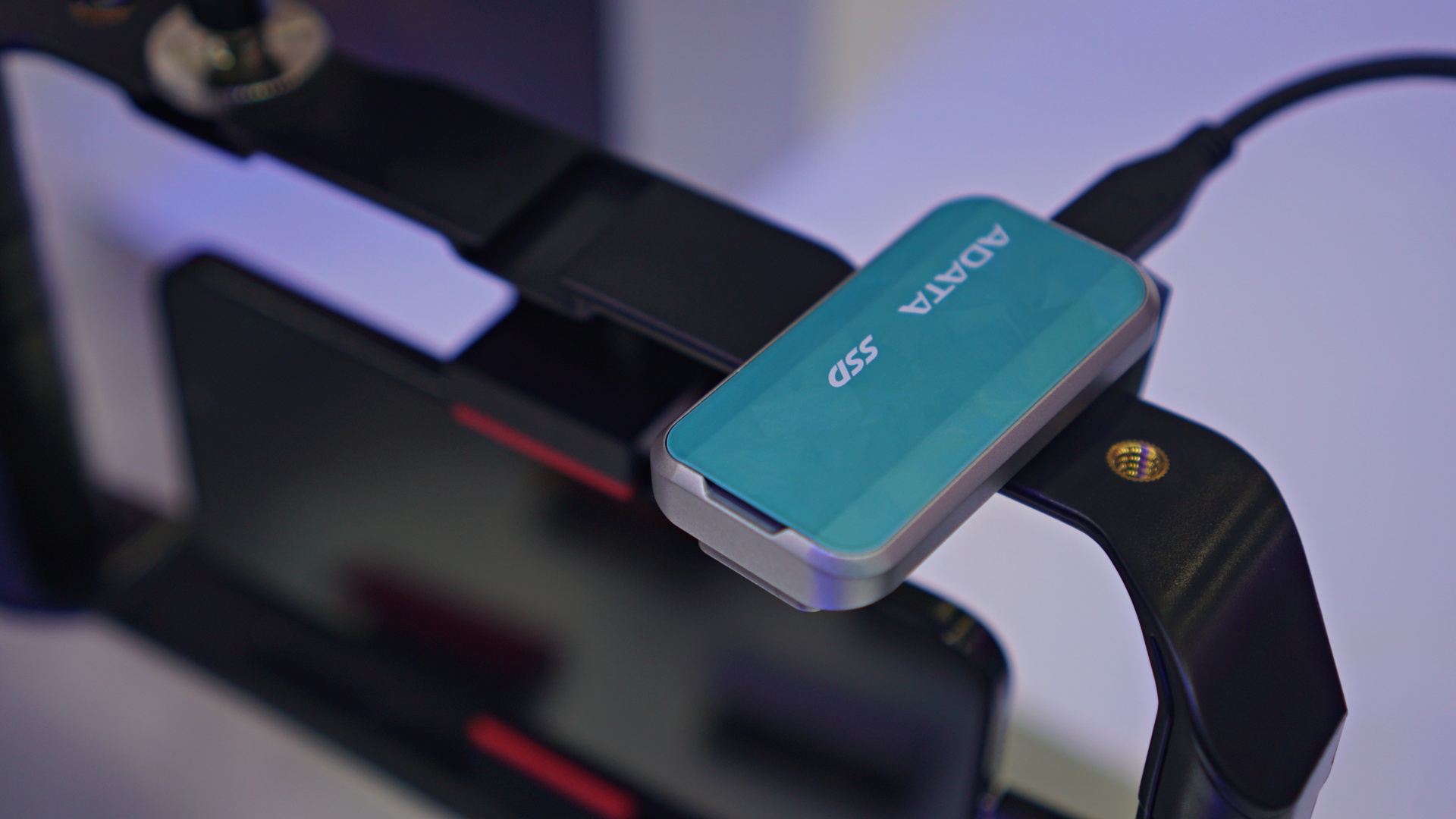
TRUSTA is also using Computex to show its TD7P51 ECO PCIe Gen5 enterprise SSD. The drive supports capacities up to 15.36TB and comes in multiple enterprise form factors, including U.2, E1.S, and E3.S. It also includes Flexible Data Placement, which is meant to improve reliability and stability through smarter data placement.
This launch also shows ADATA trying to move beyond being only a memory and storage supplier. With TRUSTA, the company is positioning itself as a software and hardware solution provider for enterprise AI infrastructure.
The real test will be performance. SSDs are much slower than GPU VRAM, so this kind of approach must balance cost savings against latency and throughput limits. Still, for companies priced out of GPU heavy AI systems, TRUSTA’s extended memory idea could become a practical middle path. It may not replace large GPU clusters for the heaviest workloads, but it could make AI inference and fine tuning more accessible for businesses with tighter budgets.



Discussion (0)
Be the first to comment.