



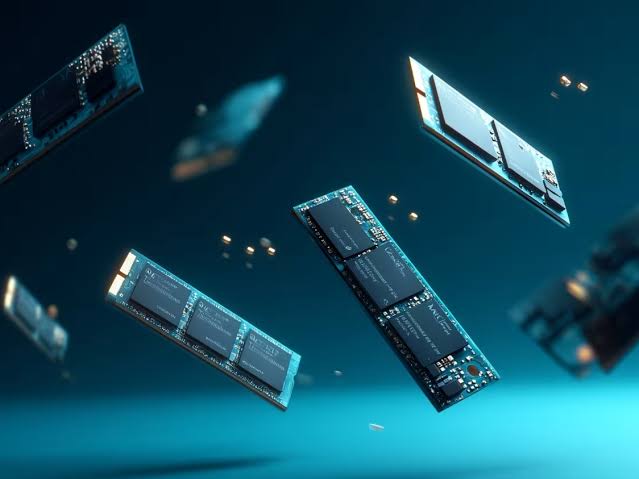
ADATA chairman Chen Li-bai believes the global memory shortage could continue for another 10 years as AI infrastructure consumes growing amounts of DRAM, storage, electricity, and data centre capacity.
His comments followed renewed concerns about whether heavy AI investment could be creating a market bubble. Chen rejected that idea for now, arguing that global demand for computing infrastructure remains much stronger than many investors understand.
He suggested that meaningful discussion about an AI bubble may be premature until well after 2030. His view is that AI adoption will continue spreading across enterprise, government, consumer, and mixed business models, creating additional demand for processors, memory, storage, networking, and power.
The warning adds to concerns that current DRAM price increases may not be temporary. Samsung, SK hynix, and Micron are expanding production, but new factories take years to build and may not increase supply quickly enough to match demand.
AI infrastructure is consuming more memory across the market
Large AI systems require several types of memory. Training accelerators use high bandwidth memory, while servers also need conventional DRAM for processors, storage caching, networking, and system management.
As companies build larger data centres, demand rises across several product categories at the same time.
| Market pressure | Expected effect |
|---|---|
| AI accelerator growth | Higher demand for HBM |
| Larger server deployments | Greater conventional DRAM use |
| Expanding model sizes | More memory capacity per system |
| Data centre construction | Increased storage and power demand |
| Limited fab expansion | Slower supply growth |
| Long term supply agreements | Less memory available on the open market |
Chen argues that this demand will continue even if some cloud companies temporarily lease unused computing capacity to other businesses.
Excess capacity does not necessarily mean AI spending has slowed permanently. New applications can absorb available infrastructure as companies introduce more AI products, agents, analytics systems, and automated services.
He expects demand to spread across business to business, business to government, business to consumer, and other commercial models.
New memory factories may not provide quick relief
Samsung, SK hynix, and Micron have announced production expansions, but Chen does not expect these plans to solve the shortage quickly.
Memory manufacturers are likely to expand carefully because aggressive capacity growth has damaged profits during previous market cycles. When supply rises too quickly, prices can collapse and leave companies with expensive factories operating below capacity.
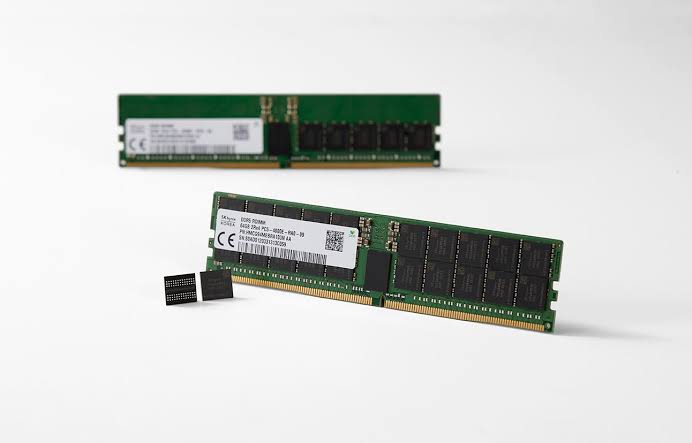
The major suppliers are therefore expected to follow multi year expansion plans rather than adding production as quickly as possible.
Many projects are scheduled between 2028 and 2035. Construction delays, equipment availability, production yields, and customer qualification could push some of those timelines further.
Even after a new fab opens, it may take a considerable period before it reaches full output. Manufacturers must install equipment, improve yields, validate products, and gradually increase production.
Long term agreements are limiting open market supply
Large technology companies are increasingly signing long term agreements with memory suppliers.
These contracts help customers secure capacity for future AI systems, but they can also reduce the amount of DRAM and HBM available to smaller buyers.
A supplier may commit much of its future output years before the memory is produced. That leaves consumer electronics companies, PC manufacturers, and smaller server businesses competing for the remaining supply.
| Supply factor | Why it matters |
|---|---|
| Long term contracts | Reserve future production for major customers |
| AI customer priority | Higher margin products receive more capacity |
| Careful fab expansion | Prevents rapid oversupply but prolongs shortages |
| Equipment constraints | Delays new production lines |
| Yield improvement | Takes time after a fab begins operating |
| Power availability | Limits data centre and factory expansion |
This structure could keep prices high even when manufacturers announce large investments. The important measure is not the number of planned factories, but how much usable memory reaches customers.
DRAM and NAND prices may remain elevated
Chen previously warned that DRAM prices could rise by around 30 percent and NAND prices by approximately 40 percent during the third quarter of 2026.
Other estimates have suggested even larger increases, depending on the product category and severity of the shortage.
Short term relief appears unlikely before 2028. Returning to prices seen before the current shortage may be even more difficult if AI demand continues growing.
Higher memory costs can affect smartphones, laptops, desktop PCs, graphics cards, servers, game consoles, and storage devices. Manufacturers may raise retail prices, reduce included memory, or delay product upgrades.
The effect will vary by market. HBM shortages mainly influence AI accelerators, while conventional DRAM pressure affects a much wider range of products.
Electricity may become as scarce as memory
Chen also identified electricity as one of the most important limited resources for the next decade.
AI data centres consume large amounts of power, while memory factories also require substantial electricity and water. Expanding one part of the supply chain can therefore place pressure on another.
A company may be able to purchase more GPUs and memory but still struggle to secure enough power to operate them. New data centres often require utility upgrades, transmission lines, substations, and cooling infrastructure.
This creates a broader constraint on AI growth. The industry must expand computing hardware and the energy systems needed to support it.
The 10 year forecast remains an aggressive estimate
A decade long shortage is a strong prediction and should not be treated as certain.
Memory markets are cyclical, and demand forecasts can change quickly. New suppliers, improved manufacturing yields, economic weakness, efficiency gains, or slower AI spending could reduce pressure sooner than expected.
The forecast also does not mean every memory product will remain unavailable for 10 years. It suggests that demand may continue exceeding comfortable supply levels, keeping prices and availability under pressure.
Chen’s comments reflect the perspective of a company that benefits from strong memory demand. ADATA sells memory and storage products, so prolonged shortages and higher prices can support revenue even while creating difficulties for customers.
Still, the broader concern is supported by the scale of AI infrastructure growth and the slow pace of semiconductor factory expansion.
The memory market may see temporary improvements, but a full return to earlier pricing appears increasingly unlikely. If AI adoption continues across cloud services, enterprise software, robotics, government systems, and consumer products, DRAM could remain one of the most constrained components in the technology industry for years.



Discussion (0)
Be the first to comment.