



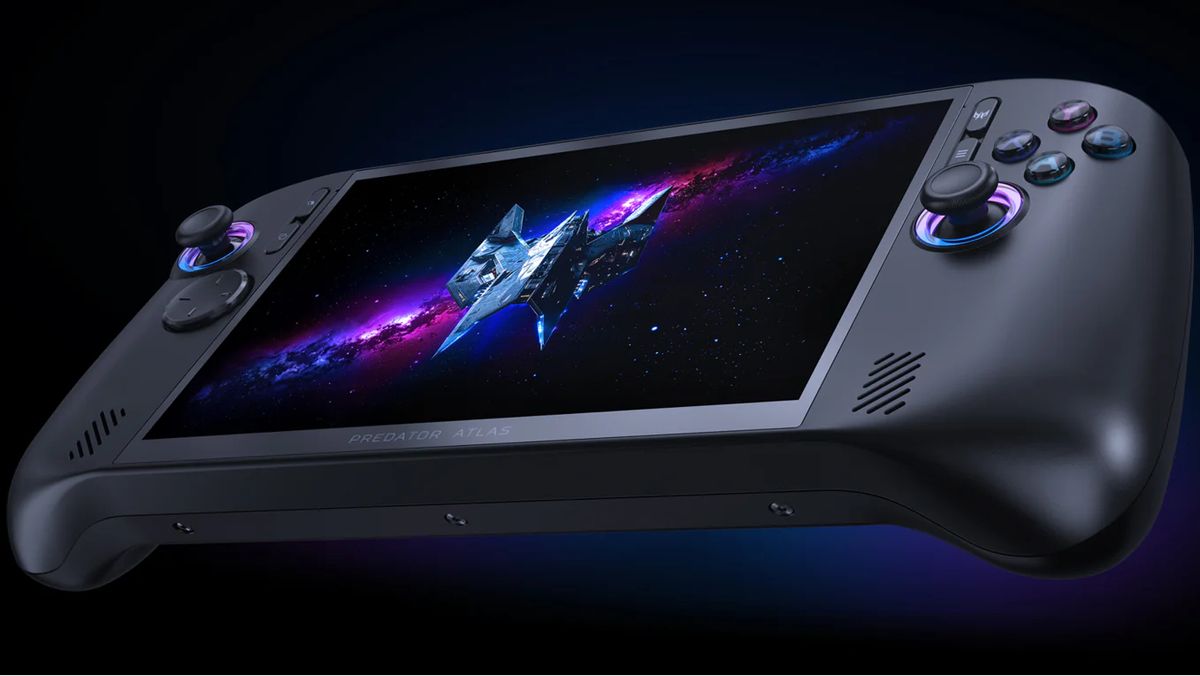
Acer has announced the Predator Atlas 8, a new handheld gaming PC built around Intel’s Arc G3 Extreme chip. On paper, it is one of the more interesting portable gaming devices revealed at Computex 2026, but the timing could make its launch difficult. The handheld PC market is no longer the affordable growth space it was when the Steam Deck first arrived. Memory and storage costs have pushed prices higher, and premium handhelds are starting to compete directly with gaming laptops.
The Predator Atlas 8 is notable because it uses Acer’s Predator branding rather than the cheaper Nitro Blaze name. That suggests Acer is positioning it as a higher end device. The biggest change is Intel’s Arc G3 Extreme, a Panther Lake based chip designed specifically for handheld gaming PCs. It is Intel’s first serious custom push into a category long dominated by AMD Ryzen Z chips.
The Arc G3 Extreme includes two performance cores, eight efficiency cores, and four low power efficiency cores. Its integrated graphics are based on Arc B390 level hardware and support Intel XeSS 3 upscaling. A lower Arc G3 version steps down to Arc B370 graphics.
The specs look strong, but price may decide everything
Acer is pairing the chip with an 8 inch 1200p IPS display running at 120Hz. The handheld can be configured with up to 24GB of RAM and 1TB of Gen 4 storage. It also includes hall effect analog triggers, two rear buttons, adjustable trigger steps, two Thunderbolt 4 USB C ports, a microSD card slot, and Killer Wi Fi 7.
| Feature | Acer Predator Atlas 8 |
|---|---|
| Processor | Intel Arc G3 Extreme |
| Graphics | Arc B390 level integrated graphics |
| Display | 8 inch 1200p IPS |
| Refresh rate | 120Hz |
| Memory | Up to 24GB |
| Storage | Up to 1TB Gen 4 |
| Battery | 80Wh on some models, 60Wh on others |
| Ports | Two Thunderbolt 4 USB C ports and microSD |
| Wireless | Killer Wi Fi 7 |
| Launch window | October 2026 |
The battery setup is also interesting. Acer says some models will include a large 80Wh battery, while cheaper versions may use a 60Wh battery. Battery life will depend heavily on how well Intel tunes the Arc G3 Extreme and how much Windows 11 improves for handheld use.
Cooling appears to be a major focus too. Acer is using a dual fan system, including one plastic fan and one Predator AeroBlade metal fan. That makes sense because powerful handheld chips need strong cooling to avoid throttling, especially in a compact body.
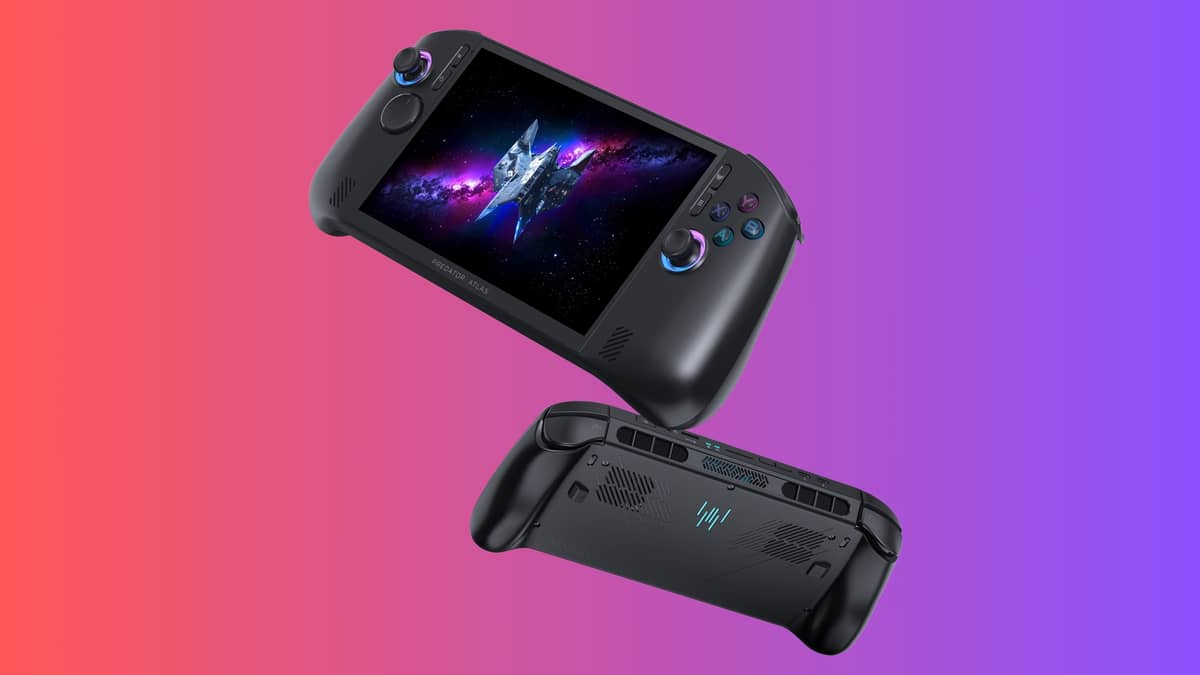
The bigger problem is the market around it. Valve recently brought the Steam Deck back after months of limited availability, but with pricing now starting near $800. Lenovo’s Legion Go 2 has also moved into a much higher price range after recent increases, reportedly landing around $1,500 to $2,000 in some configurations.
That is the challenge Acer faces. If the Predator Atlas 8 launches as a premium handheld, it may be judged against gaming laptops rather than older affordable handhelds. At that point, buyers may ask whether portability is worth giving up the larger screen, keyboard, upgrade options, and stronger discrete GPU they could get from a laptop.
There is still a market for high end handheld gaming PCs. Some players want portable Windows gaming regardless of cost, and Intel’s new chip could give Acer a strong technical story if performance and battery life are good. But the category is crowded now, with Valve, ASUS, Lenovo, Acer, MSI, and smaller brands all fighting for attention.
The Predator Atlas 8 could be important because it gives Intel a real chance to prove itself in handheld gaming. But Acer needs more than good specs. It needs the right price, strong performance, stable software, and a launch that does not slip too far beyond October.
For now, the Predator Atlas 8 looks powerful and promising, but it is arriving in a handheld market that has become much less friendly to expensive experiments.



Discussion (0)
Be the first to comment.