



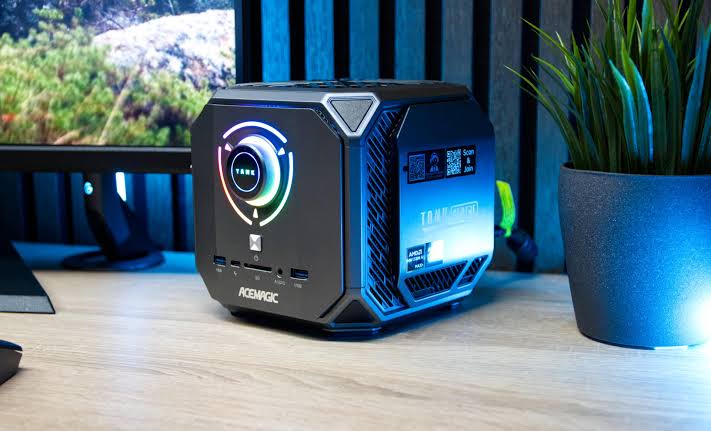
Acemagic has introduced the F9A, a compact AI focused mini PC powered by AMD’s Ryzen AI Max Plus 395 processor.
The system uses a 2 litre chassis but includes a 16 core Zen 5 processor, Radeon 8060S integrated graphics, support for up to 128GB of LPDDR5X memory and two PCIe 4.0 storage slots.
It also provides OCuLink for an external graphics card, two USB4 ports, WiFi 7 and Bluetooth 5.4. Acemagic has not announced pricing or a final release date.
The F9A sits below the company’s larger M1A Pro Plus in physical size while using the same flagship Strix Halo processor platform.
| Feature | Acemagic F9A |
|---|---|
| Processor | AMD Ryzen AI Max Plus 395 |
| CPU configuration | 16 cores and 32 threads |
| Integrated graphics | Radeon 8060S |
| Combined AI performance | Up to 126 TOPS |
| NPU performance | Up to 50 TOPS |
| Maximum memory | 128GB LPDDR5X 8000 |
| Storage | Two M.2 PCIe 4.0 NVMe slots |
| Chassis volume | 2 litres |
| External GPU support | OCuLink |
| Wireless connectivity | WiFi 7 and Bluetooth 5.4 |
Ryzen AI Max Plus 395 provides 16 Zen 5 cores
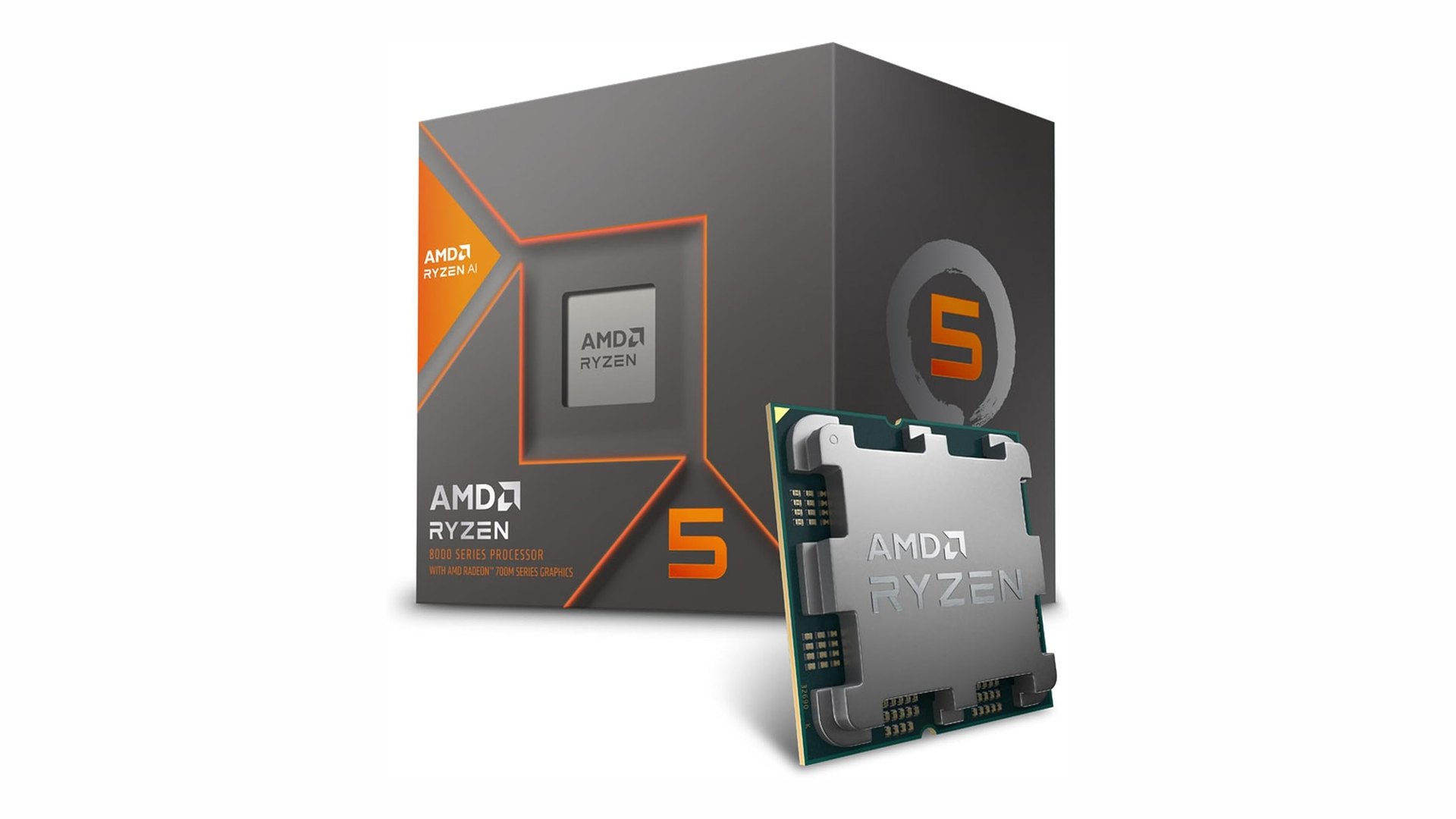
The Ryzen AI Max Plus 395 is AMD’s most powerful mobile processor in the Strix Halo family.
It includes 16 Zen 5 cores and 32 threads, giving the F9A enough processor performance for demanding creative applications, software development and heavily threaded workloads.
The processor is configured to operate at up to 140W in this system. That power level is unusually high for a mini PC and should allow the chip to maintain stronger performance than lower power laptop implementations.
Cooling will be important because the system places the processor inside a compact 2 litre enclosure. Acemagic has not provided detailed information about fan size, noise levels or sustained operating temperatures.
Actual performance will therefore depend on how effectively the cooling system handles long workloads.
Radeon 8060S reduces the need for a discrete GPU
The Ryzen AI Max Plus 395 includes Radeon 8060S integrated graphics.
This is a much larger graphics configuration than the integrated GPUs found in most conventional laptop and mini PC processors. It is designed to handle gaming, content creation and GPU accelerated applications without requiring a separate graphics card.
The shared memory design allows the processor and graphics hardware to access the same LPDDR5X memory pool. A system configured with 64GB or 128GB could assign a substantial amount of memory to graphics or AI workloads.
That may be useful for local AI models, 3D applications and projects that exceed the memory capacity of entry level discrete graphics cards.
Gaming performance will still depend on resolution, image quality settings and memory configuration. The Radeon 8060S is powerful for integrated graphics, but it will not replace every high end desktop GPU.
OCuLink provides an external GPU upgrade path
Acemagic includes an OCuLink connection for buyers who need additional graphics performance.
OCuLink provides a direct PCIe connection to an external graphics card enclosure. It generally offers lower overhead than graphics connections based on conventional USB technology.
This gives the F9A more flexibility than a sealed mini PC with no graphics expansion. You can use the Radeon 8060S for everyday workloads and connect a desktop GPU when higher gaming, rendering or compute performance is required.
An external graphics setup will still require a compatible dock, a separate power supply and enough desk space for the graphics card.
The OCuLink connection may also consume PCIe lanes that could otherwise support storage or other devices. Acemagic has not explained the internal lane arrangement.
The system supports up to 128GB of unified memory
The F9A can be configured with up to 128GB of LPDDR5X 8000 memory.
This memory is expected to be soldered rather than installed through removable desktop style modules. Soldered memory allows higher transfer rates and saves internal space, but it cannot be upgraded after purchase.
Buyers will therefore need to choose the correct capacity when ordering.
Large memory configurations are especially useful for local AI models because the CPU, GPU and NPU can access the same memory pool. This can allow the system to run models that would not fit within the dedicated memory of many consumer graphics cards.
| Memory capacity | Suitable use |
|---|---|
| 32GB | General productivity and lighter creative work |
| 64GB | Gaming, development and moderate AI workloads |
| 96GB | Larger creative projects and local AI |
| 128GB | Heavy AI, workstation and memory intensive work |
Acemagic has not confirmed which capacities will be offered at launch.
AI performance reaches a claimed 126 TOPS
The F9A combines AI processing from the CPU, integrated GPU and XDNA 2 neural processing unit.
Acemagic claims a combined output of up to 126 trillion operations per second. The dedicated NPU contributes up to 50 TOPS.
Combined figures should be treated carefully because applications cannot always use every processing unit at the same time. Performance also depends on software support, model format and memory requirements.
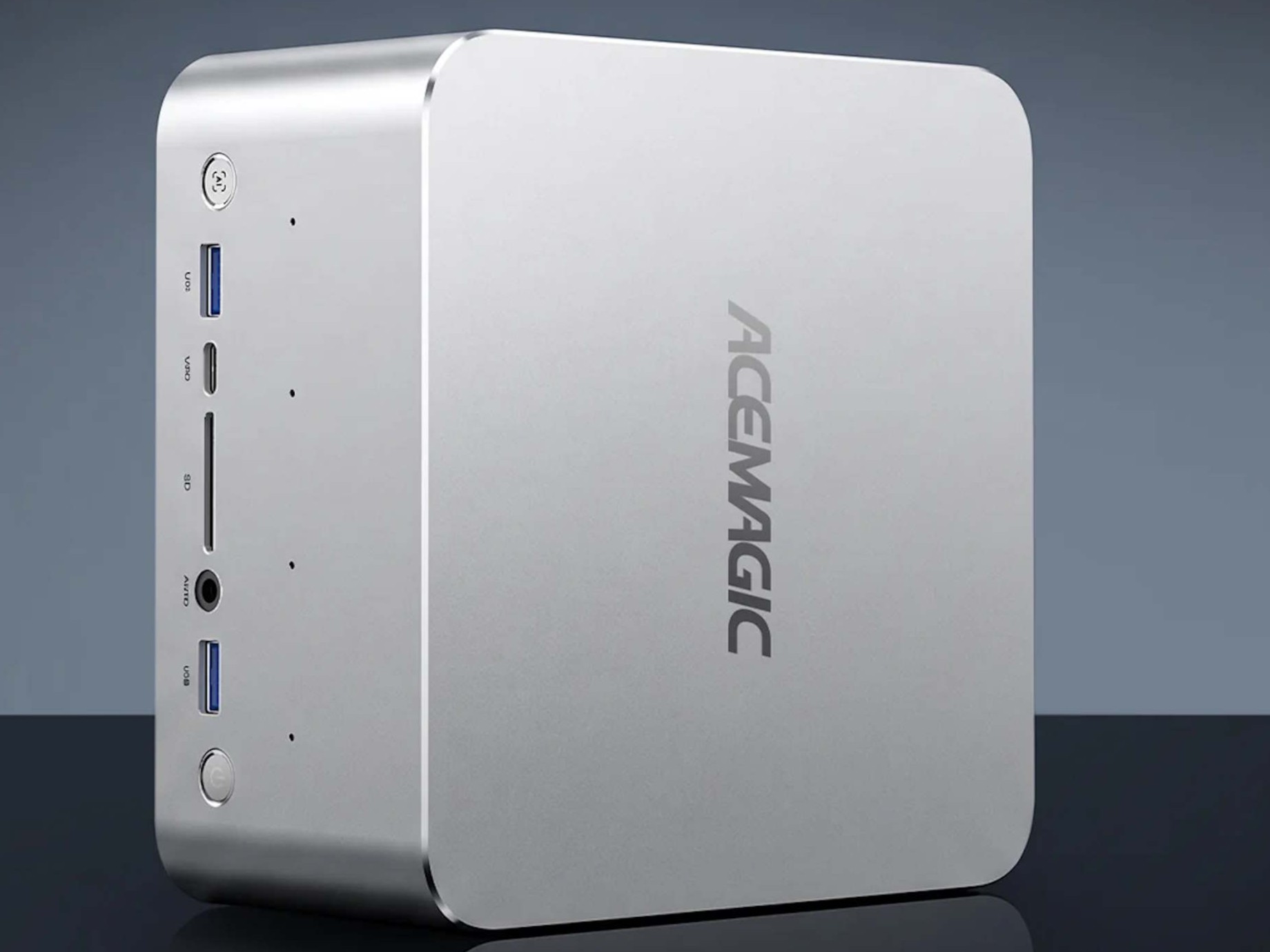
The system includes a dedicated Copilot button on the front panel. This provides quick access to supported Windows AI features, although the button does not increase hardware performance.
For local AI development, the large memory capacity may be more important than the headline TOPS figure.
Dual USB4 and modern networking expand connectivity
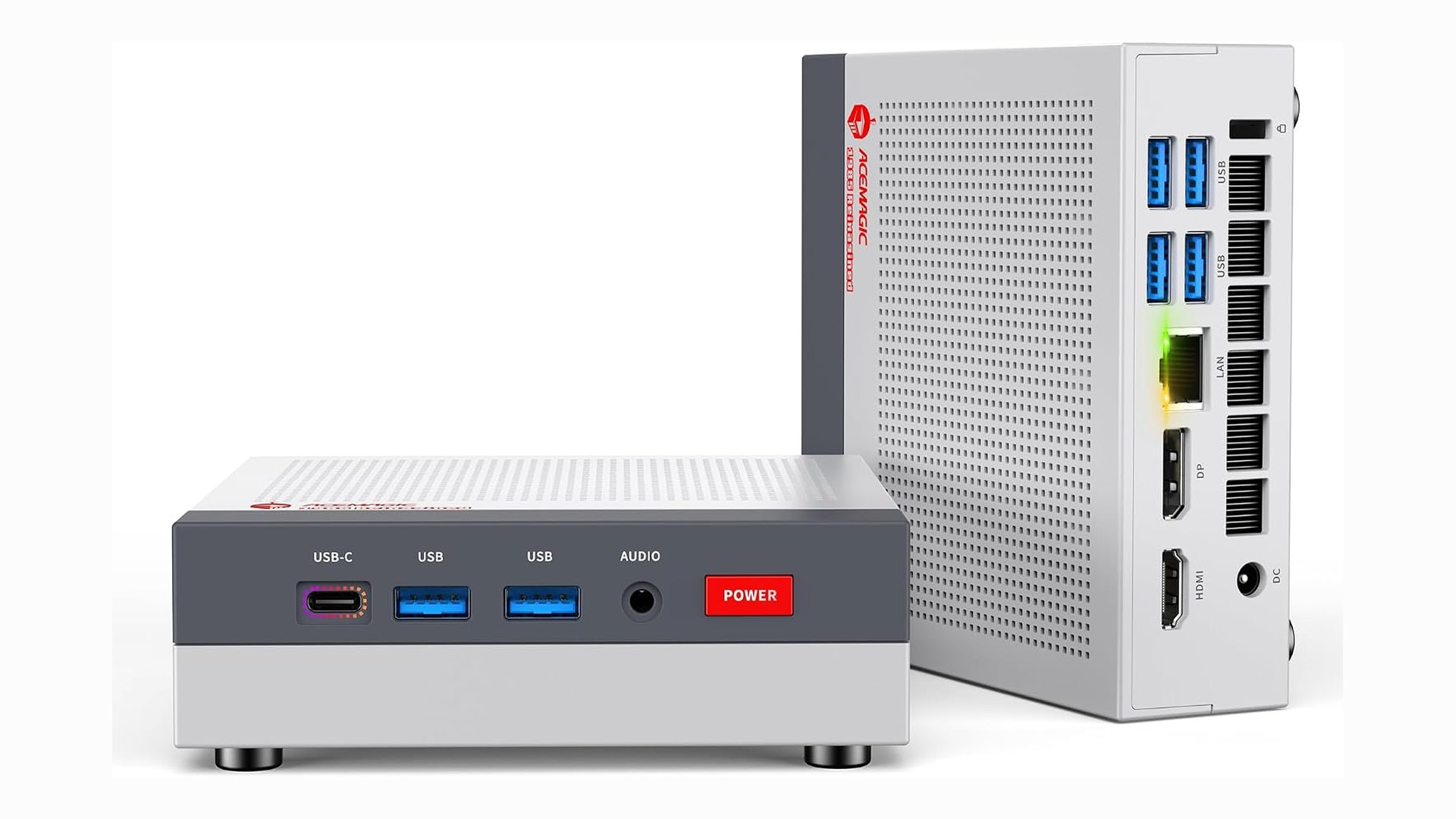
The F9A includes two USB4 ports with speeds of up to 40Gbps.
These ports can support fast external storage, high resolution displays and compatible docking equipment. Acemagic has not confirmed the maximum display output or charging capabilities of each connection.
The mini PC also includes WiFi 7 and Bluetooth 5.4 for wireless networking and accessories.
Two M.2 PCIe 4.0 NVMe slots provide internal storage expansion. This allows you to install separate drives for the operating system, games, creative files or AI data.
The exact maximum supported storage capacity has not been disclosed.
Built in audio targets home office use
Acemagic has added a four dimensional microphone array and dual speakers.
This configuration is intended to make the mini PC suitable for calls and conferences without requiring separate audio hardware. The microphone array may also help with voice control and noise reduction.
The usefulness of the built in speakers will depend on their placement and size. A compact enclosure cannot provide the same low frequency output as dedicated desktop speakers.
Still, the integrated setup could make the F9A convenient for office desks and shared workspaces.
Pricing remains the main unanswered question
Acemagic has not announced the price or availability of the F9A.
The Ryzen AI Max Plus 395, high capacity LPDDR5X memory and compact design suggest that it will be positioned as a premium product. Configurations with 128GB of memory and large NVMe drives could be particularly expensive.
The final value will depend on how the F9A compares with other Strix Halo mini PCs and compact workstations.
Its strongest features are the small 2 litre chassis, powerful integrated graphics, large unified memory capacity and OCuLink expansion. Buyers should wait for independent testing of cooling, noise and sustained performance before judging how well the compact design handles the 140W processor.
Discussion (0)
Be the first to comment.